

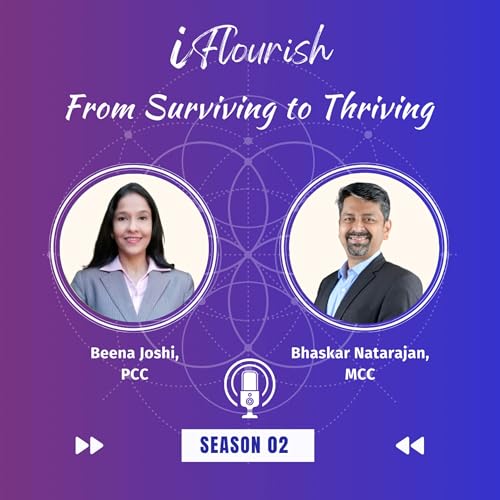
Season 2 | Episode 6 - Nurturing Relationships
Failed to add items
Add to basket failed.
Add to wishlist failed.
Remove from wishlist failed.
Adding to library failed
Follow podcast failed
Unfollow podcast failed

Season 2 | Episode 6 - Nurturing Relationships
-
Narrated by:
-
By:
Summary
In this episode, Beena and Bhaskar discuss the importance of nurturing relationships with friends and family. They emphasize that nurturing relationships goes beyond socializing and requires a sense of closeness and belongingness. They also highlight the impact of social connections on physical and mental well-being. The concept of the emotional bank account is introduced, where positive actions are deposits and negative actions are withdrawals in a relationship. Stephen Covey's six major deposits for nurturing relationships are empathy, attending to small gestures, keeping commitments, clarifying expectations, showing personal integrity, and apologizing and taking responsibility for mistakes. They also discuss the importance of setting boundaries and open communication in nurturing relationships.
Takeaways
- Nurturing relationships goes beyond socializing and requires a sense of closeness and belongingness.
- Social connections improve physical and mental well-being.
- The emotional bank account concept involves making positive deposits and avoiding negative withdrawals in relationships.
- Stephen Covey's six major deposits for nurturing relationships are empathy, attending to small gestures, keeping commitments, clarifying expectations, showing personal integrity, and apologizing and taking responsibility for mistakes.
- Setting boundaries and open communication are important in nurturing relationships.
Chapters
00:00 Introduction
01:08 Nurturing Relationships
04:34 The Concept of Emotional Bank Account
05:54 Deposits and Withdrawals in Relationships
09:20 Types of Deposits in the Emotional Bank Account
13:44 Empathy and Attending to Small Things
15:37 Keeping Commitments and Clarifying Expectations
20:54 Barriers to Nurturing Relationships
23:15 Setting Boundaries and Open Communication
25:09 Conclusion and Call for Feedback