• The Pursuit of Happiness: Virtue or Pleasure?
    Jun 26 2026
    Happiness is a complex emotion and mental state that can be achieved through virtue or pleasure. But should it be for the good of the individual or society? Those in favor of virtue point to the Stoics and the Founding Fathers, saying you should strive for a life of moral virtue and rationality. Those in favor of pleasure say everyone should be able to experience it and define their sources of happiness. Now we debate: The Pursuit of Happiness: Virtue or Pleasure? Arguing Virtue: Jeffrey Rosen, CEO & President of the National Constitution Center; Author of “The Pursuit of Happiness: How Classical Writers on Virtue Inspired the Lives of the Founders and Defined America” Arguing Pleasure: Roger Crisp, Professor of Moral Philosophy at the University of Oxford; Uehiro Fellow and Tutor in Philosophy at St. Anne's College, Oxford Nayeema Raza, Journalist and Host of "Smart Girl Dumb Questions", is the guest moderator. Join the conversation on Substack—share your perspective on this episode and subscribe to our weekly newsletter for curated insights from our debaters, moderators, and staff. Follow us on YouTube, Instagram, LinkedIn, X, Facebook, and TikTok to stay connected with our mission and ongoing debates. Learn more about your ad choices. Visit podcastchoices.com/adchoices
    Show More Show Less
    53 mins
  • World on the Brink?
    Jun 19 2026
    As the Iran war reshapes the Middle East and raises new questions about America’s role in the world, Danielle Pletka and Julia Ioffe join moderator-in-chief John Donvan at the Cascade PBS Ideas Festival for a debate-esque conversation on U.S. foreign policy in President Trump’s second term. From Iran and Russia to global stability and American leadership, they offer competing visions for navigating an increasingly volatile world. Our Guests: Julia Ioffe, Founding Partner and Washington Correspondent at Puck; Author of "Motherland" Danielle Pletka, Distinguished Senior Fellow in Foreign and Defense Policy Studies at the American Enterprise Institute Emmy award-winning journalist John Donvan moderates Join the conversation on Substack—share your perspective on this episode and subscribe to our weekly newsletter for curated insights from our debaters, moderators, and staff. Follow us on YouTube, Instagram, LinkedIn, X, Facebook, and TikTok to stay connected with our mission and ongoing debates. Learn more about your ad choices. Visit podcastchoices.com/adchoices
    Show More Show Less
    53 mins
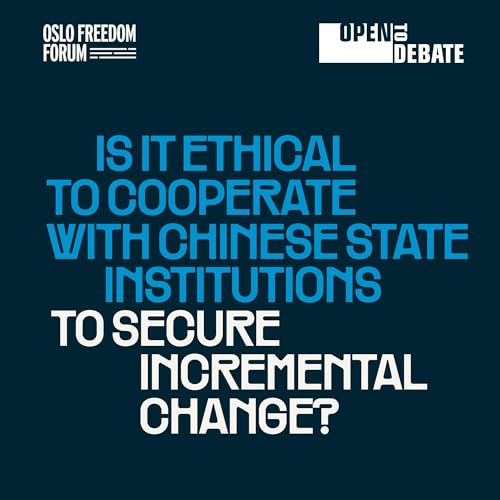
  • Is It Ethical To Cooperate With Chinese State Institutions To Secure Incremental Change?
    Jun 12 2026
    As democratic governments, universities, and civil society organizations grapple with how to engage China, an ethical question persists: should cooperation with Chinese state institutions, which involve every industry from education to commerce, be pursued as a pathway to gradual, meaningful progress, or does such engagement ultimately legitimize repression and undermine fundamental freedoms? In partnership with the Human Rights Foundation, we debate: Is It Ethical to Cooperate with Chinese State Institutions to Secure Incremental Change? Arguing Yes: Joanna Chiu, Managing Partner of Nüora Global Advisors; Author of "China Unbound" Arguing No: Isaac Stone Fish, CEO and Founder of Strategy Risks Emmy award-winning journalist John Donvan moderates Join the conversation on Substack—share your perspective on this episode and subscribe to our weekly newsletter for curated insights from our debaters, moderators, and staff. Follow us on YouTube, Instagram, LinkedIn, X, Facebook, and TikTok to stay connected with our mission and ongoing debates. Learn more about your ad choices. Visit podcastchoices.com/adchoices
    Show More Show Less
    53 mins
  • Should America End Birthright Citizenship?
    Jun 5 2026
    Birthright citizenship guarantees citizenship to anyone born within the United States’ territory, regardless of a parent’s nationality. But should this legal principle be removed from the Constitution? Those arguing it shouldn’t say that it prevents children from being punished for their parents’ status, while encouraging long-term economic and civic contributions. But those calling to end the practice argue it fuels illegal immigration and strains the overburdened immigration system. Now, we debate: Should America End Birthright Citizenship? This ethical conundrum is at the crux of this week's debate, originally broadcast in October 2025. Arguing Yes: Mark Krikorian, Executive Director of the Center for Immigration Studies Horace Cooper, Senior Fellow at the National Center for Public Policy Research; Chairman of the Project 21 National Advisory Board Arguing No: Kris Mayes, Arizona Attorney General Chris Newman, Legal Director of the National Day Laborer Organizing Network (NDLON) Emmy award-winning journalist John Donvan moderates Join the conversation on Substack - share your perspective on this episode and subscribe to our weekly newsletter for curated insights from our debaters, moderators, and staff. Follow us on YouTube, Instagram, LinkedIn, X, Facebook, and TikTok to stay connected with our mission and ongoing debates. Learn more about your ad choices. Visit podcastchoices.com/adchoices
    Show More Show Less
    53 mins
  • Generational Divides with Nick Gillespie: Are the Parents Alright?
    May 29 2026
    These days, it can feel like raising kids has become a minefield. Somewhere along the way, older generations started looking at younger generations and asking, “Are the parents alright?” In this episode of “Generational Divides", Reason editor-at-large Nick Gillespie and parents from three generations tackle some of the thorniest questions in modern parenting around social media, gentle parenting, and whether kids should be free to roam. Our Guests: For Baby Boomers: Lenore Skenazy, Co-founder of the Free-Range Kids movement For Gen X: Reshma Saujani, Founder of Girls Who Code; CEO of Moms First For Millennials: Kristin Gallant, Co-founder of Big Little Feelings Nick Gillespie, Editor-at-Large at Reason, is the guest moderator. Join the conversation on Substack - share your perspective on this episode and subscribe to our weekly newsletter for curated insights from our debaters, moderators, and staff. Follow us on YouTube, Instagram, LinkedIn, X, Facebook, and TikTok to stay connected with our mission and ongoing debates. Learn more about your ad choices. Visit podcastchoices.com/adchoices
    Show More Show Less
    53 mins
  • Government as Shareholder: Proactive Competitive Strategy or Last Resort?
    May 22 2026
    Global powers are increasingly shaping markets and taking equity positions in strategic industries. But recently, Washington’s role in the economy has expanded, with stakes in companies like Intel, different from its traditionally hands-off approach. Could strategic government investment be a source of strength and competitiveness—or should it remain a true last resort, preserving a system that allows markets to determine winners and losers? We debate: Government as Shareholder: Proactive Competitive Strategy or Last Resort? This debate was created in partnership with the Council on Foreign Relations and was recorded on May 18, 2026, at 6 PM. Arguing "Proactive Competitive Strategy": Laura Taylor-Kale, Senior Fellow for Geoeconomics and Defense at the Council of Foreign Relations and Former Assistant Secretary of Defense for Industrial Base Policy Richard Falkenrath, Senior Fellow for National Security at the Council on Foreign Relations; MJ Chung Distinguished Chair at the School of Advanced International Studies at Johns Hopkins University Arguing "Last Resort": Bob Pozen, Distinguished Senior Lecturer at MIT Sloan School of Management; Former President of Fidelity Investments Yasheng Huang, Epoch Foundation Professor of Global Economics and Management at the MIT Sloan School of Management; Author of "The Rise and the Fall of the EAST” Emmy award-winning journalist John Donvan moderates Join the conversation on Substack - share your perspective on this episode and subscribe to our weekly newsletter for curated insights from our debaters, moderators, and staff. Follow us on YouTube, Instagram, LinkedIn, X, Facebook, and TikTok to stay connected with our mission and ongoing debates. Learn more about your ad choices. Visit podcastchoices.com/adchoices
    Show More Show Less
    53 mins
  • Is the Scientific Enterprise Too Risk-Averse?
    May 14 2026
    Modern science has given us the ability to edit our genes, life-saving vaccines, and glimpse the origins of the universe. But is the same system holding itself back? Critics argue that the pressure to publish and fierce competition for funding rewards safe, incremental work over bold thinking. Others see a system still capable of paradigm-shifting discoveries — one where global collaborations and long-term thinking motivate scientists to pursue grand, ambitious ideas. Now we debate: Is the Scientific Enterprise Too Risk-Averse? This debate was produced in partnership with the Stavros Niarchos Foundation (SNF) Agora Institute at Johns Hopkins University, as part of The Hopkins Forum series. Arguing Yes: Tyler Cowen, Author of "The Great Stagnation"; Economics Professor at George Mason University; Founder of Emergent Ventures; Host of "Conversations with Tyler" podcast Brandon Ogbunu, Computational Biologist; Associate Professor of Ecology and Evolutionary Biology at Yale University; Professor at the Santa Fe Institute Arguing No: Kate Biberdorf (“Kate the Chemist”), Professor for the Public Understanding of Science and the Department of Chemistry & Biochemistry at the University of Notre Dame; Science Entertainer The Honorable Sethuraman Panchanathan, 15th Director of the National Science Foundation; University Professor of Technology and Innovation and Foundation Chair at Arizona State University Emmy award-winning journalist John Donvan moderates Join the conversation on Substack—share your perspective on this episode and subscribe to our weekly newsletter for curated insights from our debaters, moderators, and staff. Follow us on YouTube, Instagram, LinkedIn, X, Facebook, and TikTok to stay connected with our mission and ongoing debates. Learn more about your ad choices. Visit podcastchoices.com/adchoices
    Show More Show Less
    53 mins
  • Should Museums Repatriate Cultural Artifacts?
    May 7 2026
    For centuries, museums in Europe and the U.S. built their collections during eras of empire and unequal power. Now, institutions face growing calls to return artifacts taken through colonial rule or war, from the Benin Bronzes to Indigenous objects. Supporters say repatriation corrects historical injustice and restores sacred objects to their communities. Critics argue that museums serve a global public and that these works represent shared human heritage. Now we debate: Should Museums Repatriate Cultural Artifacts? Arguing Yes: Chika Okeke-Agulu, Artist, Curator, and Professor of Art and Archaeology and African American Studies at Princeton University Leila Amineddoleh, Art and Cultural Heritage Lawyer; Chair of the Firm’s Art Law Group at Tarter Krinsky & Drogin Arguing No: Dominic Selwood, Historian, Author, Journalist, and Barrister Mario Trabucco della Torretta, Classical Archaeologist Emmy award-winning journalist John Donvan moderates Join the conversation on Substack - share your perspective on this episode and subscribe to our weekly newsletter for curated insights from our debaters, moderators, and staff. Follow us on YouTube, Instagram, LinkedIn, X, Facebook, and TikTok to stay connected with our mission and ongoing debates. Learn more about your ad choices. Visit podcastchoices.com/adchoices
    Show More Show Less
    53 mins