• Play & Belonging For All: The London Children’s Museum
    Feb 9 2026

    Today, we're chatting with Vanessa Eastmure & Jessie Collins from the London Children's Museum - the masterminds behind the museum's redesign, focused on making it a welcoming haven for all kids, whether neurodiverse or neurotypical.

    Throughout our conversation, we explore how they've created a space that’s all about accessibility and inclusion for all families. We learn about their awesome sensory-friendly evenings, new exhibits, special events, and much more! So, grab your headphones, kick back, and let’s dive into how the London Children's Museum is making play & learning accessible for all!

    Timestamps:

    (01:28) - Welcome

    (01:54) - Meet Vanessa & Jessie

    (08:55) - Accessibility and Inclusion at the museum

    (16:52) - Creating Inclusive Spaces:

    (20:26) - Sensory Friendly Evenings

    (27:52) - Designing for Accessibility and Predictability

    (32:55) - Evaluating Community Feedback and Design Improvements

    (46:21) - What To Know Before Coming

    Mentioned In This Episode:

    Follow the London Children's Museum on Instagram: @londonchildrensmuseum

    For questions about the London Children’s Museum, reach out to info@londonchildrensmuseum.ca

    Special thanks to:

    Mira Noordermeer, Director of Marketing & Visitor Services

    Vanessa Eastmure, Director of Exhibits and Visitor Experience

    Jessie Collins, Director of Education

    The London Children’s Museum was designed with all types of families in mind. For more information about their quiet rooms, free sensory-friendly evenings, adventure backpacks, sensory & visual supports and more, visit: https://www.londonchildrensmuseum.ca/accessibility

    ****

    Visit The Sensory Supply for the best in sensory products to soothe, stimulate, and inspire.

    Learn about our clinic Elemenoe where we work to reach milestones together through speech, language, behaviour & learning.

    Visit neurodiversallyspeaking.com for all podcast & show info:

    Follow us:

    1. Instagram
    2. Facebook
    3. X
    4. YouTube
    5. TikTok

    Contact:

    Have a question or a topic that you'd love to hear on the show? Get in touch with us at hello@neurodiversallyspeaking.com

    Show More Show Less
    54 mins
  • Motherness: Julie M. Green on Parenting & Autism
    Jan 26 2026

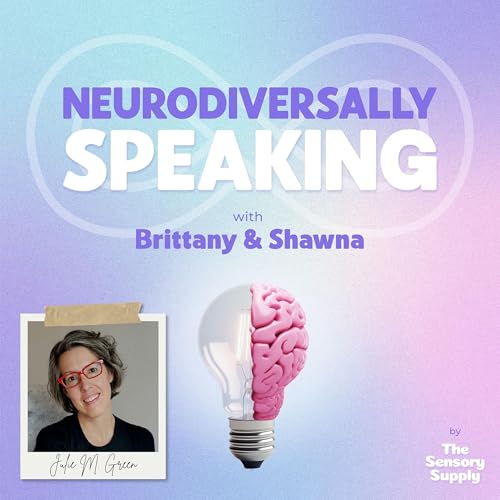
    Today, we're speaking with a very exciting guest - author Julie M. Green!

    Julie M. Green is the author of Motherness, a memoir of generational autism, parenthood, and radical acceptance (ECW Press, 2025). In 2024, she was a finalist for the CBC Nonfiction Prize. Her writing has appeared in the Washington Post, Globe and Mail, HuffPost, Parents, Chatelaine, CBC, Today's Parent, and more. She also writes The Autistic Mom on Substack.

    Throughout our conversation with Julie, we discuss her parenting journey to her autistic son and as a late-diagnosed autistic adult. We peel-back the complexities of parenting and the emotional rollercoaster it brings, especially when navigating both autism and motherhood. Learn all about her memoir "Motherness" - available now! - where she shares her candid reflections on the messy, often overwhelming realities of raising a neurodivergent child while wrestling with her own late diagnosis. There’s a ton of relatable wisdom packed in here, from the struggles of societal expectations to the brutal honesty of mental load that many parents carry. So, whether you’re a parent, a professional, or just someone trying to figure out this wild ride called life, buckle up - this one is for you!

    Timestamps:

    (01:34) - Welcome

    (03:16) - Welcome Julie!

    (07:35) - The Journey of Writing Motherness

    (16:54) - The Complexity of Parenting a Neurodivergent Child

    (24:21) - Navigating the Challenges of Autism Diagnosis and Acceptance

    (28:33) - Challenges of Caregiving for Neurodivergent Children

    (37:42) - Education and Support for Children with Disabilities

    (44:07) - Understanding Developmental Differences in Children

    (51:54) - Navigating Parental Guilt and Growth

    (56:31) - Neurodiversity in Parenting

    (01:06:45) - Community for Neurodivergent Teens

    (01:17:41) - Parenthood During Tough Times

    Mentioned In This Episode:

    Where To Find Julie:

    1. IG: @juliem.green
    2. Substack: The Autistic Mom
    3. Website: juliemgreen.ca

    Julie's Book: Motherness: a Memoir of Generational Autism, Parenthood, and Radical Acceptance

    *Disclaimer: At the time of recording this episode, Julie's son Carson used he/him pronouns.

    The Spoon Theory:

    The Spoon Theory is a metaphor for managing limited energy, particularly for people with chronic illness, neurodivergence, or caregiving responsibilities. Each “spoon” represents a unit of energy or capacity for the day, and once your spoons are used up, you need to rest before you have more to give. The concept helps explain why individuals sometimes have to prioritize tasks, activities, or social interactions, and why energy can feel finite or quickly depleted.

    Brief History of Asperger’s Syndrome:

    Asperger’s syndrome was a diagnostic term used to describe...

    Show More Show Less
    1 hr and 23 mins
  • Big Feelings: Emotional Regulation At Home
    Jan 12 2026

    The holidays & new year can be a time of emotional highs and lows, so today, we're diving into the topic of young ones grappling with "big feelings" - whether neurodiverse or neurotypical!

    We kick things off by emphasizing the importance of recognizing the subtle signs that precede emotional outbursts—because there's usually a whole lot brewing before the storm hits. With a blend of our real-life moments and professional insights, we'll share our experiences as moms and clinicians dealing with emotional rollercoasters, whether it’s a joyous moment or a meltdown. We'll also highlight the need for parents and professionals to adopt a curious mindset, spotting those precursor behaviours, and using practical strategies to help kiddos navigate their emotions. If you’re a parent or working with young ones, this episode is packed with relatable stories and actionable tips to better support those wild emotional waves!

    Timestamps:

    (01:31) - Welcome

    (04:39) - Inspiration For This Episode: Biting At Home

    (11:43) - In The Moment Teaching

    (23:38) - Strategies For Emotion Regulation

    (34:45) - Understanding Big Feelings In Neurodivergent Learners

    (57:22) - Coaching Strategies for Older Kids

    (01:03:57) - Book: The Fantastic Elastic Brain

    Mentioned In This Episode:

    1. Your Fantastic Elastic Brain by JoAnn Deak - This engaging picture book introduces children to the concept of neuroplasticity, explaining how the brain can grow and change through learning and experience. It's a great resource for fostering a growth mindset and helping kids understand that mistakes are part of the learning process.
    2. I Just Don't Like the Sound of NO! by Julia Cook - A part of the "Best Me I Can Be!" series, this book helps children understand the importance of accepting "no" for an answer and the value of patience and respect. It's a great tool for teaching emotional regulation in situations where children might feel frustrated or upset.
    3. Wilma Jean the Worry Machine by Julia Cook - This book addresses anxiety and worry in children, providing strategies for managing these emotions. It's particularly helpful for children who tend to overthink or become anxious in new or challenging situations.
    4. I'm Stretched! by Julia Cook - This book discusses the feeling of being overwhelmed and provides strategies for managing stress and finding balance. It's a great resource for children who have difficulty handling multiple demands or transitions.
    5. I Think I Think a Lot by Jessica Whipple (2023) - This picture book delves into the experience of overthinking, portraying it as a chaotic swirl of thoughts. It provides a metaphorical approach to understanding obsessive thoughts, making it accessible for children to grasp the concept of mental overload.
    6. My Brain Is a Race Car by Nell Harris (2023) - Utilizing the metaphor of a race car, this book explains how the neurodivergent brain processes experiences differently. It offers self-regulation tools in a fun, rhyming format, aiming to open conversations about managing emotions and behaviours.
    7. Flamingo Boy by Michael Morpurgo (2018) - Set during World War II, this novel follows Lorenzo, an autistic boy living on a farm...
    Show More Show Less
    1 hr and 11 mins
  • Inclusivity At Scale: w/ Meg Raby of KultureCity
    Dec 29 2025

    Time for a guest we're so excited about. In this episode, we'll be sitting down with Meg Raby of Kulture City to discuss all things inclusivity!

    Meg Raby is an autistic female, pediatric speech-language pathologist (SLP) and neurodivergent advocate, writer of the children's book series "My Brother Otto", and a regular contributor to "Scary Mommy". She writes about life, love, family dynamics and hustling for an inclusive world for other neurodivergent children and adults while working full-time for global leading nonprofit, KultureCity, alongside an unstoppable, diverse team of like-minded individuals.

    KultureCity is all about making sure that every individual, no matter their sensory needs, feels like they belong, and Meg is leading the charge with her work there. Throughout our conversation, we discuss ground-breaking initiatives at KultureCity, Meg’s background and work as an author, and much more! Meg's insights aren't just heartwarming but also packed with practical tips for parents and communities. So, if you’re looking to shift from just awareness to real inclusion & acceptance, grab a comfy seat and tune in, because this chat is gonna spark some serious joy!

    Timestamps:

    (01:36) - Welcome & Life Updates

    (02:16) - Today's Topic

    (05:21) - Introduction To Meg

    (06:43) - Meet Meg

    (17:41) - The Mission of KultureCity

    (27:38) - Setting The Table Of Hospitality

    (36:03) - KultureCity App w/ Koji

    (43:45) - KultureCity's Newest Exciting Project

    (56:44) - Understanding Inclusion and Awareness

    (01:08:30) - Barriers to Inclusion

    Mentioned In This Episode:

    Meg's Socials:

    1. IG - @author.meg.raby - https://www.instagram.com/author.meg.raby/
    2. FB - Author Meg Raby - https://www.facebook.com/meg.raby.5
    3. LinkedIn - Meg Raby Klinghoffer - https://www.linkedin.com/in/meg-raby-klinghoffer-934a89269/

    KultureCity Socials:

    1. IG - @kulturecity - https://www.instagram.com/kulturecity/
    2. FB - @kulturecity - https://www.facebook.com/kulturecity

    Meg’s children’s books:

    1. My Brother Otto https://amzn.to/47Pzykt
    2. My Brother Otto and the Birthday Party https://amzn.to/49aKYSp

    Meg shared about her ASD diagnosis and the link with Ehlers-Danlos, for more information see: https://www.ehlers-danlos.com/what-is-eds/

    Show More Show Less
    1 hr and 15 mins
  • "Bad" Behaviour: What Are Kids Really Telling Us?
    Dec 15 2025

    For our next episode, we get into the nitty-gritty of so-called “bad” behaviour in neurodiverse kids, emphasizing that there are no bad kids—just unmet needs.

    We'll break down how to identify and tackle these behaviours both at home and in clinical settings, offering practical tips for parents and professionals alike. With a mix of personal anecdotes and clinical insights, we'll highlight the importance of understanding the underlying reasons behind a child's actions rather than simply labelling them as “bad.” Whether it's figuring out how to manage hitting between siblings or navigating the complexities of communication, we've got you covered with strategies that promote empathy and effective intervention. So grab your headphones and get ready to learn how to turn those challenging moments into opportunities for growth!

    Timestamps:

    (01:10) - Welcome

    (06:50) - Unmet Needs Behind Actions

    (19:53) - Friman: No Such Thing As A "Bad" Boy

    (33:38) - The Importance of Skill Building and Reinforcement

    (46:19) - Balancing Feedback for Neurodiverse Children

    (52:00) - Tips When Dealing With "Bad" Behaviour

    (01:03:51) - Creating Predictability for Children

    Mentioned In This Episode:

    Articles:

    • Chan, C. Y. Z., Williams, K., May, T., Wan, W. H., & Brignell, A. (2023). Is language ability associated with behaviours of concern in autism? A systematic review. Autism Research, 16(2), 250–270
    • Friman, P. C. (2021). There is no such thing as a bad boy: The Circumstances View of problem behavior. Journal of Applied Behavior Analysis, 54(2), 703–715

    Blogs:

    • Fostering Positive Behaviour in Children with a "Caught Ya Being Good” Jar

    ****

    Visit The Sensory Supply for the best in sensory products to soothe, stimulate, and inspire.

    Learn about our clinic Elemenoe where we work to reach milestones together through speech, language, behaviour & learning.

    Visit neurodiversallyspeaking.com for all podcast & show info:

    Follow us:

    • Instagram
    • Facebook
    • X
    • YouTube
    • TikTok

    Contact:

    Have a question or a topic that you'd love to hear on the show? Get in touch with us at hello@neurodiversallyspeaking.com

    Show More Show Less
    1 hr and 12 mins
  • Communication: More Than Just Words!
    Dec 1 2025

    Today, we're talking all about communication! Get ready to dive into what really counts as communication, especially for our neurodiverse kiddos.

    In this episode, we'll share our experiences as both clinicians and mothers, breaking down the myth that if a child isn’t talking, they aren't communicating. From pointing and tantrums to those adorable first sounds, we'll explore how every little expression matters and how we can support our little ones in their unique communication journeys. Plus, we'll sprinkle in some personal stories that make it all feel relatable and real. So settle in, and let's prepare to unpack the beautiful messiness of communication together!

    Timestamps:

    (01:32) - Welcome

    (04:30) - Introduction To Early Communication

    (09:05) - One Of The Biggest Myths

    (14:10) - Function & Form

    (21:25) - Milestones In Communication

    (35:24) - Communication In The SLP/BA Fields

    (45:43) - The Importance of Connection in Communication

    (50:43) - Myth Busted: "All Behaviour Is Communication"

    Articles Mentioned In This Episode:

    • Greer, R. D. (2005). The evolution of verbal behavior in children. Behavioral Development Bulletin, 1(1), 31–47
    • Conceição, D. B., Greer, R. D., & Moschella, J. L. (2022). A general outline of the verbal behavior developmental theory. Revista Brasileira de Terapia Comportamental e Cognitiva, 24, 1–39

    Resources For Parents:

    • LookSee
    • M-CHAT

    ****

    Visit The Sensory Supply for the best in sensory products to soothe, stimulate, and inspire.

    Learn about our clinic Elemenoe where we work to reach milestones together through speech, language, behaviour & learning.

    Visit neurodiversallyspeaking.com for all podcast & show info:

    Follow us:

    • Instagram
    • Facebook
    • X
    • YouTube
    • TikTok

    Contact:

    Have a question or a topic that you'd love to hear on the show? Get in touch with us at hello@neurodiversallyspeaking.com

    Show More Show Less
    59 mins
  • The Power Of Lived Experience: w/ Autism Canada
    Nov 17 2025

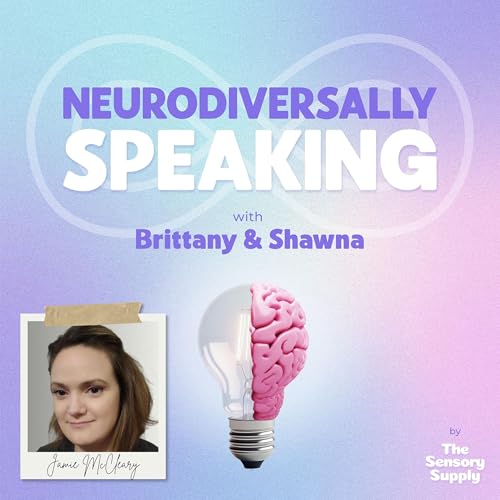
    Join us as we chat with Jamie McCleary, the Executive Director of Autism Canada. Throughout this episode, she shares insights on her personal journey as both an autistic professional and a mom to a neurodiverse family while also shedding light on the amazing resources offered by Autism Canada for families & autistic individuals across Canada.

    She kicks things off by diving into the challenges of navigating corporate environments while being true to herself. We chat about masking, how it impacts daily life, early/late diagnoses, and the resources Autism Canada offers to support individuals and families across Canada. Jamie’s insights are authentic & valuable, especially for anyone trying to figure out the complexities of autism—whether you’re a parent, a professional, or just someone curious about the experience. So, grab a comfy seat and get ready for a heartwarming and eye-opening conversation with Jamie McCleary. This conversation reminds us that representation isn’t optional — it’s essential.

    Timestamps:

    (01:28) - Welcome

    (02:15) - Understanding Masking in Neurodiversity & Autism

    (15:24) - Late Diagnoses

    (22:56) - Navigating Parenting with Neurodivergent Children

    (36:01) - Autism Canada Resources for Families

    (44:56) - Community Assistance Program

    (59:10) - Living In a World Not Designed For The Neurodiverse

    Autism Canada Resources Mentioned In This Episode:

    • Literacy program
    • National Support Line for the Autistic and Neurodivergent Community
    • Autism Junction
    • Funding (by province)
    • Community Assistance Program (CAP)
    • Publications

    ****

    Visit The Sensory Supply for the best in sensory products to soothe, stimulate, and inspire.

    Learn about our clinic Elemenoe where we work to reach milestones together through speech, language, behaviour & learning.

    Visit neurodiversallyspeaking.com for all podcast & show info:

    Follow us:

    • Instagram
    • Facebook
    • X
    • YouTube
    • TikTok

    Contact:

    Have a question or a topic that you'd love to hear on the show? Get in touch with us at hello@neurodiversallyspeaking.com

    Show More Show Less
    1 hr and 2 mins
  • Play Is The Point
    Nov 3 2025

    Today, we're jumping into the world of play and its crucial role in helping both neurodiverse and neurotypical kids learn & thrive. We'll kick off by emphasizing that play isn’t just a fun pastime; it’s a powerful tool for learning, behaviour development, emotional regulation and communication.

    Throughout our chat, you’ll hear some real talk about the difference between child-led and adult-directed play, and why following a kiddo's lead can unlock their potential in ways structured activities just can’t. Using our experiences as mothers and clinicians, we'll share practical tips and strategies that make playtime a learning opportunity, packed with joy and connection.

    By the end of this episode, you'll feel empowered to create playful learning opportunities that will make a lasting impact on your children’s development. So, grab your favorite toy, and let’s get into how we can turn play into a bridge for communication!

    Timestamps:

    (01:25) - Welcome

    (01:59) - Episode Learning Objectives

    (05:05) - Have Fun & Be Silly

    (06:09) - "Play is anything that sparks joy"

    (18:30) - Identifying Joyful Moments

    (26:30) - Understanding Adult Directed vs Child Led Play

    (36:57) - Understanding Social Reciprocity in Communication

    (44:20) - Understanding Verbal Behaviour Development Theory

    (50:34) - The Importance of Context in Learning

    (59:33) - Special Guests!

    Articles Mentioned In This Episode:

    • Tamara Kasper (SLP + BCBA)
    • Akhbari Ziegler, S., & Hadders-Algra, M. (2020). "Coaching approaches in early intervention and paediatric rehabilitation." Developmental Medicine & Child Neurology. DOI: 10.1111/dmcn.14493.
    • Elbeltagi, R., Al-Beltagi, M., Saeed, N. K., & Alhawamdeh, R. (2023). "Play therapy in children with autism: Its role, implications, and limitations." World Journal of Clinical Pediatrics, 12(1), 1-22. DOI: 10.5409/wjcp.v12.i1.1.
    • Greer, R. Douglas, Jessica Dudek, and Hung Chang. "Observation, Language Learning, and Development: The Verbal Behavior Development Theory." The Psychological Record (2024). DOI: 10.1007/s40732-024-00585-1.

    ****

    Visit The Sensory Supply for the best in sensory products to soothe, stimulate, and inspire.

    Learn about our clinic Elemenoe where we work to reach milestones together through speech, language, behaviour & learning.

    Visit neurodiversallyspeaking.com for all podcast & show info:

    Follow us:

    • Instagram
    • Facebook
    • X
    • YouTube
    • TikTok

    Contact:

    Have a question or a topic that you'd love to hear on the...

    Show More Show Less
    1 hr