• Relevance means presence 🌱 Hugo Pereira
    May 24 2026

    Hugo Pereira thinks a lot of people are struggling with a version of work that no longer feels stable. He has spent the last decade moving through startups, scale-ups, international expansion, leadership, and now a portfolio career, while watching technology move faster than most companies or careers can comfortably absorb.

    That perspective makes this conversation especially useful right now. Hugo is not talking about AI from the outside. He is building with it, testing workflows, rethinking how teams operate, and trying to understand what still matters when software gets cheaper, faster, and easier to produce. He is also unusually honest about the human side of all this: the pressure of trying to stay adaptable without losing yourself in constant change.

    In this episode, we get into scaling across markets, what bad management looks like before teams break, why AI gives speed for free, and why curiosity and a builder mindset matter more than chasing every new tool.

    What we cover

    1️⃣ Speed without judgement

    Hugo explains why AI removes friction around execution but still leaves founders with the harder job of making better decisions.

    2️⃣ What international expansion exposes fast

    Germany forced a rethink at EVBox. This part gets into what breaks when companies move too quickly into new markets without understanding local reality.

    3️⃣ The management mistakes that show up before teams crack

    One of the strongest leadership points here is about promotion, clarity, and the damage caused when companies confuse strong individual performance with people leadership.

    4️⃣ Staying relevant by staying close to the change

    Hugo talks about protecting time to learn, experiment, think, and build rather than drifting into autopilot while the market moves.

    5️⃣ Why the builder mindset matters more now

    The edge is not just using new tools. It is staying hands-on enough to understand what they change, where they help, and what still needs real judgement.

    Chapters

    00:00 Introduction to Hugo Pereira

    02:07 Why career plans break faster now

    05:01 What failed startups actually teach you

    08:14 How EVBox scaled across Europe

    11:06 Why Germany breaks expansion plans

    14:09 Build an industry, not just a company

    17:12 Why most scale-ups ruin their positioning

    20:03 Stop asking marketing for more leads

    23:18 What bad management looks like early

    26:41 Why clarity matters more than trust

    30:02 Stop promoting your best performer

    33:14 Protect deep work before AI kills it

    36:08 AI gives speed for free

    39:27 The builder mindset is becoming essential

    43:02 Why more people will build for themselves

    47:18 AI is making companies leaner

    52:11 Relevance means presence

    Also mentioned in this episode:

    Hugo’s book, Teams In Hell: How To End Bad Management

    Hugo’s newsletter, The Fractional Dad

    Get more founder interviews and practical business lessons in the Millennial Masters newsletter at MillennialMasters.net

    Share this with someone building while the rules keep changing 🌍


    Get full access to Millennial Masters at millennialmasters.net/subscribe
    Show More Show Less
    1 hr and 4 mins
  • Why builders make bad entrepreneurs 🧱 Matt Watson
    May 11 2026

    Matt Watson has spent years building software companies, including Full Scale, where he helps businesses hire and manage software development teams. He is also the author of Product Driven, a book about turning product thinking into real business growth.

    That matters because Matt has lived close to the gap between making software and building a company people actually want. His warning feels especially useful now that AI has made product building look easier than ever. Shipping faster does not solve the harder parts of entrepreneurship. You still need to understand the customer, the market, the problem, the positioning, and why anyone should care enough to buy.

    In this episode, we get into why builders often struggle to become entrepreneurs, why product vision cannot be handed off, and what still matters when AI makes the first version easier to create.

    What we cover

    1️⃣ Why technical founders still get stuck on the commercial sideMatt explains how builders can stay busy improving the product while the real business problem stays untouched.

    2️⃣ The trap AI makes easier to fall intoBuilding is now faster, cheaper, and more addictive. This part gets into the danger of mistaking constant output for actual progress.

    3️⃣ Product vision that cannot be outsourcedIf the thinking stays vague in the founder’s head, the team ends up guessing. Matt talks through what clear product direction really requires.

    4️⃣ Why perfect code is the wrong obsessionSoftware changes, teams change, and standards move. The business cannot be built around the fantasy that the product will stay pristine forever.

    5️⃣ The loneliness that comes with building seriouslyThe episode also gets into founder isolation, changing relationships, and the need for people who understand the pressure without needing the whole backstory.

    Chapters

    00:00 Introduction to Matt Watson

    02:57 The birth of VinSolutions

    05:43 Growth, pressure, and early challenges

    08:11 Why he decided to sell

    10:19 The founder and CTO trap

    12:49 Scaling and delegation problems

    16:03 What AI changes in software development

    18:01 From engineers to developers

    19:42 Product Driven as a way of thinking

    22:04 The changing role of product management

    29:50 What technical debt actually does

    36:50 Leadership inside development teams

    44:52 From AI prototypes to scalable products

    46:32 AI in prototyping and development

    48:14 The code review problem

    51:43 Building trust in business relationships

    56:07 How exits affect personal relationships

    01:00:37 What entrepreneurship takes out of you

    Get more founder interviews and practical business lessons in the Millennial Masters newsletter at MillennialMasters.net

    Send this to a builder who still needs to learn how to sell 📤


    Get full access to Millennial Masters at millennialmasters.net/subscribe
    Show More Show Less
    1 hr and 5 mins
  • Don’t hire helpers, hire owners 👑 Gavin Bell
    May 4 2026

    Gavin Bell built and sold a paid media agency by the age of 30. From the start, he wanted the business to become sellable, which forced a different kind of thinking around hiring, delivery, and how much still depended on him.

    One of the clearest lessons from his exit is that founders often hire help when they really need ownership. A helper takes tasks off your plate. An owner takes responsibility for an outcome. That difference shapes how the business grows, how much pressure stays with the founder, and whether the company can ever run properly without you in the middle.

    In this episode, we get into building a business that someone would actually want to buy, why your first hires set the standard, and how founders keep slowing the company down without realising it.

    What we cover

    1️⃣ The difference between help and ownership

    Gavin explains why taking tasks off the founder’s plate is not enough if nobody is truly carrying responsibility for an outcome.

    2️⃣ What makes a service business easier to sell

    This part gets into systems, delivery, capacity planning, and the proof a buyer needs that the company can keep working when the founder leaves.

    3️⃣ Why founders need to understand the work first

    Doing the job yourself early on helps you recognise quality, judge capacity properly, and delegate with a much clearer standard.

    4️⃣ How approval habits create dependency

    Staying too close for too long teaches the team to keep coming back for sign-off, even when the founder thinks they are just protecting quality.

    5️⃣ Choosing a model that fits the life you want

    After selling Yatter, Gavin became clearer on the kind of business he did and did not want to build next.

    Chapters

    00:00 Intro to Gavin Bell

    01:46 From fitness to Facebook ads

    03:59 The scaling problems that showed up early

    06:57 Why he rebranded and built Yatter

    09:55 What the early Yatter years taught him

    12:34 Delegation, trust, and building a team

    15:20 Systemising delivery inside the agency

    17:48 How the acquisition process unfolded

    20:27 What changed in advertising over time

    22:39 AI, personalisation, and the future of ads

    26:14 The downside of hyper-personalised advertising

    33:41 Where social media and AI go next

    37:17 What he learned from building and exiting

    41:08 Starting a new venture in healthcare

    46:52 Personal brand and why it matters

    52:13 Building a business that works without you

    57:30 How AI fits into business operations

    Get more founder interviews and practical business lessons in the Millennial Masters newsletter at MillennialMasters.net

    Send this to someone stuck in delivery 🧱


    Get full access to Millennial Masters at millennialmasters.net/subscribe
    Show More Show Less
    1 hr and 5 mins
  • Investors don’t fund ideas 💸 James Church
    Apr 27 2026

    James Church sees what most founders miss about raising money. He works closely with companies going through the process, and the pattern is consistent. Founders focus on the pitch, the deck, and the story they want to tell. Investors are reading something else entirely.

    The decision starts forming long before the meeting. Your traction, your positioning, how clearly you explain the problem, and how you show up in the market all carry more weight than any polished slide. That is where a lot of founders get caught out. They treat fundraising like a moment instead of a process, and by the time they are pitching, much of the work that matters has already been done or neglected.

    In this episode, we get into how investors really make decisions, why fundraising is closer to sales than storytelling, when not to raise, and how to build the kind of trust that makes people want to back you before you even ask.

    James is offering Millennial Masters listeners his bestselling book, The Investable Entrepreneur, free via his website

    What we cover

    1️⃣ The signals investors read before the pitchJames explains why traction, positioning, and market credibility shape the decision earlier than most founders realise.

    2️⃣ What a polished deck cannot hideSlides help, but they do not fix weak fundamentals. This part gets into the gaps investors spot quickly when the business story does not hold up.

    3️⃣ Why fundraising behaves more like salesThe process is less about performance and more about helping someone get comfortable making a high-risk decision.

    4️⃣ Trust built before the askJames talks about the role of consistency, communication, and how founders show up over time when investors are deciding who they believe in.

    5️⃣ Knowing when funding is the wrong moveNot every company should raise. The episode looks at when outside capital creates more pressure than advantage.

    Chapters

    00:00 Introduction to James Church

    02:32 From graphic design to investment consulting

    05:25 Understanding the high-performance founder

    12:41 The art of investor engagement

    17:12 The journey of fundraising

    23:38 Timing your fundraising efforts

    35:51 Overcoming shyness and building confidence

    44:06 Networking and using existing connections

    49:33 Understanding angel investors and their expectations

    52:49 Navigating dilution and equity distribution

    01:02:41 When not to raise funds

    Get more founder interviews and practical business lessons in the Millennial Masters newsletter at MillennialMasters.net

    Share this with a founder chasing funding 📩


    Get full access to Millennial Masters at millennialmasters.net/subscribe
    Show More Show Less
    1 hr and 11 mins
  • Hire your army, don’t rent mercenaries ⚔️ Yannik Schrade
    Apr 19 2026

    Yannik Schrade thinks a lot of founders are too casual about what they outsource. He is the founder of Arcium, building privacy infrastructure at a time when AI is making software easier to build, easier to copy, and more exposed than most people realise.

    His view is simple: If your edge lives in the product, the knowledge, and the way the team works together, you cannot keep giving that away and expect to build a real moat.

    In this episode, we get into in-house teams versus outsourced work, privacy as a competitive advantage, how AI is changing software, and why founder taste matters more than technical skill on its own.

    What we cover

    1️⃣ The work that should stay inside the businessYannik makes the case for keeping the core knowledge, product thinking, and team learning close rather than letting too much of it sit outside.

    2️⃣ Why privacy can strengthen the productThis part gets into treating privacy as part of the offer itself, not just a legal or compliance issue sitting in the background.

    3️⃣ What cheaper AI tools are doing to softwareAs building gets faster and easier, copying gets easier too. Yannik talks through the risks that come with that shift.

    4️⃣ Founder taste as the thing that holds it togetherTechnical skill matters, but once products get more complex, judgement around what should exist and what is worth building starts to matter even more.

    5️⃣ Putting yourself in rooms where useful things happenThe conversation also gets into luck, exposure, and why more opportunities come from being in enough real situations for something unexpected to open up.

    Chapters

    00:00 Meet Yannik Schrade

    02:04 From apps to privacy infrastructure

    09:26 Why the old model stopped working

    18:14 Building Arcium around privacy

    25:44 Where financial systems go next

    27:01 What healthcare gets wrong about data

    27:46 The basics behind computational primitives

    28:42 AI, ethics, and privacy pressure

    29:39 Whether privacy can support a business model

    30:39 Funding privacy technology with VC money

    31:48 Fixing data silos in healthcare

    33:39 Why everyday apps should worry you

    36:05 Messaging apps and what secure really means

    39:38 Convenience versus privacy in AI tools

    41:38 Building a team that keeps the edge

    43:37 Putting yourself where luck can happen

    Get more founder interviews and practical business lessons in the Millennial Masters newsletter at MillennialMasters.net

    Know a founder still outsourcing their edge? Send them this episode ⚔️


    Get full access to Millennial Masters at millennialmasters.net/subscribe
    Show More Show Less
    46 mins
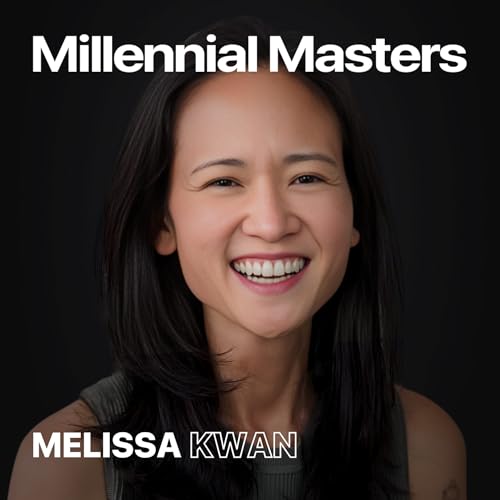
  • A good business can still trap you 🪤 Melissa Kwan
    Apr 14 2026

    Melissa Kwan has spent years building, selling, and starting again. By the time she launched eWebinar, she had a much clearer idea of what she wanted this time and what she was no longer willing to compromise on.

    For a while, it looked like it was working. Then growth slowed, old habits started creeping back in, and she realised the problem was not just effort or execution. It started earlier.

    Sometimes the market does not understand the problem the way you think it does, and no amount of pushing fixes that until the positioning gets clearer. In this episode, we get into lifestyle by design, founder drift, weak positioning, pricing, hiring, burnout, and the cost of staying too long in a business that no longer fits.

    What we cover

    1️⃣ When the business starts pulling you in the wrong direction

    Melissa talks about what happens when a company looks healthy on paper but keeps dragging you further from the life you were trying to build.

    2️⃣ Positioning problems that make everything heavier

    When the market does not quite understand what you are or why it matters, sales, marketing, and growth all get harder than they should be.

    3️⃣ Why more effort does not solve a message problem

    This part gets into the temptation to push harder when growth slows, and why that often misses the real commercial issue.

    4️⃣ How founder drift quietly builds up

    One compromise at a time, founders can end up carrying roles, pressures, and work they were never meant to keep doing.

    5️⃣ The cost of staying too long

    Melissa is clear on what happens when you keep forcing a setup that no longer fits, whether that is the offer, the pricing, the positioning, or the business itself.

    Chapters

    00:00 Meet Melissa Kwan

    01:50 Leaving corporate behind

    03:14 Building a business from zero

    07:21 Turning services into a product

    09:38 Bootstrapping, debt, and profitability

    12:40 Finding a model that fits

    15:38 What “lifestyle business” really means

    18:55 Choosing a problem you care about

    21:30 When sales is the wrong channel

    23:55 What stopped working in marketing

    26:47 The challenge she could not ignore

    29:29 Rethinking the identity of the business

    32:11 The inner work that changed everything

    41:41 Treating sales like a science

    43:26 Taking marketing back in-house

    45:42 Hiring without losing the culture

    47:15 Pricing mistakes and what they cost

    52:48 Getting to real product-market fit

    57:43 Building something you can sustain

    01:01:22 The sacrifices behind the freedom

    Get more founder interviews and practical business lessons in the Millennial Masters newsletter at MillennialMasters.net

    Share this with someone stuck on positioning 🟣


    Get full access to Millennial Masters at millennialmasters.net/subscribe
    Show More Show Less
    1 hr and 12 mins
  • Bad setup kills good AI ⚙️ Ben Tasker
    Apr 6 2026

    Ben Tasker works close to the part most companies would rather skip. He leads AI upskilling and reskilling at scale, helping tens of thousands of employees learn how to use these tools properly inside real organisations.

    His background spans data science, product, healthcare, education, and workforce transformation. That gives him a clearer view than most of where AI is genuinely helping and where it is making things worse. A lot of companies say they are investing in AI when what they really mean is they bought a tool, opened a few licences, and hoped for the best. Ben’s view is more grounded. Most AI projects fail because the basics are weak: poor data, weak guardrails, little training, no real change management, and no clear idea of what the tool should actually be doing.

    In this episode, we get into why AI is still misunderstood inside businesses, why treating it like simple automation causes problems, how leaders should think about upskilling, and what changes when junior work starts disappearing first.

    What we cover

    1️⃣ What AI is actually doing under the hood

    Ben explains why these systems are predicting rather than understanding, and why that matters when founders expect too much from weak prompts and vague instructions.

    2️⃣ The real reasons AI rollouts fail

    This part gets into poor setup, weak training, bad change management, and why buying a licence is not the same as changing how a business works.

    3️⃣ Where AI helps most inside a team

    The better use case is often augmentation rather than replacement. Ben talks through where stronger people can move faster and make better decisions with the right support.

    4️⃣ The messy data problem underneath the hype

    Bad systems, inconsistent inputs, and poor data hygiene still shape what AI can do well. The shiny layer does not fix that.

    5️⃣ What happens when junior work starts shrinking

    The episode also looks at entry-level roles, the pressure now hitting early-career work, and the skills people need if they want to stay useful through the shift.

    Chapters

    00:00 Introduction to Ben Tasker

    01:37 Data came before AI did

    03:27 ChatGPT changed what people think AI is

    06:16 Useful does not mean trustworthy

    09:33 AI is not the same as automation

    11:57 The right AI job depends on the size of the business

    14:52 AI can guide you, but it cannot think for you

    16:49 Start small before you break something bigger

    19:17 What to check before AI goes live

    21:21 Reviewing AI work without wasting time

    26:32 Advanced work still needs human judgement

    28:26 Human review is still doing the heavy lifting

    29:19 Bad data will break good AI

    33:10 AI skills are rising, human skills still matter

    35:44 Fear makes people resist AI before they learn it

    39:17 Junior roles are getting squeezed first

    43:15 The better move is augmentation, not replacement

    47:25 What businesses should do next with AI

    Get more founder interviews and practical business lessons in the Millennial Masters newsletter at MillennialMasters.net

    Send this to a founder using AI every day 📤


    Get full access to Millennial Masters at millennialmasters.net/subscribe
    Show More Show Less
    50 mins
  • Proving the sceptics wrong 🌙 Michelle Bell
    Mar 29 2026

    Michelle Bell did not stumble into this idea by accident. Before founding Cosmic Universe, she worked in journalism and SEO, watching in real time what people searched for, what they clicked, and what they kept coming back to. One pattern stood out. Astrology was not a side interest or a joke category. The demand was huge, the audience was engaged, and the market was much bigger than most people realised.

    That insight became Cosmic, a personality and connection platform built around astrology, compatibility, and live experiences. What sounds niche on paper has turned into something much more interesting in practice: a business sitting at the intersection of identity, loneliness, self-discovery, and how people now try to connect.

    In this episode, we get into why Michelle left journalism to build something of her own, what she saw in the data that others missed, and what it takes to build in a category many people still dismiss too quickly.

    What we cover

    1️⃣ The search signals that pointed to a real market

    Michelle explains how search demand revealed an audience with real intent long before astrology looked like an obvious business opportunity.

    2️⃣ Building in a category people dismiss

    Scepticism can put founders off too early. Michelle talks about seeing past that and focusing on whether the pull is real.

    3️⃣ What users were really looking for underneath the product

    The bigger opportunity was not just content. It was connection, compatibility, self-discovery, and the emotional needs users kept signalling.

    4️⃣ The pressure that comes with building alone

    This part gets into solo founder pressure, decision fatigue, and how to keep going when the weight sits with you.

    5️⃣ Motherhood, growth, and changing as the business changes

    The episode also looks at user behaviour, leadership, and what it means to keep building while your life keeps moving too.

    Chapters

    00:00 Introduction to Michelle Bell

    01:36 Journalism trained her for founder pressure

    04:24 She spotted a real astrology market

    08:15 A different answer to dating app fatigue

    10:45 Turning the app into live events

    13:02 People want connection but avoid the risk

    15:38 The pressure of being a solo founder

    18:39 Measuring meaningful connection

    20:57 Social media still drives growth

    23:21 What sceptics miss about astrology

    26:34 Why founders are wired differently

    29:12 When personality helps or hurts leadership

    30:43 Building a business through motherhood

    32:13 Building in a space people dismiss

    34:21 Community matters more than audience

    37:18 What power users do differently

    39:33 Motherhood, work, and constant adjustment

    43:12 New York, London, and raising children

    44:31 Why walking clears her head

    46:00 Growth means changing your mind

    47:55 The reality behind building a business

    Get more founder interviews and practical business lessons in the Millennial Masters newsletter at MillennialMasters.net

    Send this to someone sitting on an idea people doubt 📤


    Get full access to Millennial Masters at millennialmasters.net/subscribe
    Show More Show Less
    53 mins