Episodes

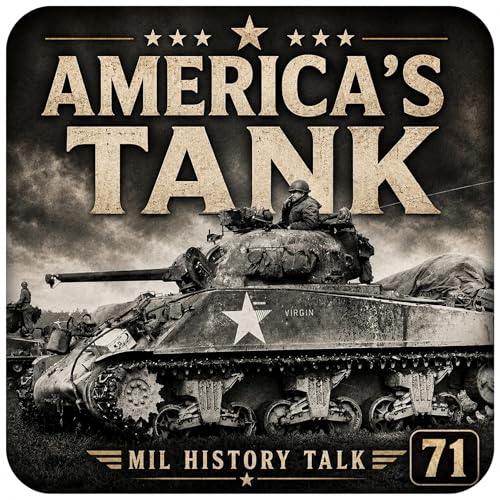
  • Episode 71: America's Tank: The M4 Sherman
    May 8 2026

    The M4 Sherman tank is one of the most famous — and misunderstood — armored vehicles in military history. In Episode 71 of Mil History Talk, Hope and Brian dive deep into the tank that became the backbone of American armored warfare in World War II. Was the Sherman really inferior to German tanks like the Tiger and Panther, or has internet mythology distorted the story?

    With humor, sharp analysis, and plenty of banter, the hosts explore the Sherman’s design philosophy, reliability, mobility, logistics, crew experience, and battlefield performance. They explain why wars are won by systems, sustainment, and adaptability — not just armor thickness and giant guns.

    From North Africa to Normandy, the Sherman helped power Allied victory through industrial scale and operational flexibility. If you love military history, armored warfare, or just want to hear Hope bully Tiger fanboys while Brian calmly restores historical sanity, this episode is for you.

    Show More Show Less
    20 mins
  • Episode 70: The Battle of Kasserine Pass
    May 1 2026

    Episode 70 dives into one of the U.S. Army’s most sobering early experiences in World War II—The Battle of Kasserine Pass. Hope and Brian break down how a newly arrived and untested American force ran headlong into a seasoned German army under Erwin Rommel—and what happened next wasn’t pretty.

    This isn’t just a story of defeat—it’s a case study in what happens when doctrine, leadership, and battlefield reality collide. From dispersed American positions to confused command relationships and piecemeal counterattacks, the episode explores how friction, in the Clausewitzian sense (yes, Hope insisted), turned a bad situation into a near disaster.

    But here’s the twist: Kasserine didn’t break the U.S. Army—it forced it to adapt. Brian walks through the leadership changes, tactical adjustments, and institutional learning that followed, while Hope connects it all to the broader theme of how organizations learn under pressure (and sometimes only after getting punched in the face).

    If you want to understand why early failure can be the foundation of later success, this episode delivers.

    Follow us:
    📘 Facebook: https://www.facebook.com/MilHistoryTalk
    📰 Substack: https://milhistorytalk.substack.com

    Show More Show Less
    11 mins
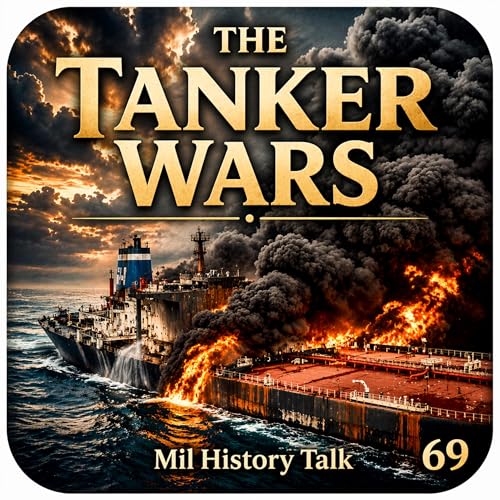
  • Episode 69: The Tanker War
    Apr 15 2026

    Episode 69 dives into the Tanker War (1984–1988)—a brutal maritime phase of the Iran-Iraq War that transformed the Persian Gulf into one of the most dangerous waterways on earth. Hope and Brian walk through the conflict chronologically, from Iraq’s opening strikes on oil shipping to Iran’s asymmetric response using mines and small boat attacks. The episode unpacks major flashpoints including the USS Stark missile strike, the mining of USS Samuel B. Roberts, Operation Praying Mantis, and the tragic shootdown of Iran Air Flight 655. Along the way, they explore how economic warfare, constrained geography, and escalation risks shaped U.S. naval operations.

    More than history, this episode reveals enduring lessons about sea control, maritime vulnerability, and how modern wars are fought through systems—not just ships and armies.

    Follow us for more:
    Substack: https://milhistorytalk.substack.com
    Facebook: https://www.facebook.com/milhistorytalk

    Show More Show Less
    14 mins
  • Episode 68: The 2025 Academy of Military Film Awards
    Apr 6 2026

    Step onto the red carpet with Mil History Talk as Hope and Brian host the Academy of Military Film Awards 2025—where Hollywood spectacle meets the hard truths of military history. From iconic war films to over-the-top action blockbusters, they break down what movies get right, what they completely invent, and why we keep watching anyway. Hope brings sharp wit and pop culture flair (yes, Clausewitz gets a cameo), while Brian delivers grounded analysis shaped by real-world experience. Together, they hand out awards for realism, leadership, chaos, and pure cinematic drama. Expect laughs, debates, and a few hard truths about how war is portrayed on screen. Whether you're a history buff, film fan, or just here for the hot takes, this episode pulls back the curtain on the stories we tell about war—and what they reveal about us.

    History isn’t just remembered—it’s performed. Let’s roll film.

    Show More Show Less
    19 mins
  • Episode 67: The Strategic Imperative of Urban Warfare
    Mar 31 2026

    Why do armies keep fighting in cities—even when it’s the worst place imaginable to wage war?

    In Episode 67, Hope and Brian break down the uncomfortable truth: urban warfare isn’t a mistake—it’s inevitable. From ancient sieges like Tyre to modern battles in Baghdad, cities have always concentrated what matters most—power, people, and control. And today, with more than half the world’s population living in sprawling urban environments, that reality is more decisive than ever.

    Hope brings the energy, humor, and pop culture analogies (yes, Clausewitz makes an appearance), while Brian grounds the conversation with sharp analysis and real-world perspective. Together, they unpack why you can win every battle and still lose the war—if you don’t take the city.

    Because in war, you don’t choose the terrain.

    Show More Show Less
    17 mins
  • Episode 66: Book Review: The Luftwaffe Reading List
    Mar 27 2026

    In this special Episode 66 of Mil History Talk, Hope and Brian test out some new equipment upgrades while diving into one of WWII’s most fascinating case studies—the rise and collapse of the Luftwaffe. From foundational analytical works to firsthand pilot memoirs, they break down ten essential books that explain not just what happened, but why it mattered.

    Along the way, the Book Review Desk sparks a lively debate: how do you include Hans-Ulrich Rudel’s Stuka Pilot and initially leave out Adolf Galland’s The First and the Last? The discussion highlights the tension between dramatic individual experience and deeper institutional analysis—one of the key themes of the episode.

    If you want to understand airpower, leadership, and why early success doesn’t guarantee long-term victory, this list is your starting point.

    Substack: https://milhistorytalk.substack.com
    Facebook: https://www.facebook.com/milhistorytalk

    Show More Show Less
    15 mins
  • Episode 65: The Challenge of Resistance in Nazi Germany
    Mar 24 2026

    In this episode of Mil History Talk, Hope and Brian tackle a deeper question beneath history’s most dramatic moments: why revolts don’t happen—even when opposition is widespread. Using Nazi Germany as a case study, they move beyond assumptions about courage or willpower and instead examine the structural conditions that make collective resistance possible—or impossible.

    From the early dismantling of institutions in 1933 to the pervasive climate of fear, surveillance, and mistrust, the episode shows how the regime didn’t just suppress dissent—it eliminated the very mechanisms required for people to organize, coordinate, and act together. The discussion builds toward the July 20 plot, revealing why even a well-planned, high-level assassination attempt failed to trigger broader change.

    This is not a story about the absence of opposition—but about the absence of structure. A powerful exploration of how systems shape human behavior—and why even widespread resistance can fail to become revolt.


    Episode 65 – Why Revolts Fail: Nazi Germany as a Case Study

    In this episode of Mil History Talk, Hope and Titan take on a deceptively simple question: why don’t people revolt—even when they oppose the system they live under? Using Nazi Germany as a case study, they move past the idea that resistance is just about courage and instead focus on the structural reality that makes collective action possible—or prevents it entirely.

    From the rapid dismantling of institutions in 1933 to the spread of fear, surveillance, and social mistrust, the episode reveals how the regime didn’t just crush opposition—it removed the conditions required for opposition to scale. The discussion builds to the July 20 plot, showing why even a coordinated, high-level attempt to kill Hitler failed—not just as a plan, but as a catalyst for wider revolt.

    This episode reframes one of history’s most important questions:
    The absence of revolt isn’t proof of support—it’s often proof of constraint.

    📘 Follow & join the discussion on Facebook:
    https://www.facebook.com/profile.php?id=61587834233418

    ✍️ Read more on Substack:
    https://dimarcol.substack.com/


    Show More Show Less
    19 mins
  • Episode 64: Book Review, The Airpower Debate: Pape vs. Warden
    Mar 17 2026

    Can airpower really win wars—or is that just a very persistent myth?

    In this episode of Mil History Talk, Hope dives into one of the most important debates in modern military strategy by comparing two foundational works: The Air Campaign by John Warden and Bombing to Win by Robert Pape.

    Warden argues that precision airpower can paralyze an enemy system by striking its critical nodes—leadership, infrastructure, and command networks. Pape pushes back, using historical evidence to show that bombing rarely coerces by punishment and instead works best when it denies the enemy’s ability to fight on the battlefield.

    From World War II to Desert Storm to Ukraine, this episode explores what airpower can—and can’t—do.

    If you want to understand strategic bombing, coercion, and the limits of modern warfare, this is essential listening.

    🎧 Listen now
    📖 More at: Substack (Mil History Talk)

    Show More Show Less
    13 mins