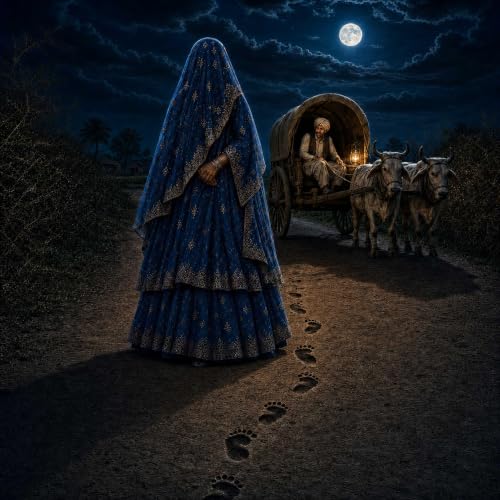
Why did a 1947 folklore geography place the earth-rejected Corpo-Seco in Paraná, Brazil, where even death refused him? First comes the sound of disturbed earth. Then a coffin strikes the surface for the third time, and the villagers stop digging. Bento, keeper of the burial road, is handed a mule cart, a tin lantern, and one rule: whatever voice the thing inside steals, never answer it with a name. The road is supposed to carry Joaquim Vale’s rejected body until dawn. Bento’s feverish daughter Rosa, however, is waiting at home for the medicine in his coat. This headphone-first folk-horror drama follows Bento through a chain of impossible refusals. A chapel bell rings while its rope hangs still. Coals die beneath cold ash. The cemetery itself shoves the coffin back onto the cart. When the mule bolts and the wheels continue in silence, a voice from behind the coffin lid calls him Father—while Rosa’s real cough answers from her window. Every sound pulls Bento closer to the one word the road needs. Close voice performances, an unmoving bell, wooden wheels, coffin scratches, pine wind, black-dust textures, and an original score turn the burial road into an intimate acoustic trap. Listen for the contrast between the stolen voice inside the coffin and the fragile signs of Rosa beyond it; that distance carries the episode’s dread. The story is fiction inspired by Brazilian Corpo-Seco traditions associated with Paraná through Luís da Câmara Cascudo’s folklore geography, first published in 1947. Joaquim Vale, Bento, Rosa, the burial road, the name trap, and all events in this episode are fictional. Content note: death, a coffin, illness involving a child, supernatural threat, non-graphic transformation, and disappearance. Best experienced with headphones in a dark room. Subscribe, rate, and review Midnight Whisperer in your podcast app. Written and produced by Midnight Whisperer. Watch with original horror artwork on YouTube: https://youtu.be/_OSBOeRIqkI
Show More
Show Less


 3 mins
 3 mins
 Jul 4 20263 mins
 3 mins
 3 mins
 3 mins
 2 mins
 3 mins