Episodes

  • J Gomez | How Jesus Gomez Turns Skin Into Hidden Art With Negative Space
    Jun 25 2026

    A tattoo that tells two stories at once changes how you look at ink forever. We’re shining a light on Jesus “J” Gomez, a black and gray realism tattoo artist whose work is blowing up online for good reason: he uses negative space and the natural color of the skin to build a second image inside the main design, without sacrificing clarity or elegance.

    We talk through what makes his approach so rare, from the flow and symmetry of his layouts to the way he controls soft tones and drop shadows so the portrait still reads instantly. Then we dig into the part that stops people in their tracks: the “design inside design” method. Instead of leaving skin as empty background, he treats it like a deliberate layer, shaping outlines and hidden forms that reveal themselves the longer you look.

    We also highlight the styles he’s a great fit for, including Chicano style tattoos, Virgin Mary imagery, skulls, and detailed portraits. If you’re on the West Coast, he tattoos out of Mez Ink in Arcadia, California, and we share the simplest way to reach him. If you’ve ever wanted a black and gray tattoo that feels classic at first glance but has a clever second meaning built in, this one will give you real ideas for your next piece.

    Subscribe for more artist spotlights, share this with a friend planning a tattoo, and leave a review if you want us to feature more black and gray realism and negative space tattoo techniques. What would you hide inside your tattoo design?

    Show More Show Less
    3 mins
  • Holytomo | What Makes A Realism Tattoo Feel Alive From Okinawa, Japan
    Jun 25 2026

    A realism tattoo can look technically perfect and still feel flat, so we’re chasing a tougher question: what makes black and gray realism actually feel alive? That’s where Holytomo comes in. He’s a tattoo artist based in Okinawa, Japan, working out of a private studio, and his large-scale black and gray realism tattoos are the kind of pieces you plan your body around. If you’ve been searching for an Okinawa tattoo artist known for ultra-clean realism, deep contrast, and bold composition, you’re going to understand the hype fast.

    We walk through the practical side first, because great art is useless if you can’t get on the books. Holy Tomo’s Instagram is the hub: he posts a “Wanna Do” set of designs for people who want big projects but need direction, and he shares a clear “How to Book” link that takes you straight to the form. We also talk about why artists often prioritize wanna-do concepts and how that can lead to stronger results when you’re committing to a back piece, full leg, or other high-effort placement.

    Then we get into the fun part: why the work hits. From an award-winning piece recognized at Gods of the Ink to a pirate-like leg scene packed with ships, skull imagery, lighthouse mood, and stormy shadows, we break down the choices that create depth and storytelling. Wrinkles, hands, braids, negative space, and strategic blackout aren’t just details, they’re tools that separate “nice tattoo” from “can’t stop looking at it.”

    If you’re building a realism tattoo plan, listen all the way through, then subscribe, share this with a friend who loves black and gray work, and leave a review with the best realism tattoo you’ve ever seen.

    Show More Show Less
    4 mins
  • Mitch Koch | Blackwork, Dotwork, and the Anatomy of Architectural Placement
    Jun 11 2026

    A great geometric tattoo doesn’t just look clean in a photo, it has to move with the person wearing it. We’re spotlighting Mitch Koch from Sleepy Reaper Tattoo in Madison, Wisconsin, and the reason his large scale blackwork and dotwork feels so intentional: he designs with body composition in mind. Think of it less like drawing a pattern and more like mapping a structure across real anatomy, from the neck and throat to the back and spine.

    We dig into a neck piece that threads the needle between mixed existing styles like lettering, realism, and color, then lands everything into crisp geometric linework that still feels seamless. The details matter here: how the design cuts around the "adam’s-apple" area, how the mandala-like forms sit on the throat, and how following the jawline can make the whole tattoo look deeper and cleaner from every angle. If you’re planning a neck tattoo, this is a practical look at what “flow” actually means.

    Then we shift to a favorite back piece and talk about contrast, saturation, and why bold black can still show nuance. From big fields of black to intricate ornamental sections, the design reads like a single system rather than separate ideas, and it reinforces the value of patience, planning, and genuine care for how the client feels during the process.

    If you’re into blackwork tattoos, geometric tattoos, ornamental design, or simply want to understand what makes placement elite, hit play. Subscribe for more, share this with a tattoo friend, and leave a review telling us what body placement you want us to break down next.

    Show More Show Less
    5 mins
  • Maksim Melnik: Love Machine | From Belarus to Soho, Tattoo Mel’s Dark Realism Formula
    Jun 4 2026

    You can learn every needle grouping and still make flat tattoos if your composition is weak. That’s where Tattoo Mel (Maksim Melnik) gets brutally honest, and it’s why his black and gray realism tattoos hit like still frames from a darker film. From Belarus to Soho, he shares how years of tattooing every style eventually narrowed into a signature: dark surrealism built from portraits, graphic elements, calligraphy, and subtle tribal patterning that wraps the body instead of sitting on top of it.

    We talk about the real workflow behind those heavy blacks that still read clean over time: starting with a small sketch, building the design on an iPad, using stencils to protect the day’s energy, then freehanding only where the body demands it. Mel breaks down why “foundation black” matters for aging, how he thinks about flow across muscle and joints, and why he often leaves space so a forearm piece can connect into a sleeve later without painting the client into a corner.

    Then we go deeper than technique. We get into gatekeeping and why he doesn’t see the point of hiding tools or tricks, plus what actually separates artists: taste, design decisions, and relentless drawing practice. We also unpack a topic every collector argues about, hand, neck, and face tattoos, and why Mel believes it’s less about “earning” the placement and more about maturity, career reality, and avoiding regret when your brain changes at 35.

    If you like dark surreal tattoos, Love Machine Tattoo NYC stories, and practical black and gray insights, hit play. Subscribe, share this with a tattooer or collector, and leave a review with the biggest takeaway you’re stealing for your next piece.

    Show More Show Less
    55 mins
  • Igor Mitrenga | When Graffiti, Pop Art, & Cartoons Mix Perfectly With Color Realism
    May 28 2026

    Street art doesn’t have to stay on brick walls. We’re putting a spotlight on Igor Mitrenga, a New York-based tattoo artist known for graffiti realism and black and gray realism, and we talk through what makes his work feel so sharp, so detailed, and so believable. When realism meets that spray paint essence, the result isn’t just “a clean tattoo” it’s a piece that looks like it was blasted onto skin with light, texture, and motion intact.

    We also keep it practical for anyone trying to book a high-demand artist. We share the simplest way to reach Igor through his Instagram (im_ tattoo) and why using the booking link is usually the fastest path compared to sending a DM and hoping it gets seen. If you’ve ever wondered how traveling tattooers manage appointments, guest spots, and conventions, we touch on the bigger picture too, including Igor’s international presence and how artists often move between cities and events.

    Then we get into the art itself. We react to a rib piece that hits with cultural grit and clever visual choices, and we break down how highlight placement and contrast sell the realism while still staying true to graffiti style. Dario also jumps in to talk about Igor’s ability to blend graffiti realism with pop art, including a mashup that pulls together a chess piece, the Mona Lisa, bold negative space, and cartoon references that somehow snap into one vibrant composition.

    If you’re into street art tattoos, realism tattoos, or bold pop culture collage work, this one will give you new eyes for what makes a piece actually work. Subscribe, share this with a friend who loves tattoos, and leave a review with the wildest combo you’d ever put together in a single design.

    Show More Show Less
    3 mins
  • Dino Vallely | Sculpting Flow Across The Skin, Decoration, and Form
    May 21 2026

    Blackwork can be loud, heavy, and flat, or it can feel like it belongs to the body the way muscle and movement do. We’re spotlighting Dino, a tattoo artist working out of France, because his work hits that rare balance: bold black used with restraint, rhythm, and intention. The pieces don’t just decorate skin, they shape it. When the body turns, the tattoo still makes sense, because it was designed with the body from the start.

    We talk through what stands out in Dino’s approach to placement and composition, especially his habit of using black as a sculptural tool. The contrast is strong, but the flow is clean. The vibe can read as neotribal and ornamental at the same time, without feeling like a copy of anything else. If you care about blackwork tattoos, elegant large-scale projects, and how negative space can create depth, this one will give you a fresh way to look at ink.

    Then we get specific with two pieces that stopped us cold. First, a permanent henna-style hand tattoo that goes beyond the top of the hand into the palm, fingers, and webbing, with negative space that keeps the palm open and readable. We also get into the reality of that placement, including why touch-ups are likely and why clean lines there are such a flex. Finally, we break down our favorite: a double leg sleeve that uses different densities of black to build depth, plus floral elements around the kneecap and calves to break the pattern and keep the whole design breathing.

    If you want to follow Dino’s work, he’s got a booking link on his Instagram and a Between Sessions group chat where he shares art, clothing, and convention updates. Subscribe, share this with a friend who loves blackwork, and leave a review with the boldest placement you’ve ever considered.

    Show More Show Less
    4 mins
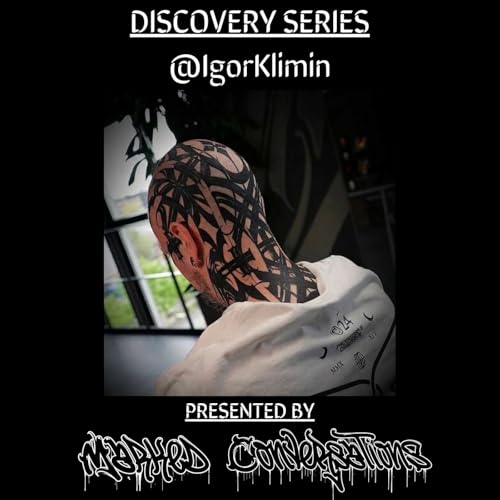
  • Igor Klimin | What Happens When Freehand Linework Follows Anatomy
    May 14 2026

    Stencil-free tattoos usually sound like a gamble, but Igor’s work makes it feel like the safest bet in the room. We put a spotlight on Igor, a Russian-based tattoo artist working out of Düsseldorf, Germany, whose freehand calligraphy and lettering tattoos come out crisp, bold, and shockingly clean even on difficult placements like the neck and throat.

    We walk through what makes his style stand out: strong black and gray tattooing, occasional red accents, and a serious respect for anatomy. When we watch him blast a neck piece, the takeaway is clear. The design isn’t just “cool linework.” It’s linework that follows the jawline, throat, and natural contours so it reads right from every angle, not just in a perfect photo. That anatomy-first approach is exactly why freehand can be the right tool, not just a flashy technique.

    We also get practical about how to book a traveling tattoo artist at this level. Igor shares updates through Instagram and runs a members group that calls out where he’ll be next, which makes it easier to catch him when he visits the US, including spots like Tampa, North Carolina, and LA. If you’ve been searching for a freehand calligraphy tattoo artist, black and gray lettering tattoos, or a stencil-free tattoo process that still looks razor sharp, this is the breakdown you want.

    Subscribe for more artist discoveries, share this with a friend planning their next piece, and leave a review with the boldest placement you’d trust for a full freehand tattoo.

    Show More Show Less
    3 mins
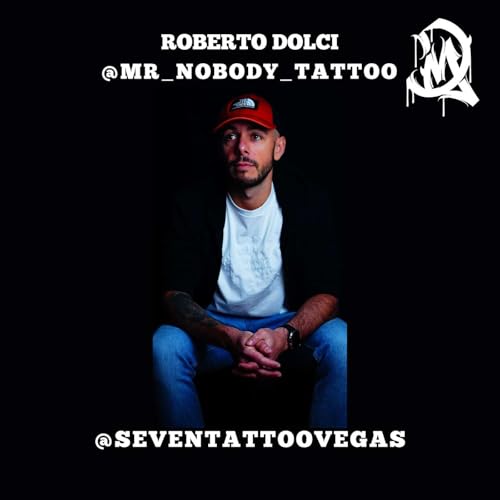
  • Mr Nobody Tattoo aka "Roberto Dolci" | Seven Tattoo Vegas | The Culture & The Ritual; From Italy to Black and Gray Realism
    May 7 2026

    A tattoo can be art, identity, and memory, but it is also a design problem that has to live on a moving body for decades. We sit down with Roberto “Mr. Nobody,” an Italian tattoo artist now working at Seven Tattoo Studio in Las Vegas, to unpack how black and gray realism gets built from the ground up: family influence, travel, obsession with references, and the slow process of refining taste.

    Roberto shares what it was like growing up in an Italian tattoo shop in the 90s, when artists had to do a bit of everything, and how that foundation shaped his approach to composition and body flow. We talk about his creative influences, from biomechanical tattooing to color realism, and why studying flow, depth, and anatomy matters whether you do realism, geometric, ornamental, or Japanese styles. If you care about tattoos that age well, you will hear his clearest standards: placement that fits the body, believable volumes, and lighting that makes the subject read clean from across the room.

    Then we hit the hot topics: tattoo trends that ignore dynamism, the idea of “earning” hands, neck, face, and head tattoos, and why a single visible tattoo on an otherwise untattooed body can feel visually unbalanced. Finally, we go deep on anesthesia tattoos, including the cost, the time pressure on the artist, and the cultural question of whether skipping pain skips the ritual.

    If you enjoy honest tattoo culture conversations and practical advice about realism tattoo design and placement, subscribe, share this with a friend who is planning their next piece, and leave a review with your take: do you think anesthesia tattoos are smart, or do they miss the point?

    Show More Show Less
    52 mins