MD Newsline Oncology Brief cover art

MD Newsline Oncology Brief

MD Newsline Oncology Brief

By: MD Newsline
Listen for free

Welcome to MD Newsline Oncology Brief, your go-to source for concise, expert-led updates in the ever-evolving field of oncology. Designed for busy healthcare professionals, this podcast delivers focused insights from leading oncologists, researchers, and clinical experts. Each episode highlights the latest breakthroughs in cancer care, including emerging therapies, clinical trial updates, and practical treatment strategies. From immunotherapy advancements to real-world patient care approaches, we break down complex topics into clear, actionable takeaways. Whether you're an oncologist, physician, or part of the broader medical community, Oncology Brief helps you stay current without the noise. Our mission is to provide relevant, timely knowledge that supports better decision-making and improved patient outcomes. Tune in for quick, impactful conversations shaping the future of cancer care.2026 Hygiene & Healthy Living Physical Illness & Disease
Episodes
  • Understanding Hidradenitis Suppurativa: Diagnosis, Treatment, and Emerging Therapies
    May 26 2026

    In this episode of MD Newsline, Dr. Oluwakemi Onajin, a board-certified dermatologist and dermatopathologist at the University of Chicago, discusses hidradenitis suppurativa (HS)—a chronic, inflammatory skin disease that is often misdiagnosed and takes years for patients to receive proper treatment. She explains the underlying causes of HS, the impact of genetics, hormones, and environmental factors, and how the disease progresses over time. Dr. Onajin also highlights the latest treatment options, including biologic therapies, surgical interventions, and laser treatments, as well as the psychosocial challenges that HS patients face.

    Episode Highlights:

    Delayed Diagnosis and Challenges in HS Care

    HS is frequently misdiagnosed as abscesses or cysts, leading many patients to seek care in emergency rooms and urgent care centers for painful, recurring lesions. On average, it takes 7 to 10 years for an HS diagnosis, despite clear diagnostic criteria that clinicians can use to identify the disease earlier. Dr. Onajin emphasizes the need for better awareness among primary care providers and dermatologists to improve early diagnosis and prevent long-term complications.

    Understanding HS Severity and Treatment Strategies

    HS severity is classified into three stages using the Hurley system, with mild, moderate, and severe disease requiring different treatment approaches. For mild cases, topical antibiotics and short-term systemic antibiotics are often used. Moderate to severe cases require biologic immunomodulators, surgical interventions like deroofing and excision, and in some cases, laser hair removal to reduce follicular occlusion. Dr. Onajin also stresses the importance of pain management strategies, which can vary based on inflammation levels and nerve involvement.

    The Future of HS Research and Patient-Centered Care

    Despite advances in treatment, there are still gaps in clinical trials and research, particularly for underrepresented populations. Dr. Onajin advocates for more diverse clinical trial participation and multidisciplinary care approaches to address comorbidities such as diabetes, cardiovascular disease, and inflammatory arthritis. She also highlights the psychosocial impact of HS, including its effects on mental health, employment, and relationships, and the need for greater patient support and education.

    Key Takeaway:

    Hidradenitis suppurativa is a chronic inflammatory skin disease that is often misdiagnosed, delaying treatment for many patients. Early diagnosis and a personalized approach, including biologics, surgery, and laser therapy, can significantly improve outcomes. Managing comorbidities like diabetes and cardiovascular disease is crucial for overall health. Increased awareness, research, and multidisciplinary care are essential to advancing HS treatment and patient support.

    Resources & Links:

    Website: MD Newsline Newsletter: Subscribe Here

    Connect with Dr. Oluwakemi Onajin: University of Chicago Dermatology

    Show More Show Less
    34 mins
  • De-escalating Breast Cancer Treatment: Balancing Effectiveness and Quality of Life
    May 19 2026

    In this episode of MD Newsline, Dr. Simone Nardin, a medical oncology fellow at the University of Genoa, discusses his research on ovarian suppression in premenopausal women undergoing endocrine therapy for luminal early breast cancer. His award-winning study explores the challenges of suboptimal ovarian suppression, its impact on treatment outcomes, and the need for longer follow-up and more frequent hormonal assessments. Dr. Nardin also highlights recent advancements in de-escalation strategies, emphasizing the importance of personalized treatment approaches to balance effectiveness and quality of life for breast cancer patients.

    Episode Highlights:

    Ovarian Suppression and Endocrine Therapy Challenges

    Dr. Nardin's research focuses on premenopausal women receiving GnRH analogs plus tamoxifen or aromatase inhibitors. His study found that suboptimal ovarian suppression is more common than previously thought, with 20% of patients experiencing inadequate suppression after five years of treatment. This could potentially impact long-term outcomes, though longer follow-up is needed. His findings suggest that hormonal levels should be monitored annually, rather than just in the first few months of treatment, to ensure effective suppression and improved patient outcomes.

    De-escalation Strategies in Breast Cancer Treatment

    A growing area of focus in breast cancer care is de-escalation of treatment to improve patient quality of life while maintaining treatment efficacy. Dr. Nardin discusses recent clinical trials that explore reducing endocrine therapy for elderly patients and omitting axillary lymph node dissection in certain cases to minimize long-term side effects. These studies suggest that some patients may benefit from less aggressive treatment without compromising survival rates, marking a shift in the standard approach to breast cancer management.

    The Future of Breast Cancer Treatment

    Looking ahead, Dr. Nardin envisions a more personalized approach to breast cancer care, where genetic signatures and biomarkers help tailor treatments to individual patient needs. Ongoing trials are evaluating chemotherapy-free regimens, alternative endocrine therapy strategies, and ways to avoid overtreatment, especially for patients who may not require intensive therapy. These advancements could lead to better long-term outcomes with fewer side effects, ensuring that patients receive the best treatment for their specific cancer type and risk level.

    Key Takeaway:

    Suboptimal ovarian suppression affects up to 20% of premenopausal breast cancer patients on endocrine therapy, highlighting the need for annual hormone level monitoring. De-escalation strategies in breast cancer treatment can improve quality of life without compromising outcomes for select patients. The future of breast cancer care lies in personalized treatments, ensuring each patient receives the most effective and least toxic therapy for their specific condition.

    Resources & Links:

    Website: MD Newsline Newsletter: Subscribe Here

    Connect with Dr. Simone Nardin:LinkedIn

    Show More Show Less
    14 mins
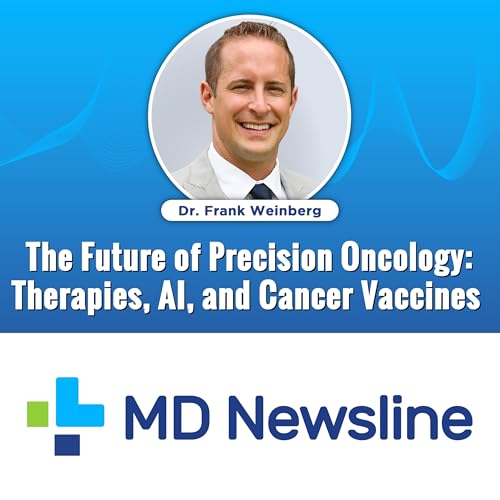
  • The Future of Precision Oncology: Targeted Therapies, AI, and Cancer Vaccines with Dr. Frank Weinberg
    May 13 2026

    In this episode of MD Newsline, Dr. Frank Weinberg, a thoracic oncologist at the University of Illinois Cancer Center, explores the latest advancements in lung cancer research. He shares insights on the role of biomarkers in early detection and treatment, the impact of COVID-19 on cancer immunology, and how machine learning is transforming oncology. Dr. Weinberg also discusses the importance of diverse clinical trial participation, the challenges of precision medicine, and the potential of cancer vaccines and immunotherapies in shaping the future of lung cancer treatment.

    Episode Highlights:

    Psoriasis Risk Factors & Diagnosis

    Lung cancer remains a leading cause of cancer-related deaths, but emerging research on biomarkers is changing how the disease is detected and treated. Dr. Weinberg's research focuses on immunometabolic biomarkers, particularly lipid metabolites, which may serve as early indicators of lung cancer. He explains how steric acid, a specific fatty acid, is linked to macrophage inflammation and could potentially be targeted for preventative therapies. His team is working on validating these findings through mouse models and clinical studies.

    The Role of Immunotherapy & Machine Learning

    Dr. Weinberg highlights how COVID-19 accelerated research on immunology and vaccines, leading to a deeper understanding of how cancer vaccines could be used to improve immune responses to lung cancer treatments. He also explores the growing role of machine learning and AI in analyzing large genomic and metabolic datasets, identifying new treatment pathways, and improving precision oncology. AI-driven models are helping oncologists make more data-driven treatment decisions for lung cancer patients.

    Challenges in Clinical Trials & Health Disparities

    One of the biggest challenges in oncology is ensuring diverse representation in clinical trials. At the University of Illinois Cancer Center, 70% of lung cancer trial participants are African American, a significant improvement over national averages. Dr. Weinberg explains how building patient trust and addressing socioeconomic barriers are key to closing health disparities in lung cancer research. He also discusses the importance of biomarker testing, noting that only 50-60% of lung cancer patients currently receive it, despite its critical role in determining targeted treatments.

    The Future of Lung Cancer Treatment

    Looking ahead, Dr. Weinberg is excited about next-generation immunotherapies, including bi-specific T-cell engagers and NK cell inhibitors, which could revolutionize lung cancer treatment. He also sees cancer vaccines and cellular therapies playing a larger role in long-term disease management. As researchers continue to refine personalized medicine strategies, the integration of biomarkers, AI, and innovative clinical trial designs will be essential in improving outcomes for all lung cancer patients.

    Key Takeaway:

    Lung cancer research is advancing rapidly with biomarkers, immunotherapy, and AI-driven precision medicine playing a key role in early detection and treatment. Diverse clinical trial participation is essential to ensuring that new therapies are effective for all patient populations, particularly underserved communities. The future of lung cancer treatment lies in next-generation immunotherapies, cancer vaccines, and machine learning integration, which have the potential to revolutionize patient outcomes.

    Resources & Links:

    Website: MD Newsline Newsletter: Subscribe Here

    Connect with Dr. Frank Weinberg: University of Illinois Cancer Center

    Show More Show Less
    42 mins
adbl_web_anon_alc_button_suppression_c
No reviews yet