Episodes

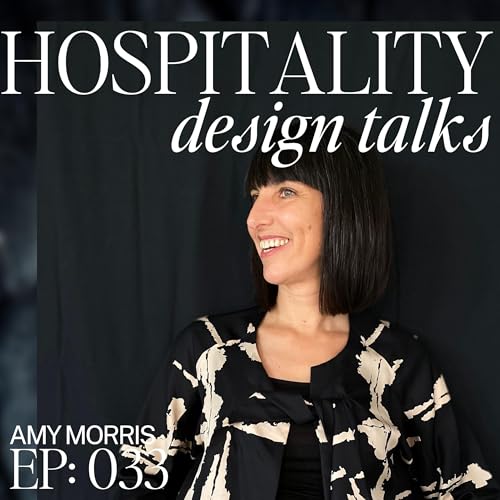
  • 033: Building a Brand Guests Remember w/ Amy Morris of The Morris Project
    Feb 10 2026

    Today on Hospitality Design Talks, host Rachel Larraine Crawford sits down with Amy Morris of The Morris Project to talk about the real reason most hospitality brands struggle: it’s not a marketing problem — it’s a clarity problem. Amy shares how she helps founders define who they are in one to two sentences (and why every decision — interiors, hiring, menus, and guest touch points — should flow from that).

    You’ll hear Amy’s approach to building a brand with the whole team (not just the owner), why consistency is what makes something feel elevated (not price), and the small, often-forgotten details that create big guest “chemistry”—from the host stand to the bathroom to the menu design. Plus, she offers an easy brand clarity audit you can do this week to see if your team is aligned or accidentally creating confusion.

    Connect with Amy Morris / The Morris Project:

    1. Find Amy on Instagram (The Morris Project)
    2. Email: hello@themorrisproject.com
    3. Grab Amy’s Brand Guideline Here

    Connect with Rachel Larraine

    Website

    Instagram

    Interior Design Services

    Newsletter Sign Up

    Want more guidance from me? Sign up to appear on the Holistic Hospitality Design Podcast for a design audit. You can book your design audit here.

    Show More Show Less
    57 mins
  • 032: Can Lighting Make Guests Stay Longer and Spend More w/ Martin Epstein of Tazz Lighting
    Feb 3 2026

    Lighting is doing far more than helping guests see — it’s shaping how long they stay, how comfortable they feel, and how much they spend. In this episode of Hospitality Design Talks, host Rachel Larraine Crawford sits down with Martin Epstein, founder of Tazz Lighting, to unpack how intentional, layered lighting quietly drives guest behavior, brand perception, and business performance.

    With decades of hands-on experience — from electrical contracting to large-scale hospitality projects — Martin shares why lighting should be treated as a strategic system, not an afterthought. Together, they explore how hospitality lighting has evolved from purely aesthetic to deeply experiential, operational, and human-centered.

    Whether you’re opening a new restaurant, renovating a hotel, or refining an existing guest experience, this episode offers practical insights into how lighting can become your most powerful (and invisible) team member.

    In This Episode, You’ll Learn:
    1. Why lighting acts as a “silent host” that influences guest mood, dwell time, and spending
    2. The biggest lighting mistakes Martin sees in hospitality spaces — and how to avoid them
    3. What “layered lighting” really means, and why even light levels kill atmosphere
    4. How warm color temperatures (like 2700K) support comfort, intimacy, and lingering
    5. Why lighting controls and scene programming are non-negotiable for hospitality spaces
    6. How lighting transitions throughout the day without guests consciously noticing
    7. What tunable white and circadian lighting are — and where they truly make sense
    8. Why you should never leave lighting decisions solely to an electrician
    9. How early collaboration between designers, lighting experts, and contractors saves money and stress
    10. Trends shaping hospitality lighting today — from tunable systems to intelligent controls
    11. Martin’s advice for owner-operators planning lighting in 2026 and beyond

    Key Takeaway:

    Thoughtful lighting isn’t about adding more fixtures — it’s about designing comfort, flow, and emotion. When lighting is planned early, layered intentionally, and controlled intelligently, it enhances guest experience, reinforces brand identity, and quietly supports revenue without ever demanding attention.

    About the Guest:

    Martin Epstein ,President & Co-Founder, Tazz Lighting, Inc.

    Martin Epstein is the President and co-founder of Tazz Lighting, Inc., a premier San Diego-based lighting

    design, distribution, and consultation firm known for delivering innovative and high-quality lighting solutions

    for residential, commercial, and architectural projects. With over three decades of experience in the lighting

    industry, Martin has built a reputation for excellence rooted in deep technical expertise, thoughtful design

    sensibility, and a client-centered approach.

    Tazz Lighting has guided projects from concept through completion, partnering with architects, designers,

    builders, and homeowners to elevate spaces through carefully curated lighting, advanced control systems, and

    energy...

    Show More Show Less
    31 mins
  • 031: Is Your Space Blocking Your Next Level — Feng Shui w/ Amanda Sophia
    Jan 27 2026

    In this episode of Hospitality Design Talks, host Rachel Larraine Crawford sits down with her longtime teacher and mentor, Amanda Sophia, for a conversation that blends feng shui, seasonal wisdom, and conscious business—with a special focus on the “in-between” season we’re in right now (that liminal space between the Year of the Snake and the incoming Fire Horse).

    Together, Rachel and Amanda explore how your space—whether it’s your home, studio, restaurant, spa, or retreat property—acts as a living mirror for your energy, your patterns, and your next level. This is a grounded, soulful episode about clearing what’s no longer aligned, choosing collaborations from full-body yes, and setting your business up for expansion without burnout.

    What you’ll learn in this episodeThe liminal space isn’t “behind schedule”—it’s sacred

    Amanda reframes January as a time that often asks us to slow down, reflect, and stop forcing momentum just because the calendar flipped. Instead of hustling, she invites you to tune into nature’s timing—winter as rest, dreaming, integration… the space where clarity actually lands.

    Feng Shui as a soul mirror (not just aesthetics)

    Amanda shares a deeper view of feng shui: your home or business isn’t random—it’s often a soul match. You’re drawn to certain spaces because they reflect your energetic blueprint, and they can also support your healing and evolution. Your environment mirrors back what’s happening internally—clutter, broken items, stuck corners, loose handles… all of it carries information.

    Fire Horse themes for conscious entrepreneurs + owner-operators

    As we move into a Fire Horse year, the energy shifts toward:

    1. expansion, movement, opportunity
    2. heart-led leadership (integrity matters more than ever)
    3. authentic expression (no watering down your true work)
    4. collaboration—but only with full alignment

    Amanda also names the shadow side: with fire + speed comes the risk of burnout, scattered energy, and saying yes too quickly. The medicine? Grounding and deep nervous-system support.

    A practical feng shui focus for hospitality spaces (restaurants, spas, hotels)

    Amanda gives clear, beginner-friendly guidance for activating supportive energy in your business this year:

    1. Southeast: the most auspicious energy (prosperity, joy, success, “peach blossom” connection energy).
    2. Simple activation ideas: a candle ritual, meaningful symbolism of prosperity, or planting something outdoors in the SE area.
    3. East: another highly supportive prosperity area.
    4. Activation ideas: a salt lamp, fiery-toned crystals, uplifting intention, daily energetic practices in that zone.
    5. South: the area to support with metal to help neutralize more challenging energy.
    6. Examples: a metal bowl with coins, bronze décor, metal objects...
    Show More Show Less
    39 mins
  • 030: Building Brand Universes + Collaboration-Driven Hospitality with Lindsay Wynn
    Jan 20 2026

    In this guest episode of Hospitality Design Talks, host Rachel Larraine Crawford sits down with Lindsay Wynn—a San Diego + New York–based creative who’s spent nearly two decades weaving together hospitality, fine art, photography, and brand experience. Lindsay shares how her path (from waiting tables → opening restaurants → working with Jean-Georges → fashion/beauty/alcohol campaigns → building integrated brand activations) shaped the way she approaches hospitality today: not as a “one-and-done” meal, but as a through-line in the human experience, from the moment someone arrives to how they feel when they return home.

    Together, Rachel and Lindsay dig into what it really takes to craft experiences that feel intentional, holistic, and human—and why collaboration is one of the most powerful tools hospitality owners have right now. Lindsay breaks down her approach to building “brand universes,” how she helps clients uncover what they actually want (even when it starts as a messy mix of ideas), and why the best spaces aren’t just trendy—they’re rooted in story, materiality, and meaning.

    What you’ll learn in this episode
    1. Lindsay’s origin story: how art school, fine art, and hospitality operations shaped her creative edge and problem-solving style
    2. Why post-COVID hospitality needs more than aesthetics—it needs connection, intimacy, and real emotional resonance
    3. What it means to have an integrated approach (brand values, visuals, content, activation) instead of disconnected marketing
    4. A standout case study: a month-long sexual health pop-up designed as an educational, inclusive, community-centered resource (built during the Roe v. Wade overturn era)
    5. How to present “big” or unconventional creative ideas without shocking clients—meeting people where they are
    6. Why collaboration works (and what gets in the way): egos, control, and the fear of doing it differently
    7. A concrete collab example: Dow of Clay x The Friendly — ceramics + pizza + wine, an interactive event that lowered the barrier to entry for art through hospitality
    8. Lindsay’s take on trends: how to build something memorable without copying the same Pinterest formulas (and yes—why gray floors are a hard no)
    9. The power of deep research: Pinterest plus books, libraries, history, and details that create a richer design story
    10. Practical encouragement for owner-operators: find your thing, obsess over it, and build your business around what you genuinely love

    Key takeaways
    1. Design + hospitality work best when they’re embodied. A beautiful space still needs warmth, flow, and a sense of belonging.
    2. Collaboration is a growth strategy—not just for marketing, but for community, cross-pollination, and richer guest experiences.
    3. Your “thing” is your advantage. In a world of fast trends and short attention spans, what’s specific and true about you is what sticks.
    4. Depth beats...
    Show More Show Less
    45 mins
  • 029: Finding the Right Space: Location, Leases, and the Details That Make It Work w/ Owen Curry
    Jan 12 2026

    Today I’m joined by Owen Curry of Cushman & Wakefield—and y’all, this is the real estate episode I’ve been waiting to record. If you’re an owner-operator with a big vision (restaurant, café, wellness studio, boutique concept) and you’re trying to land the right space—especially in a coastal market—this conversation will save you so much time, money, and stress.

    Owen breaks down what’s actually happening in North County coastal commercial real estate (Carlsbad through Del Mar), why “vacancy” isn’t always what it looks like, and what you need to understand before you fall in love with a space. We talk budgets, lease runway, rentable vs. usable square footage, how zoning + parking requirements can make or break a concept (especially wellness), and what makes a Letter of Intent attractive without getting you pushed to the back of the line. If you’ve ever felt overwhelmed by LoopNet listings, landlord language, or the sheer sticker shock of beach-town pricing—this one is for you.

    What You’ll Learn in This Episode

    1. Why coastal communities like Encinitas, Leucadia, Cardiff, Solana Beach stay high-demand (and high price per square foot)
    2. How “vacant” buildings can be misleading (and why signs can be strategic)
    3. The first questions to answer before you tour spaces: budget, runway, and true market rent
    4. Why under-market rent can be risky if you don’t have a long-term lease horizon
    5. How smaller footprints can be a strategic advantage (overhead + TI math)
    6. The zoning + parking issues that quietly derail wellness concepts (and why cities can treat your use differently if you add things like saunas/cold plunge)
    7. What to look for to “win” a space: configuration, speed to occupancy, and financial readiness
    8. Lease terms operators overlook: rentable vs. usable + load factors (often 10–20%)
    9. TI realities: cold shell vs. existing buildout, and when landlords offer free rent in lieu of TI
    10. LOI strategy: how to negotiate without burning goodwill (and how it changes when there’s competition)
    11. Why you should get a contractor walk-through before submitting an LOI
    12. Green flags + red flags on tours (local landlord access, building systems, pride of ownership)
    13. A surprisingly helpful tip for LoopNet: who to call first (hint: the associate)

    Key Takeaways for Conscious Owner-Operators

    1. Location is a design decision—but it’s also a systems decision. Don’t pay “foot traffic rent” if your model is membership-based or appointment-driven.
    2. Do not skip zoning + parking due diligence. Especially if your concept blends categories (retail + events + wellness).
    3. Fall in love after the numbers work. The shiny object space can come with hidden timeline and permitting costs.
    Show More Show Less
    55 mins
  • 028: Holistic Hospitality Trends For 2026 That Your Guests Will Actually Feel
    Jan 8 2026

    In this solo episode, holistic interior designer and Tiger Veil founder Rachel Larraine Crawford breaks down the holistic hospitality trends that actually matter for 2026.

    Instead of chasing another photo moment, Rachel invites owner operators to think about their space as a living system that impacts guest experience, staff wellbeing, and the bottom line.

    She walks through emerging bio based materials, regenerative sustainability practices, and wellness focused design moves that you can bring into your restaurant, bar, cafe, hotel, or spa, even if you are working with an existing footprint.

    If you want guests to linger longer, leave better reviews, and feel genuinely cared for in your space, this episode will give you practical ideas and questions to bring to your next refresh.

    In this episode Rachel covers

    1. Why guests are more sensitive than ever to sound, light, and stress and what that means for hospitality spaces
    2. How holistic design gives owner operators real leverage without a complete renovation
    3. Emerging bio based materials such as mycelium panels, hemp plasters, and cork and how they can transform corridors, bars, and guest rooms
    4. Quiet technology inside natural finishes that help regulate temperature, reduce maintenance, and improve acoustics
    5. The shift away from bright white interiors into tactile, wood drenched, earth toned spaces that feel like a hug
    6. How circular design and planning for disassembly can protect your future self when you rebrand or update your concept
    7. Low carbon material choices that still feel luxurious and aligned with your brand story
    8. Ways to build sustainability into daily operations such as water rituals, daylight first seating plans, and planted shading
    9. The idea of acoustic wellness and silent architecture as business tools that affect dwell time and staff burnout
    10. How circadian friendly lighting scenes can support guest comfort from breakfast through last call
    11. Biophilic strategies that turn your space into a small ecosystem rather than a plant in the corner
    12. Neuro inclusive and sensory aware choices that welcome different nervous systems into your space

    Questions to ask about your space

    1. How do guests feel in the first thirty seconds from door to host stand
    2. What does your restaurant or hotel sound like at peak time
    3. Where could one small micro retreat exist for guests or staff
    4. Which surfaces do guests touch all day and what story do those materials tell

    Simple action steps for owner operators

    1. Take a sound walk during peak service and identify three zones that need acoustic...
    Show More Show Less
    15 mins
  • 027: How To Build A Restaurant People Are Obsessed With Being In Not Just Eating At
    Dec 31 2025

    In the final episode of our Aura Gardens series, I’m joined again by co-owner R.J. Fernandez as we zoom all the way into what Aura feels like from the moment you walk in. We’re talking playlist, glassware, filtered water, lighting, greenery, textures, and the tiny design decisions that create that “vibrant but deeply cozy” energy guests keep describing. R.J. shares how hospitality is the true product (food + beverage are simply the vehicle), why every detail has to answer the question “Will this make the customer feel something?”, and how Aura is intentionally designed to hold community—across demographics, moods, and moments.

    We also look ahead: events that spark real connection, the early success of Friendsgiving + the Chef’s Table vibe, the vision for a full calendar by 2027, and the growing concept of Aura After Dark—private evening events that transform the space once the brunch rush ends. And if you love the behind-the-scenes build energy? R.J. shares his growth philosophy of developing managing partners through ownership, plus a dreamy future bakery + café concept that could become the commissary engine for future Aura locations.

    What You’ll Learn in This Episode

    • How “guest experience” is built through micro-choices (water, glassware, plating, lighting, texture, sound)
    • Why hospitality and emotional resonance come before menu strategy
    • How to design a space that feels both energetic and cozy (not one or the other)
    • Event formats that gently push connection—without making it awkward (even for introverts)
    • A scalable growth model rooted in mentorship + managing partners (not just “more locations”)
    • The early blueprint for Aura After Dark + a potential bakery storefront/commissary model

    Key Takeaways (the stuff you’ll want to steal for your own concept)

    • Ask one guiding question for every decision: “Will this make the guest feel something?”
    • Create value in the “small” things: complimentary crisp filtered water, the right rocks glass, consistent warmth from staff.
    • Design for multiple emotions: a space can be clean + bright and grounded + comforting if the layers are intentional.
    • Community doesn’t happen by accident: events need built-in prompts and structure to make connection easy.
    • If you want to scale the energy, build leaders: ownership + mentorship creates aligned operators who protect the vibe.

    Follow Aura Gardens in Instagram

    Connect with Rachel Larraine Crawford

    Website

    Instagram

    Interior Design Services

    If you’re building a restaurant, café, retreat space, or any hospitality concept where you want people to feel seen, nourished, and connected, share this episode with a friend (or your business partner 👀). And if you post about it, tag me so I can cheer you on.

    Until next time—keep designing spaces with intentional flow, well-being, and conscious business at the center.

    Show More Show Less
    19 mins
  • 026: You Lose The Restaurant Then The Universe Hands You A Keys To A New One
    Dec 18 2025

    Hospitality Design Talks — Aura Garden Series (Part 3) with co-owner R.J. Fernandes

    In part three of the Aura Garden series, Rachel sits down with R.J. Fernandez for the hard chapter: when the “planned rebirth” of the family restaurant doesn’t happen, the building sells (December 2023), and R.J. has to grieve what he poured his life into. From there, we follow the pivot—through unemployment, a more grounded season of decision-making, and into an unlikely little 1,800 sq ft former taco spot in a strip center that’s quietly becoming a health-and-wellness hub in North County San Diego.

    This episode is a real-time look at what conscious business actually requires: letting go, reading the environment, designing for what’s true now, and building a concept that matches the life you’re living—energy, flow, well-being and all.

    What You’ll Hear in This Episode

    • When the rebrand plan collapses: the Salt & Smoke vision, the heartbreak of the sale, and the emotional aftermath of “another door closed.”
    • The in-between season: unemployment, urgency, and the pressure to make a decision without the safety net of the old restaurant.
    • The location that wasn’t “the dream”… until it was: why a strip center felt like a compromise—and how the surrounding fitness + wellness neighbors changed the whole story.
    • Concept clarity through constraints: why smaller + quick service suddenly made sense (speed + quality, grab-and-go, beer/wine only, no late-night bar life).
    • Partnership alignment: how R.J. and Andrew stayed malleable instead of locked into one rigid vision—and why that matters in hospitality.
    • The “signs” that sealed the deal: the Jefferson exit connection and the license plate moment that felt like the universe winking.
    • Naming Aura Gardens: “aura” as the people-energy of hospitality, “garden” as the metaphor—whole foods for a whole life, and the long game of nurturing team, guests, and community.
    • Food philosophy, openly discussed: whole-food prep, local sourcing where possible, and R.J.’s nuanced take on “organic” vs actual quality.

    Key Takeaways

    • Grief and business decisions can coexist. You can be devastated and still build what’s next—slowly, intentionally.
    • Constraints create the concept. Size, neighborhood, licensing, and lifestyle can be your best creative brief.
    • Design starts with the feeling. Before finishes and furniture: What do you want people to feel when they walk in? That’s your aura.
    • Your concept has to match your life. If you’re building a conscious business, the operations (hours, service style, menu, offerings) must support your well-being—not just your ambition.
    • “Garden” is a business model. What you nurture—ingredients, team culture, guest experience—becomes what your brand produces over time.

    Reflection Prompt (for owners, retreat hosts, and conscious entrepreneurs)

    Take two minutes and write down:

    1. What do I want people to feel in my space?
    2. What does my business need to look like to support my life right now?
    3. That feeling is your version of an aura—and it’s the truest starting point for design.

    What’s Next

    In the final episode of this series, we talk about what Aura Gardens actually feels like now that the doors are open—design details, playlist, events, and where R.J. and Andrew see the brand growing next.

    Connect with Rachel Larraine Crawford

    Website

    Instagram

    Interior Design Services

    Show More Show Less
    25 mins