HEYS REVIEWS Podcast cover art

HEYS REVIEWS Podcast

HEYS REVIEWS Podcast

By: Nick Heys
Listen for free

About this listen

HEYS REVIEWS Podcast is a weekly podcast exploring the best books on the open plan for world control.

Nick Heys
World
Episodes
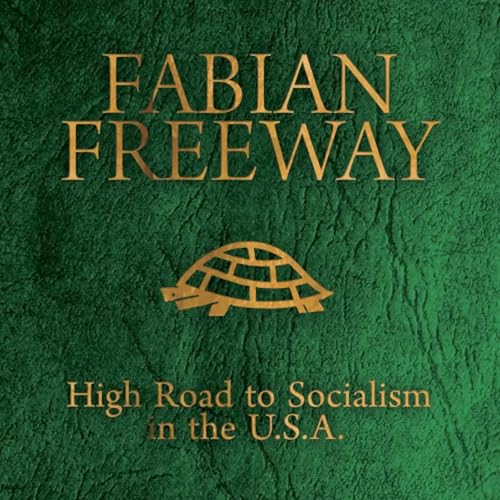
  • Fabian Freeway by Rose L Martin (1966) - Part 7
    Feb 1 2026
    • Fabian socialism gains durable U.S. roots with the Intercollegiate Socialist Society (ISS), 1905; earlier efforts failed for moving too fast.
    • Early U.S. socialist/Fabian scene = scattered clubs and individuals; Robert Hunter recalls small, obscure reform circles vs. Europe’s parliamentary socialist leaders.
    • Some Americans joined the London Fabian Society for prestige and lack of a U.S. equivalent; British Fabians made socialism “university-trained,” respectable, and for many “a substitute or an adjunct of religion.”
    • A U.S. Socialist Party (Debs/Hillquit) polled well in 1904 but had little path to power; revolutionary and immigrant-labor currents remained strong.
    • Fabian “magic formula”: present socialism as college “education”. ISS (renamed League for Industrial Democracy (LID), 1921) becomes an American affiliate/outpost of London Fabians and the oldest continuing socialist society.
    • Founding meeting (Sept 12, 1905, NYC) included figures like Jack London and Upton Sinclair; continuity traced through earlier nationalist clubs. The author frames a lineage from Sidney Webb back to Karl Marx (with vivid imagery).
    • Early presence of future Communists (e.g., Flynn, Bloor) is cited as evidence of an underlying “unity” of the social-democratic faith; ISS later aided the (then illegal) Communist Party despite later barring known Communists.
    • Official purpose understated: “creating students of socialism, not to produce socialists”; clubs invited occasional anti-socialist speakers as “debate training,” helping campuses tolerate them.
    • Claimed later admission: ISS was founded as a secret American Fabian Society to supply leadership while staying publicly aloof; it aimed to “capture the heads and the hearts” of future leaders.
    • Key tactics: recruit bright students; only convinced socialists become officers; alumni remain attached and rise into education, labor, media, and government.
    • Upton Sinclair’s role: distributed propaganda to campuses; wrote The Jungle; sent Ella Reeve Bloor; maintained ties to later Communists.
    • Student-club touring modeled on British practice; Jack London pioneered a U.S.-style coast-to-coast lecture circuit; later used by visiting British Fabians.
    • Harvard/Columbia clubs seed elite networks (Lippmann, others). Many later “masquerade” as liberals while remaining aligned.
    • Walter Lippmann portrayed as a high-level penetrator: cultivated elites in business/finance/politics; shifted tone by audience; promoted applied psychology for socialism; introduced Keynes; used “one step backward, two steps forward.”
    • Graham Wallas is cast as pivotal: taught politics as social psychology; aim “to control human conduct”; acted as a covert Fabian link, aiding appointments and LSE funding; influence traced to New Deal/New Frontier/Great Society.
    • “Lovable” front personalities used deliberately (“honey vs vinegar”); continuity sustained via families, couples, and quiet networks.
    • A 1955/50th-anniversary collaborator list (Congressional Record) is said to reveal many influential figures (even near the White House) committed to gradual “Cooperative Commonwealth.”
    • Overall depiction: a diffuse, hard-to-pinpoint fraternity emanating from a single center, seeking to supplant U.S. constitutional checks and balances with a collectivist state under socialist-international guidance.
    Show More Show Less
    56 mins
  • Fabian Freeway by Rose L Martin (1966) - Part 6
    Jan 25 2026

    Chapter 11: The Professor Goes to Washington

    The chapter describes how Fabian socialists advanced their influence by redefining economics and related fields as “science.” Sydney Webb succeeds in having economics formally declared a science by the University of London. Beatrice Webb records approvingly that this involved divorcing economics from metaphysics and admits the decision was achieved by packing the commission.

    Once economics and other social inquiries were labeled “social sciences,” professors could present ideological conclusions as objective research. Fabian writers argue this allowed political intent to be concealed behind academic authority.

    The chapter traces the spread of Fabian ideas through British and American universities, extension programs, and summer schools. In the United States, professors studied socialism quietly to avoid professional consequences. Academic networks form around figures such as Richard T. Ely, Albert Shaw, and Woodrow Wilson.

    Woodrow Wilson appears first as a professor influenced by these circles and later as president who accepted socialist-minded advisers. Under his administration, federal labor agencies were consolidated, culminating in the creation of the Department of Labor. These agencies generated statistics later used to support reform and regulation.

    The chapter highlights legal innovation through the Brandeis Brief, which relied heavily on sociological data rather than traditional legal reasoning. This approach later became standard.

    Major Fabian objectives realized during this period include the federal income tax, legalized through the Sixteenth Amendment during World War I. The chapter closes by describing how academics, journalists, and advisers shaped domestic and foreign policy during the Wilson years, embedding Fabian gradualism within American government.

    Chapter 12: The Perfect Friendship

    The chapter portrays Edward M. House as Woodrow Wilson’s most influential adviser: an outwardly quiet political operator who engineered Wilson’s 1912 nomination and sought a “fail-proof” president able to advance a radical program quietly, without public alarm. House is described as believing the U.S. Constitution was “outmoded” and should be rewritten gradually.

    House’s program is presented through his anonymous novel Philip Drew, Administrator (1912), which the chapter treats as a blueprint: a military figure seizes power and rules by executive decree, reshaping administration, revising the judiciary, reforming labor/capital law, creating a graduated income tax, banking reform (later linked to the Federal Reserve), corporate taxation, old-age pensions, labor insurance, compulsory arbitration, labor representation on corporate boards, and an international League of Nations.

    It describes House’s New York apartment as a political nerve center with direct lines to the White House and departments, and places British intelligence chief Sir William Wiseman in close proximity. A highlighted wartime episode: Trotsky is detained in Canada in 1917; Wilson/House request his release; he is allowed onward—paired with Lenin’s sealed-train passage—followed by Bolshevik takeover and Russia leaving the war.

    The chapter then traces linked “peace” and opinion networks: Hull House activism, British Fabian-connected visitors, and the role of The New Republic (including Walter Lippmann and contributors like Harold Laski). It describes the secret planning group “The Inquiry,” organized via House and academics, producing memoranda behind Wilson’s Fourteen Points, and claims the program closely matches Britain’s Fabian-authored Labour’s War Aims (Sydney Webb central).

    Finally, it recounts the Wilson–House break at Paris and ends with House convening a 1919 dinner that leads to founding the Royal Institute of International Affairs in Britain and, in the U.S., the Council on Foreign Relations.

    Show More Show Less
    1 hr and 41 mins
  • Fabian Freeway by Rose L Martin (1966) - Part 5
    Jan 15 2026

    Chapter 9: The Fabian Turtle Discovers America

    Edward Bellamy’s Looking Backward (1888) becomes an unexpected bestseller and political catalyst. Bellamy, a frail, tubercular former journalist known for attacking “competitive industry,” produces what is described as a highly effective piece of propaganda.

    The novel is labeled “a socialist romance which never once mentioned socialism.” ⚠️ Covert socialism via fiction. The Nation (March 29, 1888) praises it as “a glowing prophecy and gospel of peace,” judging it more radical than the proposals of Henry George.

    Bellamy’s vision calls for making land and “all other investments equally unprofitable,” to be achieved through a “National Organization of Labor under a single direction.” Like Uncle Tom’s Cabin, it promotes abolition—this time of “wage slavery.”

    Selling “a thousand copies a day,” Bellamy becomes a symbolic leader. British Fabians assist in shaping the movement. Lawrence Gronlund’s The Cooperative Commonwealth (1884) repackages Marxism for American readers and is withdrawn to promote Bellamy’s novel. ⚠️ Marxism rebranded for U.S. audiences.

    Marx and Engels are cited as believing revolution could proceed “peacefully” in the U.S. and Britain by exploiting free institutions. Early American socialism struggles due to German-language isolation, anarchist violence, and scandals involving “free love.”

    Universities become key transmission points. Richard T. Ely and the American Economic Association (1885) promote municipal and national ownership ideas. Sydney Webb publishes through these academic networks, which include figures such as Woodrow Wilson.

    Webb and Edward Pease visit in 1888, promoting gradualism. The Boston Bellamy Club reorganizes as the “Nationalist Club,” using patriotic language to conceal nationalization. Its declaration condemns “competition” as “brute,” praises trusts as proof of “practicability,” and urges industries to operate “in the interests of the nation.”

    Chapter 10: Putting the Silk Hat on Socialism

    The Bellamy movement expands rapidly. By November 1890 there are “158 nationalist clubs in 27 States,” concentrated in New York and California, which Gronlund calls “ripe for the Cooperative Commonwealth.”

    The movement avoids former Confederate states and largely bypasses the Catholic Church. Bellamy presents nationalism as an American “Social Gospel,” not foreign radicalism. By February 1891 there are “165 chartered clubs” and “50 newspapers” offering support.

    The Literary Digest (launched March 1890) treats Looking Backward favorably and reports socialism’s spread in British universities and churches, including the public role of Annie Besant.

    Clubs are predominantly middle-class and New England–oriented, attracting figures such as William Dean Howells, Edward Everett Hale, Hamlin Garland, and theosophist John Storer Cobb. Many support socialist aims while remaining unaware of their Marxist foundations. ⚠️ Elite respectability enables “unconscious socialism.”

    Women participate prominently, including Julia Ward Howe and Frances Willard. Meetings draw “the best people in town,” from luxury hotels to prominent synagogues.

    Leadership rests with committed socialists: Bellamy, Gronlund, Elwood Pomeroy, and Rev. W.D.P. Bliss, who argues Christianity and socialism are compatible despite papal defenses of private property.

    Nationalist clubs merge into the People’s Party in 1892 and soon collapse. Bellamy’s July 4, 1892 editorial predicts a new “Declaration of Independence” abolishing class distinctions, achieved “peaceably or forcibly.”

    After anarchism is outlawed in 1894, socialism avoids prohibition. Nationalism has provided a “veneer of respectability”—“putting the silk hat on socialism.” Former nationalists go on to seed later socialist institutions.

    Show More Show Less
    1 hr and 45 mins
No reviews yet