• In The Beginning (Creation)
    May 27 2025

    Did God really create everything?

    In Genesis 1, the Bible opens with five world-shaping words: “In the beginning, God created.” In this study, Dr. Toby Holt shows why how we understand creation shapes everything else we believe.

    Genesis declares that God made the heavens and the earth out of nothing, by His word, and made human beings in His own image. Dr. Holt explains that this is the foundation of all right thinking about God and ourselves — “there is a God, and you are not Him.” Because God is the Creator, He sets the purpose of everything and has authority over every life. And because people are made in His image, every human life carries dignity and worth.

    Questions this study answers:

    1. Why do people prefer theories like evolution or the Big Bang? Because they remove a Creator to whom we are accountable. Genesis insists that a personal God made everything on purpose.

    2. What does it mean that we are made “in God’s image”? That every person carries God-given dignity and worth. This grounds the sanctity of human life.

    3. Why does the doctrine of creation matter so much? Because it establishes who God is and who we are. If God is Creator, He has authority over our lives and gives them meaning.

    “In the beginning God created the heavens and the earth.” — Genesis 1:1 (NKJV)

    Speaker: Dr. Toby Holt is the President of New Geneva Theological Seminary, a Reformed seminary in Colorado Springs. He is known for clear, down-to-earth Bible teaching, and his sermons have been downloaded more than 1.9 million times on SermonAudio.

    Listen and go deeper: This sermon is part of the Genesis Explained study from New Geneva Theological Seminary. Find more verse-by-verse teaching across the Bible at newgeneva.org. To support this teaching ministry, visit newgeneva.org/give.

    Show More Show Less
    31 mins
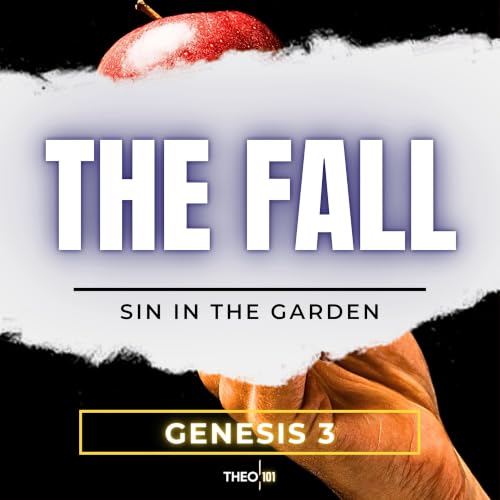
  • The Temptation And The Fall
    May 20 2025

    How did one sin change everything?

    In Genesis 3, a single act of disobedience plunges the whole world into ruin. In this study, Dr. Toby Holt explains the fall of mankind — and the first promise of a Savior.

    The serpent tempts Eve by twisting God’s word and questioning His goodness, and both Adam and Eve eat the forbidden fruit. Shame, blame, and death follow at once, and the curse spreads to all of creation. Dr. Holt explains that this one sin shows how serious sin is and how holy God is. Yet even in the curse comes the first gospel promise: a coming “Seed” of the woman who will crush the serpent’s head — pointing ahead to Christ.

    Questions this study answers:

    1. How did the serpent tempt Eve? By questioning and twisting God’s word and casting doubt on His goodness. He made her believe God was withholding something good.

    2. How serious was this one sin? Serious enough to bring death and to curse all creation. It shows both the gravity of sin and the holiness of God.

    3. Where is the hope in this dark chapter? In Genesis 3:15 — the promise of a coming Savior, the Seed of the woman, who would crush the serpent. It is the first announcement of the gospel.

    “And I will put enmity between you and the woman, and between your seed and her Seed; He shall bruise your head, and you shall bruise His heel.” — Genesis 3:15 (NKJV)

    Speaker: Dr. Toby Holt is the President of New Geneva Theological Seminary, a Reformed seminary in Colorado Springs. He is known for clear, down-to-earth Bible teaching, and his sermons have been downloaded more than 1.9 million times on SermonAudio.

    Listen and go deeper: This sermon is part of the Genesis Explained study from New Geneva Theological Seminary. Find more verse-by-verse teaching across the Bible at newgeneva.org. To support this teaching ministry, visit newgeneva.org/give.

    Show More Show Less
    33 mins
  • A Murder East Of Eden
    May 14 2025

    Why did Cain kill his brother?

    In Genesis 4:1-12, the first child ever born grows up to commit the first murder. In this study, Dr. Toby Holt shows how Cain and Abel reveal the deep reality of sin in every human heart.

    Cain and Abel both bring offerings to God, but God accepts Abel’s and not Cain’s — because of the heart behind it. Instead of repenting, Cain grows furious and murders his brother. Dr. Holt notes that there was no bad upbringing or culture to blame; Cain’s sin came from his own fallen nature. God had warned him, “sin lies at the door,” and the same warning applies to us. Humanity divides into two lines, with no neutral middle ground.

    Questions this study answers:

    1. Why did God reject Cain’s offering? Because of the heart behind it. The problem was not merely what Cain brought, but the attitude with which he brought it.

    2. What did God mean that “sin lies at the door”? That sin was crouching, ready to master Cain — and that he needed to rule over it. It is a warning to every heart.

    3. Is sin “at our door” too? Yes. The same fallen nature is in all of us. Like Cain, we must recognize sin’s pull and turn from it to God.

    “If you do well, will you not be accepted? And if you do not do well, sin lies at the door. And its desire is for you, but you should rule over it.” — Genesis 4:7 (NKJV)

    Speaker: Dr. Toby Holt is the President of New Geneva Theological Seminary, a Reformed seminary in Colorado Springs. He is known for clear, down-to-earth Bible teaching, and his sermons have been downloaded more than 1.9 million times on SermonAudio.

    Listen and go deeper: This sermon is part of the Genesis Explained study from New Geneva Theological Seminary. Find more verse-by-verse teaching across the Bible at newgeneva.org. To support this teaching ministry, visit newgeneva.org/give.

    Show More Show Less
    26 mins
  • Noah And The Great Flood
    May 7 2025

    Was Noah’s flood about more than animals?

    In Genesis 6, the world has grown so corrupt that God sends a flood — yet “Noah found grace.” In this study, Dr. Toby Holt shows that the flood is far more than a children’s story about animals.

    As humanity’s wickedness fills the earth, God resolves to judge it with a flood — a picture of His wrath poured out on sin. But Noah finds grace, and God provides the ark as the one means of rescue. Dr. Holt explains that the ark points forward to Christ, the only refuge from judgment, and that Noah and his family were saved by grace, not by merit. Jesus Himself said the last days would be “like the days of Noah” — a warning to be ready.

    Questions this study answers:

    1. What did the flood represent? The wrath of God poured out on a sinful world. It was an act of judgment, not merely a natural disaster.

    2. How does the ark point to Jesus? It was the one means of rescue from the coming judgment. Christ is that refuge for sinners today.

    3. Why did Jesus compare the last days to “the days of Noah”? To warn that judgment will come suddenly on a world that ignores God. As in Noah’s day, only those in the refuge are safe.

    “But Noah found grace in the eyes of the LORD.” — Genesis 6:8 (NKJV)

    Speaker: Dr. Toby Holt is the President of New Geneva Theological Seminary, a Reformed seminary in Colorado Springs. He is known for clear, down-to-earth Bible teaching, and his sermons have been downloaded more than 1.9 million times on SermonAudio.

    Listen and go deeper: This sermon is part of the Genesis Explained study from New Geneva Theological Seminary. Find more verse-by-verse teaching across the Bible at newgeneva.org. To support this teaching ministry, visit newgeneva.org/give.

    Show More Show Less
    32 mins
  • The Tower Of Babel
    Apr 30 2025

    Why did God confuse the world’s languages?

    In Genesis 11:1-9, humanity unites to build a tower to the heavens — and God scatters them by confusing their language. In this study, Dr. Toby Holt explains what really happened at Babel.

    God had told mankind to spread out and fill the earth, but instead the people gathered to build a city and a tower “to make a name for ourselves.” Their project was rooted in pride and rebellion. God came down, confused their language, and scattered them across the earth — accomplishing His will despite their defiance. Dr. Holt points out that Babel is reversed at Pentecost: where God once divided languages to scatter rebels, He later used many languages to unite people into His church.

    Questions this study answers:

    1. Why did the tower anger God? Because it was an act of proud rebellion — building “up” to make a name for themselves instead of spreading out as God commanded.

    2. Why did God confuse their language? To stop their united rebellion and scatter them across the earth, accomplishing His purpose despite their resistance.

    3. How does Babel connect to Pentecost? At Babel, God divided languages to scatter; at Pentecost, He used many languages to gather people into His church. One judged pride; the other built His people.

    “Come, let us build ourselves a city, and a tower whose top is in the heavens; let us make a name for ourselves, lest we be scattered abroad over the face of the whole earth.” — Genesis 11:4 (NKJV)

    Speaker: Dr. Toby Holt is the President of New Geneva Theological Seminary, a Reformed seminary in Colorado Springs. He is known for clear, down-to-earth Bible teaching, and his sermons have been downloaded more than 1.9 million times on SermonAudio.

    Listen and go deeper: This sermon is part of the Genesis Explained study from New Geneva Theological Seminary. Find more verse-by-verse teaching across the Bible at newgeneva.org. To support this teaching ministry, visit newgeneva.org/give.

    Show More Show Less
    30 mins
  • Abraham, The Friend Of God
    Apr 22 2025

    What does it mean to be a friend of God?

    In Genesis 12, God calls Abraham out of a pagan land with a staggering set of promises. In this study, Dr. Toby Holt opens the life of the man the Bible calls “the friend of God.”

    Abraham came from Ur, a place steeped in idol worship, yet God chose him — not for his merit, but by God’s own grace. God told him to leave his country, his family, and his father’s house for a land he had never seen, and Abraham obeyed. God promised to make him a great nation and to bless all the families of the earth through him — a promise fulfilled in Christ. Dr. Holt notes that the true children of Abraham are not defined by bloodline but by faith.

    Questions this study answers:

    1. Why did God choose Abraham? Not because of his goodness — he came from a family of idol-worshipers. God chose him by His own sovereign grace.

    2. What did God promise Abraham? To make him a great nation, to bless him, and to bless all the families of the earth through him. That last promise points to Christ.

    3. Who are the true children of Abraham? Those who share his faith, not merely his bloodline. All who trust God as Abraham did are counted his children.

    “I will bless those who bless you, and I will curse him who curses you; and in you all the families of the earth shall be blessed.” — Genesis 12:3 (NKJV)

    Speaker: Dr. Toby Holt is the President of New Geneva Theological Seminary, a Reformed seminary in Colorado Springs. He is known for clear, down-to-earth Bible teaching, and his sermons have been downloaded more than 1.9 million times on SermonAudio.

    Listen and go deeper: This sermon is part of the Genesis Explained study from New Geneva Theological Seminary. Find more verse-by-verse teaching across the Bible at newgeneva.org. To support this teaching ministry, visit newgeneva.org/give.

    Show More Show Less
    26 mins
  • Abraham, Sarah, And God's Big Promise
    Apr 16 2025

    Is anything too hard for God?

    In Genesis 18:1-15, the Lord promises ninety-year-old Sarah a son — and she laughs. In this study, Dr. Toby Holt asks whether anything is truly too hard for God.

    Three visitors come to Abraham in the heat of the day, one of them the Lord Himself in human form. As Abraham serves them a lavish meal, the Lord renews His promise: Sarah will have a son within the year. Sarah, far past childbearing age, laughs to herself at the impossibility. God’s gentle reply is a question for the ages: “Is anything too hard for the LORD?” Dr. Holt urges us to measure God’s promises by His power and His track record, not by what seems feasible to us.

    Questions this study answers:

    1. Who were the three visitors? One was the Lord Himself, appearing in human form, with two angels. Abraham welcomed them with lavish hospitality.

    2. Why did Sarah laugh? Because she was far too old to bear a child; the promise seemed impossible. She judged God’s promise by what seemed feasible.

    3. Is anything too hard for God? No. The God who kept this promise to Sarah keeps every promise He makes. His power, not our circumstances, is the measure.

    “Is anything too hard for the LORD? At the appointed time I will return to you, according to the time of life, and Sarah shall have a son.” — Genesis 18:14 (NKJV)

    Speaker: Dr. Toby Holt is the President of New Geneva Theological Seminary, a Reformed seminary in Colorado Springs. He is known for clear, down-to-earth Bible teaching, and his sermons have been downloaded more than 1.9 million times on SermonAudio.

    Listen and go deeper: This sermon is part of the Genesis Explained study from New Geneva Theological Seminary. Find more verse-by-verse teaching across the Bible at newgeneva.org. To support this teaching ministry, visit newgeneva.org/give.

    Show More Show Less
    32 mins
  • The Destruction Of Sodom And Gomorrah
    Apr 9 2025

    Why did God destroy Sodom and Gomorrah?

    In Genesis 18:22 through 19, God rains down judgment on the wicked cities of Sodom and Gomorrah. In this study, Dr. Toby Holt examines a sobering account of both God’s wrath and His mercy.

    Before the judgment falls, Abraham pleads with God, who agrees to spare the cities for the sake of just ten righteous people — but not even ten can be found. Two angels rescue Lot and his family as fire and brimstone destroy the cities; Lot’s wife looks back and becomes a pillar of salt. Dr. Holt explains that the cities’ sin was deep and many-sided, and that Jesus warned it will be “more bearable” for Sodom than for those who hear the gospel and reject it. Greater light brings greater accountability — yet God’s patience and mercy run all through the story.

    Questions this study answers:

    1. What was the sin of Sodom and Gomorrah? Deep and widespread wickedness, including sexual sin but, as Ezekiel says, “all manner” of evil. Their corruption was total.

    2. Why would God spare the cities for ten righteous people? Because He is merciful and patient, willing to relent for the sake of His own. Sadly, not even ten could be found.

    3. What did Jesus mean when He spoke of Sodom? That it will be more bearable for Sodom than for those who reject the gospel. Greater revelation brings greater accountability.

    “Then the LORD rained brimstone and fire on Sodom and Gomorrah, from the LORD out of the heavens.” — Genesis 19:24 (NKJV)

    Speaker: Dr. Toby Holt is the President of New Geneva Theological Seminary, a Reformed seminary in Colorado Springs. He is known for clear, down-to-earth Bible teaching, and his sermons have been downloaded more than 1.9 million times on SermonAudio.

    Listen and go deeper: This sermon is part of the Genesis Explained study from New Geneva Theological Seminary. Find more verse-by-verse teaching across the Bible at newgeneva.org. To support this teaching ministry, visit newgeneva.org/give.

    Show More Show Less
    29 mins