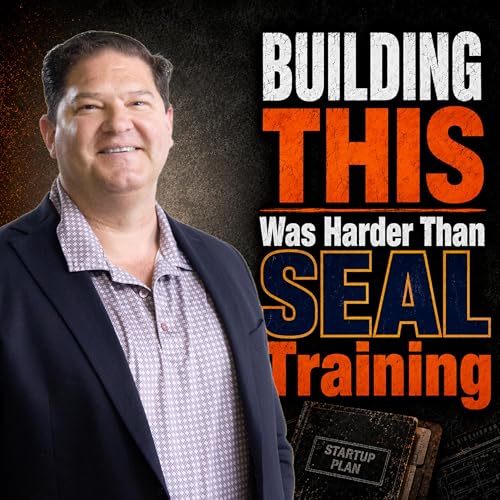
• Former Navy SEAL on Why Starting a Business Was Harder Than SEAL Training
    May 19 2026

    Former Navy SEAL and Neptune Shield CEO Nicholas Rocha joins The Fervent Four Show to talk about military service, entrepreneurship, veteran transition, mental health, and why building a company can be harder than elite military training.

    After 26 years in the Navy, nine combat deployments, and a career inside one of the most demanding communities in the world, Rocha found himself facing a different kind of challenge: figuring out life after service. In this conversation, he shares how veterans can find a new mission through business, why the right team and support system matter, and how entrepreneurship can give former service members purpose, structure, and a reason to keep going.

    Rocha also opens up about veteran suicide, his own moment of crisis, the "Quick Reaction Friends" concept, and why asking for help can be one of the strongest things a person can do.

    This episode is for veterans, founders, military families, entrepreneurs, and anyone trying to build something meaningful after a major life transition.

    https://neptuneshield.com/

    0:00 Intro, giving veterans a new mission
    1:22 How Nick first connected with Virginia Cup
    2:17 Failing eighth grade, ADHD, and finding structure
    4:07 Catching up in school and discovering the Navy
    6:20 Seeing Navy SEALs for the first time
    7:47 How Nick entered the SEAL pipeline
    11:19 Why SEAL culture used to stay quiet
    14:00 SEAL books, public stories, and what not to reveal
    17:20 Why "team" matters more than "SEAL"
    19:18 What was harder, Neptune Shield or the SEAL teams?
    22:00 Why so many startups fail
    23:57 Starting a CBD company to help his daughter
    28:02 Transitioning after 26 years in the Navy
    30:22 The crisis veterans face after service
    32:30 The cost of training a Navy SEAL
    33:30 "Everybody dies, but not everybody truly lives"
    34:44 Helping veterans understand the new battlefield
    35:30 Nick opens up about his own crisis
    38:15 Quick Reaction Friends and suicide prevention
    42:42 How the same framework applies to business
    44:46 Why veterans need tools, resources, and a plan
    46:16 Why founders have to ask for help
    47:44 Showing up and doing the work
    53:20 Could Neptune Shield expand to other cities?
    54:38 Validating technology with operators
    56:05 What's next for Neptune Shield
    58:01 The food of Hampton Roads
    59:42 Closing thoughts

    The Fervent Four Show

    Where Hampton Roads entrepreneurs tell their stories.

    Since 2020, The Fervent Four Show has been the weekly conversation connecting the entrepreneurs, innovators, and community builders shaping the future of Hampton Roads, Virginia. Each Thursday at 11 a.m. EST, hosts Tim Ryan and Zack Miller sit down with founders, CEOs, investors, and ecosystem leaders to explore the real stories behind regional growth — from bold startups and 757 trailblazers to nationally recognized brands born right here.

    Whether you're launching your first venture or scaling your next big idea, these candid, conversational episodes deliver insights on entrepreneurship, innovation, leadership, and business growth that will keep you fired up long after the mics go off.

    Subscribe on Apple: https://podcasts.apple.com/us/podcast/fervent-four/id1596516837
    Spotify: https://open.spotify.com/show/7egTPUyiUEZF4QACNKBYI6?si=704d8e723f3842f5
    YouTube: https://www.youtube.com/@Innovate757?sub_confirmation=1

    Show More Show Less
    1 hr
  • From Wall Street to Building 757 Angels
    May 12 2026

    Organized startup capital has been one of the biggest challenges for cities across the country, and Hampton Roads struggled with it for decades.

    That started to change in 2015 when Monique Adams helped launch 757 Angels, building one of the region's first organized angel investment networks focused on backing high-growth startups and entrepreneurs.

    After surviving the pressure of Wall Street investment banking in New York, Adams brought that experience to Hampton Roads and helped shape a new era of startup investing in the region.

    In this episode of The Fervent Four Show, Adams reflects on what it really took to build 757 Angels, from investor skepticism and startup risk to the pressure of creating systems, relationships, and infrastructure for a startup ecosystem that was still finding its footing.

    The Fervent Four Show is where Hampton Roads entrepreneurs tell their stories.

    New episodes every Tuesday at 6AM.

    Explore more: Innovate Hampton Roads https://www.innovate757.org/ferventfour/


    0:00 Why Startup Capital Was a Problem in Hampton Roads
    1:41 Meeting Monique Adams and the Origins of 757 Angels
    5:12 Surviving Wall Street Investment Banking
    12:29 Leaving New York for Hampton Roads
    17:12 The Reputation That Followed Monique Into Virginia
    21:48 The Lunch That Changed Everything
    23:24 The Self Doubt Behind Building 757 Angels
    29:37 "There's No Way This Is Part Time"
    35:35 The Biggest Problem With Angel Investing
    41:20 Why 757 Angels Never Became a Fund
    49:00 The Real Mission Behind 757 Angels
    50:48 Building the Startup Pipeline in Hampton Roads
    52:45 "Hard Things Are My Middle Name"
    56:14 Handling Pressure While Building an Ecosystem
    58:13 The People Who Helped Shape Monique's Career
    1:00:25 Learning the "Power of the Pause"
    1:02:26 Why She's Going to Meet the Dalai Lama
    1:04:13 What Founders Still Need Most
    1:06:25 Final Thoughts

    Show More Show Less
    1 hr and 6 mins
  • "Your Baby's Ugly" — The Truth Most Agencies Won't Tell You
    May 5 2026

    Most marketing doesn't fail because of bad ads. It fails because the foundation is broken.

    In this episode of The Fervent Four Show, Nicole Newsome, CEO of Qantm Creative, breaks down what she calls "radical honesty" — the willingness to tell clients the truth, even when they don't want to hear it.

    From firing toxic clients to rebuilding broken brands before spending a dollar on ads, this is a conversation about doing the hard work first and building businesses that actually last.

    If you've ever wondered why your marketing isn't working, this is probably why.


    00:00 Intro
    02:20 Nicole's background in sales and startups
    05:45 What "radical honesty" really means
    08:50 "Your baby's ugly" and fixing broken businesses
    12:40 Why most marketing fails before it starts
    16:30 Firing clients and protecting your team
    20:40 Building a culture of trust and transparency
    25:10 Radical honesty in personal relationships
    29:30 Compensation, leadership, and trust
    34:10 Side hustles and the modern workforce
    38:30 AI in marketing, threat or advantage
    43:10 SEO vs AEO and the future of search
    47:30 Showing up in the 757 ecosystem
    51:00 Building better businesses in Hampton Roads

    https://qantmcreative.com/

    Show More Show Less
    1 hr and 6 mins
  • The Hidden Business Value of Comments (Most Companies Ignore This Data)
    Apr 28 2026

    Most companies already have the data they need—they're just ignoring it. In this episode, we break down how comments expose customer intent, fix your messaging, and drive smarter decisions, featuring insights from Marc Weinberg of YourComments.AI.


    0:00 Why negative comments stick more than positive ones
    3:49 Intro to Marc Weinberg and YourComments.AI
    6:28 The core problem, too many comments to actually use
    7:57 How companies like Tesla use customer feedback at scale
    10:07 Why most people ignore comments, and why that's a mistake
    11:36 Comments as a business intelligence tool beyond social media
    13:12 The role of bots, spam, and platform limitations
    16:28 Why big platforms don't solve the problem
    18:16 Real time comment insights and future use cases
    21:05 Understanding sentiment and customer perception
    23:14 The psychology of feedback and decision making
    29:12 Comments as signals, not noise
    33:17 Filtering data, positive, negative, and patterns
    35:03 The real challenge, what to do with the data
    38:00 Using AI to uncover trends, intent, and patterns
    41:10 The risk of audience capture when listening too closely
    43:08 Using repeated questions to improve messaging and products
    46:09 How creators and companies use comments to build new products
    49:45 Why some content wins, and what comments reveal about it
    56:18 The shift from social connection to algorithm driven content
    58:04 Cutting out noise and focusing on signal
    1:00:17 The mental cost of ignoring how comments affect you
    1:02:47 Building better teams and communication through feedback

    Show More Show Less
    1 hr and 11 mins
  • Why This Coworking Model Keeps Selling Out
    Apr 21 2026

    Most coworking spaces struggle. This one doesn't.

    In this episode of Fervent Four, we break down the model behind a business hub that keeps filling up, not because of flashy marketing, but because it actually works for the people inside it.

    Gene Granger, Managing Director of The IncuHub, shares how a community-first approach, flexible memberships, and relentless visibility across the region have turned a simple workspace into a growth engine for entrepreneurs.

    From HUBZone strategy to word-of-mouth referrals and what they call "return on collision," this is a real look at what happens when you build for business owners instead of just renting desks.

    If you're building a business, or thinking about where and how to do it, this is worth your time.

    00:00 Intro and trophy banter
    02:00 Meet the guest behind the growth
    03:10 From one location to rapid expansion
    07:30 The real strategy behind networking
    11:40 Why no event is too small
    15:00 What a HUBZone actually is
    18:45 Expansion into a new market
    22:45 Why this model is outperforming others
    29:50 The power of community and "collisions"
    30:00 Who this actually works for
    31:45 How location strategy plays a role
    37:20 Daily routines and discipline
    41:00 Culture vs typical coworking
    46:20 How people are getting in early
    49:00 Behind the scenes of building it
    52:30 Office culture and real conversations
    56:00 Why this market is heating up
    58:40 Startup World Cup and big ideas
    59:40 Why this region is undervalued
    1:02:00 Presidents?

    https://theincuhub.com/

    Show More Show Less
    1 hr and 5 mins
  • The Silicon Valley of Water Is Being Built in Virginia
    Apr 14 2026

    Most people think it's just another utility bill.

    They're wrong.

    The organization behind it is responsible for cleaning millions of gallons of wastewater, protecting our waterways, and now, turning that same water back into drinking water.

    In this episode of The Fervent Four Show, Jay Bernas breaks down how Hampton Roads is becoming the Silicon Valley of water technology, from recycling wastewater into drinking water, to reversing land subsidence, to building a sustainable water supply that could impact millions.

    This isn't theory.

    It's happening right now.

    And chances are, you had no idea.

    00:18 The moment it became more than "just a bill"
    01:08 The "Silicon Valley of Water Tech" idea
    03:03 Why people think they pick up trash
    04:02 The wild origin story (oysters + raw sewage crisis)
    05:17 The SWIFT program explained
    06:00 The aquifer problem no one is talking about
    07:30 Why Hampton Roads is sinking
    09:01 Can we actually reverse sea level impact?
    10:11 You're drinking 30–40,000-year-old water
    11:18 The economic impact (billions saved)
    14:01 The truth about where water comes from
    15:26 Would you drink recycled water?
    18:20 The vision: Silicon Valley of water
    22:13 Tech impacting millions globally
    24:32 The $400M innovation breakthrough
    26:19 AI + water (this is where it gets crazy)
    28:30 The future of fully automated plants
    31:13 What happens to jobs?
    34:54 The jobs nobody wants (and why that matters)
    36:13 Clean water is the most important invention ever
    39:09 Inside the culture
    42:38 What the aquifer actually looks like
    46:36 Where your toilet water actually goes
    48:47 Clean water for a penny per gallon
    50:53 Why nobody knows this story

    Learn more about HRSD: https://www.hrsd.com/

    Show More Show Less
    1 hr and 4 mins
  • She Got "Shellacked"… Then Built a Company to Fix a Problem Everyone Ignores
    Apr 7 2026

    Everyone has sat at a railroad crossing wondering how long they'll be stuck.

    Most people accept it.

    Andria McClellan didn't.

    After years in local government hearing complaints about blocked roads, delayed emergency response, and daily frustration, she realized something shocking:

    "There's no data. You don't have any data on how many times the train has blocked your road."

    Now, as CEO of Oculus Rail, she's building a system to track, measure, and ultimately solve one of the most overlooked infrastructure problems in the country.

    This is a story about failure, resilience, and seeing opportunity where everyone else sees inconvenience.

    From getting "shellacked" in elections to building a company rooted in real-world problems, Andria breaks down what it actually takes to build something that matters.


    00:00 Startup mindset and campaigns
    03:39 Naming Oculus Rail and building a brand
    07:01 Space, region, and innovation context
    09:36 The real problem, trains blocking roads
    11:28 Past startup experience and early career
    14:39 Failure, shutdowns, and lessons learned
    16:00 Running for office like building a startup
    18:38 Losing campaigns and resilience
    19:17 Becoming a problem solver again
    23:23 What railroads actually know and don't
    25:02 Rail industry, data, and disruption
    28:43 Selling to government and AI hesitation
    32:40 Building the tech and partnerships
    36:20 Why prediction is hard
    40:48 Managing people and leadership struggles
    42:16 The hardest part, selling into government
    45:51 Data as the real product
    47:38 Why this problem still exists
    51:15 Expansion and scaling Oculus Rail

    https://oculusrail.com/

    Show More Show Less
    1 hr and 6 mins
  • Why Most Founders Actually Fail (It's Not Money)
    Mar 31 2026

    Most people think startups fail because they run out of money.

    That's not what actually happens.

    In this episode of The Fervent Four Show, Ryan Dean, founder of Dreamer Made, breaks down what really causes businesses to stall, why early momentum fades, and how founders end up quitting long before they run out of options.

    From buying a bus on a whim to rebuilding his company with a sharper focus, Ryan shares the reality behind startup energy, AI shortcuts, and the difference between ideas that start and businesses that last.

    If you're building something, this is the part no one talks about.

    Listen now.

    Timestamps

    00:00 Intro and opening banter
    02:30 The unicorn story and standing out early
    05:30 What Dreamer Made originally was
    09:00 Why early ideas lack structure
    12:30 Shutting it down and lessons learned
    16:00 Restarting Dreamer Made with a new approach
    19:30 AI, roadmaps, and building clarity
    23:00 Why AI isn't the shortcut people think
    27:00 The importance of human expertise
    31:00 Where most founders go wrong early
    35:00 Why businesses fail from energy, not money
    39:00 The reality of expectations vs execution
    43:00 The problem with "easy button" thinking
    47:00 Customer validation and the "mom effect"
    51:00 Why chasing "yes" is dangerous
    55:00 Learning to value negative feedback
    58:30 Final thoughts and closing

    More info on dreamermade: https://dreamermade.com/

    Show More Show Less
    1 hr and 6 mins