• MOVEMENT SNACKS - THE 2026 WELLNESS TREND THAT ACTUALLY WORKS
    Jan 17 2026
    Hey everyone, Summer here.And today I'm talking about one of the coolest wellness trends for 2026—and trust me, this is one you're actually going to want to try because it's so simple and it works.It's called "movement snacks." And no, that's not some weird protein bar. It's the idea of taking short bursts of movement throughout your day instead of forcing yourself to do one long workout that you probably won't stick with anyway.If you're someone who sits at a desk all day, feels guilty about not going to the gym, or just can't seem to find time for exercise—this trend is for you. It's backed by science, it's easy to implement, and it actually fits into real life.Let's dive in. PART ONE: WHAT ARE MOVEMENT SNACKS?So what exactly are movement snacks?Simply put: short bursts of movement, stretching, or mobility exercises scattered throughout your day. We're talking 2-5 minutes at a time, multiple times per day, instead of one 30-60 minute workout.Think about it like eating. You don't eat all your daily calories in one meal, right? You snack throughout the day to keep your energy up. Movement snacks are the same concept—keeping your body active throughout the day rather than being sedentary for 8+ hours and then trying to make up for it with one gym session.Why This Is Trending in 2026Here's why health experts are all over this trend: most of us have desk jobs or sedentary lifestyles. We sit for work, we sit during commutes, we sit to watch TV. Even if you work out for an hour, if you're sitting the other 15 hours you're awake, that's still a problem.Research shows that prolonged sitting is linked to health issues—obesity, diabetes, cardiovascular disease, even early death. And here's the kicker: going to the gym for an hour doesn't fully offset the damage of sitting all day.Movement snacks counter this by breaking up those long periods of sitting. You're keeping your metabolism active, supporting joint health, maintaining blood flow, and preventing your body from getting stiff and achy.What Counts as a Movement Snack?The beauty is that it can be almost anything:Standing up and stretching for 2 minutesWalking to get water or coffeeDoing 10 squats or push-upsA quick mobility drillDancing to one songGoing up and down stairsDesk yoga stretchesA quick walk around the buildingIt's not about intensity. It's about consistency and frequency. Multiple small movements throughout the day instead of one big effort. PART TWO: THE SCIENCE - WHY IT WORKS So why does this actually work better than traditional exercise for some people?Metabolic BenefitsWhen you sit for long periods, your metabolism slows down. Your muscles aren't contracting, so they're not using glucose or burning calories efficiently. Blood flow decreases.But when you stand up and move—even just for 2 minutes—you activate muscles, increase blood flow, and spike your metabolism temporarily. Do this multiple times per day, and you're keeping your metabolic rate more elevated overall.Joint and Muscle HealthSitting in the same position for hours causes muscles to tighten and joints to stiffen. Your hip flexors shorten, your shoulders round forward, your neck gets tight. Movement snacks counteract this by regularly moving your joints through their range of motion and preventing muscles from staying locked in one position.Energy and FocusHere's something you've probably experienced: sitting at your desk for 3 hours straight makes you feel tired, foggy, and unmotivated. But if you get up and move for even 2 minutes, you come back feeling more awake and focused.That's because movement increases blood flow to your brain, delivers oxygen, and triggers the release of neurotransmitters that improve mood and cognition. Students and workers who take movement breaks actually perform better than those who power through without breaks.SustainabilityThe biggest reason movement snacks work is that they're sustainable. Most people can't stick to a 5-day-a-week gym routine. Life gets busy, motivation fades, workouts feel like a chore.But can you stand up and stretch for 2 minutes every hour? Yeah, you can. Can you do 10 squats while your coffee brews? Absolutely. These are small enough that you'll actually do them, which means you'll actually get the benefits. PART THREE: HOW TO IMPLEMENT MOVEMENT SNACKS So how do you actually start doing this?Set RemindersThe easiest way is to set a timer or reminder on your phone. Every hour, get a notification that says "movement snack time" or "stand up and stretch." Follow it for just 2 minutes, then sit back down.There are apps designed for this, or you can just use your phone's alarm feature. The key is making it automatic so you don't have to remember or motivate yourself each time.Link It to Existing HabitsAnother strategy is to attach movement snacks to things you already do:Every time you go to the bathroom, do 10 squats before you sit back downEvery time you refill your coffee or water, do arm circles and ...
    Show More Show Less
    10 mins
  • The AI Revolution - How Artificial Intelligence Is Reshaping Humanity
    Jan 16 2026
    You made 47 decisions before you even got to work this morning. But here's the thing—you probably only consciously made about 15 of them. The rest? Artificial intelligence made them for you.Your alarm clock's wake-up time, optimized for your sleep cycle. Your commute route, calculated around real-time traffic. Your morning news feed, curated by algorithms that know you better than your best friend.Welcome to 2025, where AI isn't coming—it's already here. And it's fundamentally changing what it means to be human.I'm Summer, and today on the Duke Tyner podcast, we're diving deep into the AI revolution. The numbers, the innovations, the fears, and the extraordinary future being built right now.Let's talk about artificial intelligence.THE INVISIBLE DECISION MAKERLet's start with a stat that should make you pause and think.Artificial intelligence is already making 68% of the decisions you encounter in your daily life.Think about that. More than two-thirds of the choices affecting your day aren't being made by you, or even by other humans. They're being made by algorithms.Your GPS route to work? AI analyzed millions of data points about traffic patterns, accidents, construction, and historical trends to determine the fastest path.The price you see when shopping online? AI dynamically adjusted it based on demand, your browsing history, competitor pricing, and predicted willingness to pay.Your medical diagnosis at the doctor's office? Increasingly, AI is analyzing your symptoms, cross-referencing millions of medical cases, and suggesting the most likely conditions.Even your credit card approval or denial? AI risk assessment models made that call in milliseconds.Now, here's the question: Is this good or bad?The answer is... complicated. Because AI decision-making isn't inherently good or evil. It's a tool. And like any tool, it depends on how it's designed, who controls it, and what values are embedded in it.But one thing is certain—we can't ignore it anymore. AI isn't the future. It's the present. And understanding how it works is now as essential as understanding how money works or how democracy works. FROM FEAR TO ACCEPTANCE - THE WORKPLACE TRANSFORMATION]When AI first started appearing in workplaces, people were terrified.And honestly? That fear was justified. Nobody wants to be replaced by a machine. Nobody wants to lose their livelihood to an algorithm.The stats showed it: 72% of people said they were initially worried about AI in their workplace.That's nearly three-quarters of workers feeling anxious, threatened, and uncertain about their future.But here's where it gets interesting.After six months of actually using AI in their jobs, that worry dropped to just 31%.That's a massive shift. From 72% worried to 31% worried. Why?Because people discovered something crucial: AI wasn't replacing them. It was assisting them.Think about it like this—when calculators were introduced, accountants didn't become obsolete. They became more efficient. They stopped doing tedious arithmetic by hand and started focusing on analysis, strategy, and interpretation.AI is doing the same thing across industries.Customer service reps aren't losing jobs to chatbots—they're handling the complex, emotionally sensitive cases while AI handles the routine questions.Radiologists aren't being replaced by diagnostic AI—they're using AI to catch details they might have missed and spending more time on difficult cases.Writers aren't being replaced by AI content generators—they're using AI to research faster, brainstorm ideas, and edit more efficiently, then applying their creativity and judgment to craft the final product.The pattern is clear: AI handles repetitive, data-heavy tasks. Humans handle judgment, creativity, and emotional intelligence.And workers who were initially terrified are discovering that working with AI actually makes their jobs more interesting, less tedious, and often more fulfilling.AI IN AGRICULTURE - THE MILLION EXPERT FARMERSNow let's talk about a place you might not expect to find cutting-edge AI: the farm.Agriculture seems like the last place that would be transformed by artificial intelligence. I mean, it's dirt, seeds, water, and sun, right? How high-tech can that get?Turns out, very high-tech.AI-powered agricultural systems have increased crop yields by up to 30% while reducing water usage by 25%.Let me repeat that. More food. Less water. Better outcomes.How is this possible?Imagine having a million expert farmers watching every single plant in your field, 24 hours a day, 7 days a week. Each one monitoring soil moisture, nutrient levels, pest activity, weather patterns, and growth rates.That's essentially what AI does.Sensors in the field collect real-time data on thousands of variables.Satellite imagery tracks crop health from space.Machine learning algorithms analyze all this data and make micro-decisions: This section needs more water. That section has a nitrogen deficiency. These plants are ...
    Show More Show Less
    34 mins
  • WHAT TV SHOWS SHOULD WE BE WATCHING RIGHT NOW?
    Jan 16 2026
    Hey everyone, Summer here.And it's January 2026, which means we're in peak TV season. Golden Globes just happened, streaming services are dropping new shows left and right, and you're probably wondering: what should I actually be watching?The good news is there's a ton of great stuff out right now. The bad news? There's SO much that it's overwhelming to choose. Between Netflix, HBO Max, Apple TV, Disney+, Paramount+, and all the others, how do you even decide what deserves your time?So today I'm breaking down the hottest shows you should be watching right now in January 2026—what's brand new, what's returning, and what's actually worth the hype.Let's dive in. PART ONE: THE MUST-WATCH NEW SHOWS Let's start with brand new series that just premiered or are about to.The Pitt - Season 2 (HBO Max, January 8)If you loved ER back in the day, you need to watch The Pitt. Noah Wyle—yes, from ER—is back in another medical drama, but this one's different. Each episode covers one hour of a 15-hour shift in a teaching hospital emergency room. The whole season takes place in a single day in real time.Season 2 just dropped on January 8th, and critics are raving. It's been praised for its accuracy about modern medicine and healthcare, and it's perfect for binging since the real-time format makes you want to keep watching.Star Trek: Starfleet Academy (Paramount+, January 15)For sci-fi fans, this is the big one. It's a new Star Trek series following young cadets training to become Starfleet officers. Set in the 32nd century after Discovery, it's got Oscar winners Holly Hunter and Paul Giamatti providing serious acting weight.If you've been missing Star Trek or want a fresh entry point into the franchise, this looks like the perfect jumping-on spot.A Knight of the Seven Kingdoms (HBO, January 18)Game of Thrones fans, HBO's got you. This new spinoff is based on George R.R. Martin's novellas and follows Ser Duncan the Tall and his squire Egg, set a century before the original Game of Thrones.Martin himself promised duel scenes "on another level," and early word is it's more accessible than House of the Dragon while still delivering that Westeros drama we crave. Plus it's already been renewed for Season 2, so you know HBO has confidence.Bridgerton - New Season (Netflix, January 16)Regency romance fans know the drill—each season focuses on a different Bridgerton sibling. This time it's Benedict, the arty, licentious second son who's always resisted settling down until he spots a mysterious woman at a masked ball.If you've been following Bridgerton, you're already watching. If you haven't started, this might be a good season to jump in because Benedict's story looks particularly compelling. PART TWO: RETURNING FAVORITES YOU CAN'T MISS Now let's talk about shows coming back that you absolutely need to catch up on if you've fallen behind.Industry - Season 4 (HBO, January 11)This British drama about young recruits at a London investment bank has been getting better every season. Season 4 adds Kiernan Shipka, Kal Penn, and Max Minghella to an already strong cast.If you want authentic finance industry drama with great writing and diverse casting, Industry is criminally underrated. Plus, Stranger Things fans will be happy to know Charlie Heaton is joining this season.Shrinking - Season 3 (Apple TV, January 28)Jason Segel and Harrison Ford star in this comedy-drama about a therapist who lost his wife and decides to completely change how he treats patients. Season 3 is adding Michael J. Fox to the cast, which is reason enough to watch.If you loved Ted Lasso, Shrinking has some of the same creative team and that perfect blend of humor and heart. It's been getting better with each season.The Boys - Season 5 (Prime Video, April 8)Okay, this isn't January but it's close enough that I have to mention it—The Boys final season drops April 8th. The first two episodes release that day, then weekly after that.This season will see Butcher, Hughie, and the gang try to take down Homelander once and for all. Plus, in fun casting news, Jared Padalecki is joining, reuniting with his Supernatural co-star Jensen Ackles who plays Soldier Boy.Beef - Season 2 (Netflix, TBA)The acclaimed A24 series from Lee Sung Jin is back with an all-new cast and story. This time it's Oscar Isaac, Carey Mulligan, Charles Melton, and Cailee Spaeny dealing with viciously aired grievances at a country club.Season 1 was phenomenal, and the anthology format means you don't need to have seen it to jump into Season 2. PART THREE: HIDDEN GEMS AND NICHE PICKS Now for some shows that might not be on everyone's radar but are worth checking out depending on your interests.His & Hers (Netflix, January 8)Tessa Thompson stars in this psychological thriller based on a book, playing a newscaster trying to resurrect her career after tragedy. If you like suspense and strong performances, this could be your sleeper hit of January.Hijack - Season 2 (Apple TV, January 14)...
    Show More Show Less
    9 mins
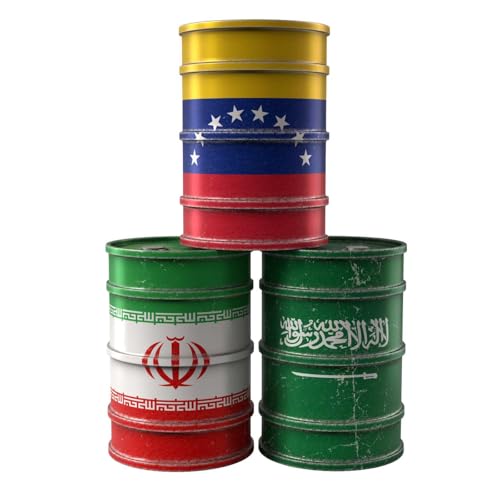
  • WHAT'S HAPPENING IN IRAN AND VENEZUELA - TWO CRISES UNFOLDING
    Jan 12 2026
    Hey everyone, Summer here.Today we're talking about two major international stories that are unfolding right now—situations in Iran and Venezuela that are dominating headlines and raising serious questions about what happens next.I want to be upfront: these are complex, developing situations involving real people in real danger. I'm going to do my best to explain what's happening based on current reporting, but things are changing rapidly and there's a lot we still don't know.What's clear is that both Iran and Venezuela are experiencing significant upheaval right now, and the international community—especially the United States—is deeply involved in both situations.Let's break down what's happening and why it matters. PART ONE: IRAN - PROTESTS AND CRACKDOWN Let's start with Iran, where mass protests have been raging for almost two weeks now.How the Protests StartedThe Iranian protests began on December 28th, 2025, in Tehran's Grand Bazaar—the historic commercial center of Iran's capital. The immediate trigger was economic: Iran's currency, the rial, has collapsed to over 1.4 million to one U.S. dollar. Inflation has exceeded 42 percent. Basic necessities have become unaffordable.Shopkeepers in the bazaar shut down their businesses in protest—merchants who depend on being open chose to close because the economic situation had become untenable.How It's EvolvedWhat started as economic protests quickly evolved into broader political demonstrations. The protests have now spread to over 130 cities across all 31 of Iran's provinces.People aren't just protesting prices anymore. They're chanting slogans against Supreme Leader Ayatollah Ali Khamenei, calling for political change, and in some cases expressing support for the monarchy that was overthrown in Iran's 1979 Islamic Revolution.The Government ResponseIran's government has responded with severe force. According to human rights organizations:At least 50-60 people have been killedOver 2,000 people have been arrestedSecurity forces have used live ammunition, tear gas, and beatings against largely peaceful protestersThe government shut down internet access nationwide on Thursday, cutting Iran off from the worldThat internet blackout is significant—it prevents images of violence from getting out and makes it harder for protesters to organize.The International DimensionPresident Trump has repeatedly warned Iran against killing protesters, threatening U.S. intervention if the violence continues. Given recent U.S. actions elsewhere, these threats are being taken seriously.Iran's Supreme Leader has accused protesters of being "mercenaries for foreigners" working on behalf of Trump and the United States. The government frames the protests as foreign-backed rather than legitimate domestic unrest.The exiled son of Iran's last Shah, Reza Pahlavi, has been calling for protests and positioning himself as a potential leader if the current government falls, though Trump has said he won't back any specific successor.Why This Is HappeningIran has been under intense pressure from multiple directions:Severe economic sanctions from the U.S. and UN over its nuclear programA 12-day war with Israel in June 2025 that damaged its military infrastructureThe collapse of its "Axis of Resistance" regional alliesYears of corruption and economic mismanagementAll of this has created conditions where ordinary Iranians can't afford basic necessities, and frustration has boiled over into the streets. PART TWO: VENEZUELA - INTERVENTION AND UNCERTAINTY Now let's talk about Venezuela, where an even more dramatic situation has unfolded.What Happened - U.S. Military ActionAccording to reports from January 3rd-4th, 2026, the United States conducted military strikes on Venezuela and captured President Nicolás Maduro and his wife, flying them to New York to face drug trafficking charges.This was a lightning military operation—explosions in Caracas early Saturday morning, strikes on military facilities, and the extraction of Venezuela's president.President Trump announced that the U.S. would temporarily "run" Venezuela until a transition to new leadership could occur, though exactly what that means on the ground remains unclear.The JustificationThe U.S. has had outstanding indictments against Maduro for years, alleging he partnered with drug trafficking organizations to transport cocaine into the United States. The Trump administration framed this as a law enforcement operation targeting a narco-terrorist regime.Maduro has repeatedly denied these accusations and claimed the U.S. simply wants access to Venezuela's vast oil reserves.The AftermathVenezuela's Vice President, Delcy Rodríguez, was reportedly "sworn in" as president, though she demanded Maduro's release and called him the rightful leader. The situation on the ground in Venezuela remains chaotic and unclear.Neighboring countries like Brazil and Colombia have condemned the U.S. action, with Brazilian President Lula ...
    Show More Show Less
    10 mins
  • FAST LANE COWBOY - DUKE'S NEWEST ANTHEM
    Jan 11 2026
    Hey everyone, Summer here.And I am so excited to talk to you today about Duke's brand new track and music video—"Fast Lane Cowboy." This one just dropped, and I've got to tell you, it's everything you love about Duke Teynor cranked up to eleven.If you've been following Duke's journey through Southern rock, country rap, Gothic storytelling, and working-class anthems, "Fast Lane Cowboy" takes all that energy and puts it on the highway at 98 BPM with the pedal to the metal.This is Duke at his most free, most wild, most unapologetically himself—riding Interstate 65 from Nashville to Atlanta with chrome shining, engines screaming, and the radio blasting. It's Southern hip-hop meeting rap-rock meeting outlaw country, and it absolutely works.So let's dive into "Fast Lane Cowboy"—what it's about, how it sounds, and why this might be Duke's most personal anthem yet. PART ONE: THE SONG - WHAT "FAST LANE COWBOY" IS ABOUT "Fast Lane Cowboy" is about freedom. Not theoretical freedom, not philosophical freedom—actual, physical, pedal-to-the-metal freedom on the American highway.The Story Duke's TellingDuke opens with "Pedal to the metal, highway's my home, Nashville to Atlanta, never alone." Right away, you know this isn't about a road trip or vacation. The highway IS home. This is a lifestyle, an identity.He's hauling dreams from town to town. He's living every moment, making mama proud. He's got his trucker hat, his Ray-Bans, windows rolled down, radio blasting. And he's very clear: standing still makes him queasy. Movement is the air he breathes.This is someone who was born to ride, not to settle or stay. The fast lane isn't just where he drives—it's who he is.The Route - Interstate 65Duke specifically mentions Interstate 65, which runs from Nashville, Tennessee, down through Alabama to the Gulf Coast, but he's riding it between Nashville and Atlanta—crossing state lines, county lines, moving through the Smokies to Georgia pines.Every exit has a story. Every mile marker knows him well. Rest stops, truck stops, neon signs—this asphalt ribbon is where he shines.If you've ever driven through the South on major highways, you know exactly what Duke's describing. The rhythm of the road, the landmarks you recognize, the way certain stretches become familiar even as you're constantly moving.The Tension - Settling Down vs. Staying FreeThere's this beautiful tension in the song. Duke acknowledges that maybe one day he'll settle down, plant roots in some quiet town. But not yet. Not until freedom's been fully tasted.He says it perfectly in the bridge: "Maybe one day I'll settle down, plant my roots in some quiet town. But until then, I'll take the ride, fast lane cowboy with Southern pride."That's honest. He's not saying he'll never settle. He's saying not yet. The road still calls. Freedom still answers.The Philosophy - Life's a Journey, Not a RaceDuke drops this line: "Life's a journey, not a race." Which is interesting because the whole song is about speed, about pushing hard, about the fast lane.But I think what he's saying is that he's not racing toward some destination. He's not trying to get somewhere faster than everyone else. He's just living fully in the journey itself—which happens to involve going fast, living wild, chasing thrills.The speed isn't about competition. It's about feeling alive. PART TWO: THE SOUND - SOUTHERN HIP-HOP MEETS RAP-ROCK Musically, "Fast Lane Cowboy" is Duke pushing into new territory while staying rooted in Southern sound.The Genre FusionDuke describes this as "upbeat Southern hip-hop rap-rock with outlaw country twang." That's a mouthful, but it's accurate.The foundation is hip-hop—heavy bass lines, 98 BPM groove, rap flow in verses two and four. But layered over that is acoustic guitar strums giving it country soul, and then rock energy pushing the whole thing forward.It's like if you took OutKast's Southern hip-hop sensibility, mixed it with Kid Rock's rap-rock energy, added some outlaw country from Waylon Jennings, and created something uniquely Duke Teynor.The Production DetailsAt 98 BPM, the song has this driving momentum. It's not frantic-fast, but it's got forward motion that matches the highway theme perfectly.The heavy bass drops hit like highway dividers—boom, boom, boom—keeping rhythm like mile markers passing by.The acoustic guitar strums give it organic warmth, preventing it from being all electronic hip-hop production. You can hear the country roots even while the rap verses flow.And Duke switches between sung choruses and rap verses seamlessly. The rap flow feels natural, conversational, like he's telling you stories from the road. Then the chorus opens up into this anthemic sing-along: "I'm a fast lane cowboy, riding the line, between the danger and the divine."The Lyrical FlowWhat I love about Duke's rap verses is they don't feel forced. Some country artists try to incorporate rap and it sounds awkward, like they're imitating something outside ...
    Show More Show Less
    12 mins
  • WHAT'S HAPPENING IN IRAN - PROTESTS AND CRISIS
    Jan 10 2026
    Hey everyone, Summer here.Today we're talking about something serious happening right now—protests in Iran that have been going on for almost two weeks. This is a major story that's unfolding in real-time, and I think it's important to understand what's happening and why it matters.I want to be clear upfront: this is a complex situation involving real people facing real danger. I'm going to do my best to explain what's going on based on current reporting, but this is a developing story and things are changing rapidly.Let's talk about what's happening in Iran. PART ONE: WHAT'S HAPPENING - THE BASICS The protests in Iran started at the end of December 2025—specifically around December 28th—in Tehran's Grand Bazaar. This is the historic commercial center of Iran's capital city.How It Started - Economic CrisisThe initial spark was economic. Iran's currency, the rial, has been in free fall. To give you perspective: the rial is now trading at over 1.4 million to one U.S. dollar. That's catastrophic currency devaluation.Inflation in Iran has exceeded 42 percent. Basic necessities—rice, meat, pasta, everyday food items—have become unaffordable for ordinary Iranians. Shopkeepers in the Grand Bazaar closed their businesses in protest over these economic conditions.Think about that: merchants who depend on being open for business shutting down because the economic situation has become untenable. That's how bad things have gotten.How It's Evolved - Beyond EconomicsWhat started as economic protests has evolved into something much broader. The demonstrations have spread to over 130 cities across all 31 of Iran's provinces. People aren't just protesting prices anymore—they're chanting slogans against the Supreme Leader, Ayatollah Ali Khamenei, and calling for broader political change.Some protesters have been chanting support for the late Shah—Iran's monarch who was overthrown in the 1979 Islamic Revolution. That's significant because expressing support for the monarchy can carry serious consequences in Iran.The Government Response - CrackdownThe Iranian government's response has been severe. According to human rights organizations:At least 50-60 people have been killed (numbers vary by source, but all report significant casualties)Over 2,000 people have been arrestedSecurity forces have used live ammunition, tear gas, water cannons, and beatings against largely peaceful protestersThe government shut down internet access across the country on Thursday, cutting Iran off from the worldThat internet blackout is significant. When governments shut down the internet during protests, it's usually to prevent images and videos of violence from getting out and to make it harder for protesters to organize. PART TWO: THE DEEPER CONTEXT - WHY THIS IS HAPPENING To understand these protests, you need to understand the pressures Iran has been under.Economic Sanctions and PressureIran has been under various U.S. and international sanctions for years, but things intensified in September 2025 when the United Nations reimposed sanctions over Iran's nuclear program. These sanctions make it extremely difficult for Iran to trade internationally, access foreign currency, or maintain economic stability.The result is the economic collapse we're seeing—massive inflation, currency devaluation, and ordinary people unable to afford basic necessities.Recent Military ConflictAccording to reports, there was a 12-day war in June 2025 between Israel and Iran, during which the United States bombed nuclear sites in Iran. This conflict severely weakened Iran's military infrastructure and its network of regional allies.Iran's so-called "Axis of Resistance"—a coalition of countries and militant groups that Iran backed—has been significantly weakened since the start of the Israel-Hamas war in 2023.So Iran is dealing with economic crisis, military setbacks, weakened regional influence, and now massive domestic protests.Government Framing - Blaming Foreign InterferenceThe Iranian government, led by Supreme Leader Khamenei, has framed these protests as foreign interference—specifically blaming the United States and Israel for inciting unrest.Khamenei has said protesters are "mercenaries for foreigners" and are "ruining their own streets to make the president of another country happy," referring to U.S. President Trump.Iran's top judge warned that protesters are "operating in line" with U.S. and Israel interests and promised no leniency.Whether you believe foreign powers are involved or not, it's clear that economic hardship and domestic frustration are real factors driving these protests. PART THREE: INTERNATIONAL DIMENSIONS - TRUMP AND PAHLAVI There are some international dimensions to this story that are important to understand.Trump's WarningsPresident Trump has repeatedly warned Iran against killing protesters, saying the U.S. would "come to their rescue" if violence escalates. He's said Iran is in "big trouble" and threatened ...
    Show More Show Less
    10 mins
  • THE BROWN MOUNTAIN LIGHTS - NORTH CAROLINA'S GLOWING MYSTERY
    Jan 9 2026
    Hey everyone, Summer here.And today we're diving into one of the most fascinating mysteries in North Carolina—and honestly, one of the weirdest things you'll ever hear about. We're talking about the Brown Mountain Lights.If you've never heard of them, imagine this: mysterious glowing orbs that appear over a mountain ridge in the Blue Ridge Mountains. White lights, red lights, blue lights—floating, hovering, darting around unpredictably, then disappearing and reappearing somewhere else.And here's the thing that makes this genuinely strange: people have been seeing these lights for over a century. Actually, much longer than that—Cherokee legends talked about them before Europeans even arrived in North Carolina. The U.S. Geological Survey has investigated them. Twice. Scientists have proposed theories. None of them fully explain what people are seeing.So today, we're exploring the Brown Mountain Lights—what they are, what they might be, the folklore surrounding them, and why this mystery has captivated the American South for generations.Let's get weird. Let's get into it. PART ONE: WHAT ARE THE BROWN MOUNTAIN LIGHTS? First, let's establish what we're actually talking about here.Brown Mountain is a low ridge in Burke County, North Carolina, sitting in the Blue Ridge Mountains between Morganton and Linville. It's not a dramatic peak—it's actually pretty modest as mountains go. But what happens above and around this mountain? That's where things get interesting.The PhenomenonThe Brown Mountain Lights are mysterious luminous orbs—glowing spheres of light that appear near the mountain. They show up in different colors: white, red, blue, sometimes combinations. And they don't just sit there. They move.Witnesses describe these lights rising above the mountain ridge, hovering in place, then suddenly darting around in erratic patterns. They'll disappear completely, then reappear somewhere else. They vary in size—sometimes small pinpoints of light, sometimes larger glowing masses that are clearly visible from miles away.What makes this particularly compelling is the consistency of reports across time. People aren't describing vaguely seeing something weird in the dark. They're describing specific, observable phenomena: distinct colored lights, movement patterns, predictable viewing locations.Historical SightingsHere's where it gets really interesting. These aren't modern sightings that could be easily explained by cars or planes or drones.Cherokee legends spoke of these mysterious lights long before European settlement. The indigenous people who lived in these mountains for thousands of years had stories about these illuminations. That's not recent history—that's ancient oral tradition.The first documented written account came in 1771. Think about that date. 1771. No cars. No electric lights. No trains. No highways. Just wilderness, mountains, and whatever these lights actually are.By the early 20th century, the lights had become famous enough that the U.S. Geological Survey decided to investigate. They studied the phenomenon in 1913 and then again in 1922. Government scientists, official investigations, attempting to find a rational explanation.And you know what they concluded? They couldn't definitively explain it.When scientists investigate something twice and still can't give you a clear answer, that's when you know you've got a genuine mystery. PART TWO: THE THEORIES - WHAT COULD THEY BE? So if scientists can't explain the Brown Mountain Lights, what are the leading theories? What MIGHT be causing this?Let's go through the main scientific explanations that have been proposed:Ball LightningThis is a rare atmospheric electrical phenomenon—basically, glowing spheres of electricity that appear during thunderstorms, float around, and then disappear. They're real, they're documented, but they're extremely rare and not well understood.Could ball lightning account for some of the Brown Mountain Light sightings? Maybe. Especially sightings that happen during or after storms. But ball lightning doesn't explain sightings on clear nights, and it doesn't explain the historical consistency of these lights appearing in this specific location.Swamp Gas or Marsh GasThis is the classic "rational explanation" for mysterious lights—methane emissions from decaying organic matter in swamps can spontaneously combust, creating brief flashes of light.The problem with this theory for Brown Mountain? There aren't significant swamps or marshes in that area. The Blue Ridge Mountains are rocky, forested terrain. So unless there's some hidden methane source we don't know about, this doesn't hold up well.Distant Light RefractionThis is one of the more popular scientific explanations: headlights from highways, trains, or distant towns being refracted through layers of atmosphere, making them appear as mysterious floating lights.And this could explain some modern sightings, sure. Atmospheric refraction is real. Light ...
    Show More Show Less
    14 mins
  • LOVE VALLEY, NORTH CAROLINA - THE WILD WEST TOWN IN THE HEART OF THE SOUTH
    Jan 8 2026
    Picture this: You're driving through the rolling hills of North Carolina. Past tobacco farms and horse pastures. Through typical small Southern towns with their churches and barbecue joints.And then suddenly, you round a corner and see it—a town that looks like it was plucked straight out of an old Western movie. Dirt streets. Hitching posts. Saloons with swinging doors. Cowboys on horseback riding down Main Street.You haven't traveled back in time. You've just arrived in Love Valley, North Carolina—one of the most unique, fascinating, and downright bizarre towns in America.I'm Summer, and welcome to the Duke Tyner podcast. Today, we're diving deep into the story of Love Valley—how it started, why it exists, what it's like today, and the surprising connections it has to Hollywood and country music royalty.This is a story about one man's wild dream to recreate the Old West in the middle of North Carolina. And somehow, against all odds, that dream is still alive.Let's ride into Love Valley. SEGMENT 1: THE FOUNDING - ANDY BARKER'S WILD WEST DREAMLove Valley's story begins with one man: Andy Barker. And trust me, Andy Barker was a character.Born in 1929, Andy grew up in Charlotte, North Carolina. He was a successful businessman, a devout Christian, and a man with a vision that everyone thought was completely insane.In 1954, at just 25 years old, Andy Barker bought 1,000 acres of land in Iredell County, North Carolina, about 50 miles north of Charlotte.His plan? To build an authentic Old West town. In North Carolina. In the 1950s.People thought he'd lost his mind.But Andy had a philosophy. He believed that modern American society was becoming too urbanized, too disconnected from nature, too reliant on automobiles and technology. He wanted to create a place where people could live simply, close to the land, connected to horses and the cowboy way of life.He wanted to recreate the values and lifestyle of the Old West—self-reliance, community, simplicity, and a connection to the land.So he started building. And not just any town—a historically accurate Old West town.The original Main Street was just 100 feet long. Every building was designed to look like something from the 1880s. Wooden storefronts with covered walkways. Hitching posts for horses. A saloon. A general store. A church at the end of the street.But here's the kicker: No cars were allowed in the town limits. Only horses.Main Street was—and still is—a dirt road. If you wanted to visit Love Valley, you came on horseback, or you parked your car outside of town and walked in.Andy Barker officially incorporated Love Valley as a town in 1963. It became North Carolina's newest—and most unusual—municipality.And yes, they actually had a mayor and town council. Andy was the first mayor, serving from 1963 until his death in 2008. That's 45 years as mayor of his own Western town.But why "Love Valley"?Andy was a deeply religious man. He named the town "Love Valley" because he believed that love—Christian love, neighborly love, love of the land—was the foundation of a good community.The name has caused some confusion over the years. People assume it's some kind of hippie commune or romantic getaway spot. Nope. It's literally a cowboy town named after Christian principles.By the late 1960s, Love Valley had about 100 full-time residents, all living without cars, all traveling by horse, all embracing the cowboy lifestyle.It was bizarre. It was audacious. And somehow, it worked. SEGMENT 2: THE HEYDAY - RODEOS, CONCERTS, AND 30,000 VISITORSThe 1960s and 70s were Love Valley's golden age. This wasn't just a quirky little town—it became a legitimate destination.Andy Barker started hosting events. Big events.The Love Valley Rodeo became the town's signature attraction. Professional rodeo riders came from across the country to compete. Bull riding, bronco busting, barrel racing, roping competitions—the real deal.On rodeo weekends, thousands of people would descend on this tiny town. They'd camp in the surrounding hills, ride their horses through the trails, and party in the saloons.But then something unexpected happened: Love Valley became a concert venue.In the late 1960s and early 70s, Love Valley hosted major country music concerts and even rock festivals. Artists like:Waylon JenningsWillie NelsonCharlie DanielsThe Allman Brothers BandThe Marshall Tucker BandThese weren't small shows. We're talking about 10,000 to 30,000 people showing up to concerts in Love Valley.Picture this: A tiny Western town in the middle of nowhere, North Carolina, suddenly hosting massive music festivals. Hippies, cowboys, bikers, and Southern rock fans all converging on this dirt-street town.The most famous event was the 1970 Love Valley Rock Festival, which drew an estimated 25,000-30,000 people over several days. It was North Carolina's answer to Woodstock, except it happened in a cowboy town and featured both rock bands and rodeo events.Can you imagine the ...
    Show More Show Less
    35 mins