• Care for Women with Pre-Existing Diabetes During Pregnancy
    May 15 2026
    In this episode, leading experts from international endocrine and diabetes organisations discuss newly launched guidelines on diabetes and pregnancy. The conversation explores the importance of preconception care, nutrition during pregnancy, the use of metformin and GLP-1 therapies, continuous glucose monitoring (CGM), and the often-overlooked postpartum period. With growing numbers of women living with diabetes during pregnancy, these guidelines aim to standardise care and address critical gaps in evidence and clinical practice. Join us as we examine the challenges, controversies, and future directions in diabetes and pregnancy care.
    Show More Show Less
    19 mins
  • It's All About Us - Taking Lived Experience into Account
    May 8 2026
    In this episode, Bastian Hauck and Renza Scibilia from the Dedoc° explore how lived experience is reshaping the future of diabetes care. Once excluded from scientific discussions, people living with diabetes are now playing a central role in research, clinical guidelines, and innovation. From contributing to EASD guideline development to sharing global perspectives in leading journals, patient voices are driving more relevant, inclusive, and impactful care. Join us as we discuss the evolution of patient involvement, the power of peer support, and why lived experience is now recognised as essential expertise in diabetes research and practice.
    Show More Show Less
    11 mins
  • Is Type 1 Diabetes a Slow Virus Disease?
    Apr 24 2026
    In this episode, experts in diabetes and virology, Profs. Knut Dahl-Jørgensen (University of Oslo), Heikki A. Hyöty (Tampere University), and Decio L. Eizirik (Université Libre de Bruxelles), explore the long-debated link between viral infections and type 1 diabetes. With new technologies enabling the detection of viruses at unprecedented sensitivity, the evidence connecting enteroviruses - particularly Coxsackie B viruses - to beta cell damage is becoming stronger. The discussion covers groundbreaking studies detecting viruses in pancreatic tissue, trials using antiviral therapies to preserve insulin production, and the development of vaccines aimed at preventing disease onset. The panel also explores why certain cells are more vulnerable than others, how persistent infections may drive autoimmunity, and what lessons can be learned from unexpected sources, including bat immunity. Join us for a deep dive into one of the most complex and promising areas of diabetes research, and what it could mean for future prevention strategies.
    Show More Show Less
    20 mins
  • Differences in Diabetes Manifestations across the Globe: Insights from members of the EASD Global Council
    Apr 17 2026
    In this episode, members of the EASD Global Council, Dr. Fawaz Alzaid and Dr. Banshi Saboo, share their perspectives on the global challenges of diabetes, highlighting how regional differences shape both risk and care. From the Middle East to South Asia, they explore how factors such as climate, diet, and socioeconomic conditions influence diabetes prevalence and outcomes. The discussion delves into unique population-specific characteristics, including the “thin-fat” phenotype seen in India, the impact of extreme heat on physical activity in the Middle East, and the role of high-carbohydrate diets across Asia. The speakers also reflect on the importance of global collaboration, data sharing, and inclusive research to better understand diabetes across diverse populations. Join us to learn how international partnerships, emerging technologies and a deeper understanding of regional differences are helping to shape the future of diabetes prevention and care worldwide.
    Show More Show Less
    12 mins
  • How Might Anti-Obesity Medication Look Like in the Future?
    Apr 10 2026
    In this episode, leading experts Dr. Daniela Liśkiewicz and Dr. Juan Pablo Frías explore the rapidly evolving landscape of anti-obesity medications. From the rise of GLP-1-based therapies and oral treatments to next-generation multi-agonists, this discussion highlights how innovation is transforming obesity care. The conversation moves beyond weight loss alone, focusing on treatment quality, long-term weight maintenance, and patient-centred outcomes. The speakers also examine emerging therapeutic targets, the importance of preserving muscle mass, and the growing role of lifestyle interventions alongside pharmacotherapy. Looking ahead, they share insights into future directions, from resetting metabolic “set points” to improving global access to treatment.
    Show More Show Less
    16 mins
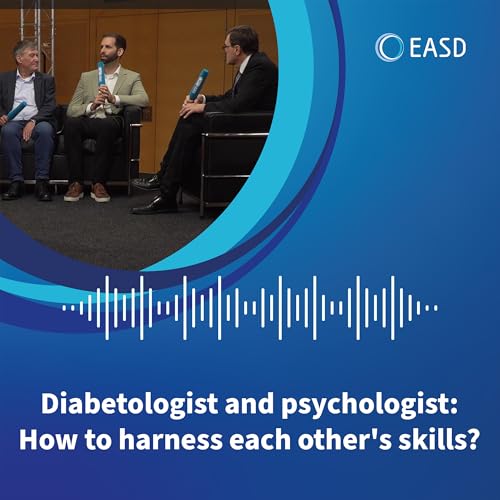
  • Diabetologist and Psychologist: How to harness each other's skills?
    Mar 27 2026
    In this episode, leading experts Maciej T. Małecki, Norbert Hermanns and Dominic Ehrmann explore the essential role of clinical psychology in diabetes care. Living with diabetes, particularly type 1 diabetes, requires constant decision-making and places a significant psychological burden on individuals and their families. From diabetes distress and depression to fear of hypoglycaemia, mental health challenges can directly impact glycaemic control and quality of life. This discussion highlights why clinical psychologists must be integrated into multidisciplinary diabetes teams, the need for specialised “diabetes psychologists,” and how education, guidelines and policy change can help address current gaps in care.
    Show More Show Less
    11 mins
  • The Future of Scientific Publishing: Trust, Transparency and Turbulence
    Mar 20 2026
    In this episode, we explore the rapidly evolving world of scientific publishing and the challenges facing researchers today, featuring insights from Diabetologia Editor in Chief Prof. Hindrik Mulder, Maria Hodges, Past EASD Early Career Member Pierre Larraufie and Annette Schürmann. From the rise of predatory journals and paper mills to the growing influence of artificial intelligence, the landscape is becoming increasingly complex. Our experts discuss how open access has reshaped publishing, why peer review remains essential, and the pressures placed on early career researchers navigating where and how to publish. They also explore the limitations of impact factors, the risks of fraudulent data, and the urgent need for new ways to evaluate scientific contribution. Join us for a timely conversation on how the research community can safeguard quality, transparency, and trust in science and what the future of publishing might look like.
    Show More Show Less
    20 mins
  • Towards arresting type 1 diabetes: Breaking results of the MELD-ATG & Ver-A-T1D trials
    Mar 13 2026
    In this episode, Prof. Chantal Mathieu and Prof. Francesco Dotta discuss two major European clinical trials presented at the EASD Annual Meeting: MELD-ATG and VERA-T1D. Both studies were conducted through the INNODIA consortium, a large European collaboration aimed at identifying biomarkers and testing new disease-modifying therapies for type 1 diabetes. The VERA-T1D trial investigated verapamil, a long-established cardiovascular drug, for its potential to preserve beta cell function after diagnosis. While the study narrowly missed its primary endpoint, the results provide important insights into disease heterogeneity and future combination therapies. The MELD-ATG trial used an innovative adaptive trial design to identify an effective low dose of anti-thymocyte globulin (ATG), showing that a single low-dose infusion may help delay beta-cell decline in newly diagnosed patients. Together, these studies highlight the rapid progress being made in type 1 diabetes research and the growing move toward precision medicine approaches.
    Show More Show Less
    17 mins