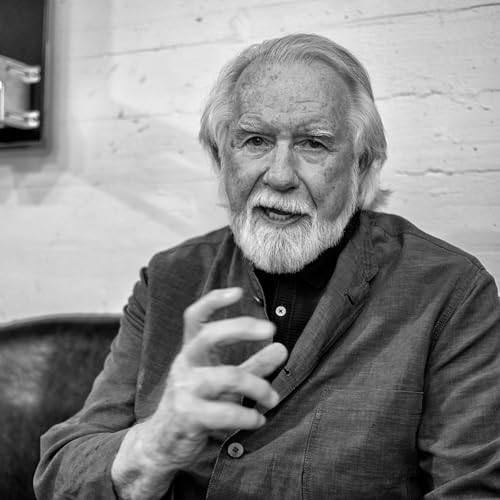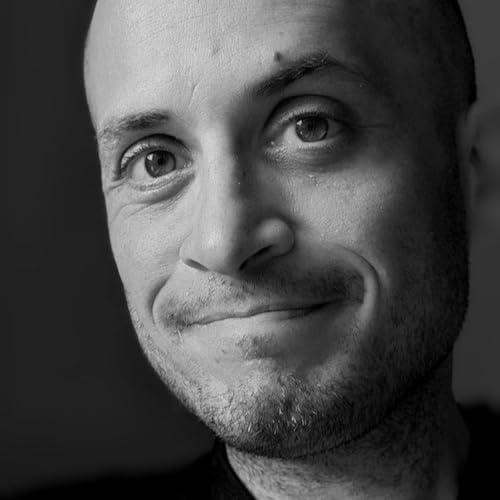
Danielle Newnham Podcast cover art

Danielle Newnham Podcast

Danielle Newnham Podcast

By: Danielle Newnham
Listen for free

LIMITED TIME OFFER | £0.99/mo for the first 3 months

Premium Plus auto-renews at £8.99/mo after 3 months. Terms apply.

About this listen

Interviews with tech founders and innovators2023 Danielle Newnham Podcast Economics Leadership Management & Leadership Personal Development Personal Success
Episodes
  • Steve Furber: Reverse Engineering the Human Brain (REPLAY)
    Apr 25 2025

    As April 2025 marks the 40th anniversary of the Arm architecture, I am re-releasing my episode with Steve Furber. What began as an ambitious project in a small corner of Cambridge, U.K., has grown into the world's most widely adopted computing architecture, now powering billions of devices – from sensors, smartphones and laptops to vehicles, datacenters and beyond.

    It was at 3pm on 26th April 1985, the chip that led to the world's first commercial RISC processor powered up... and changed the world!

    Steve Furber is a seminal computer scientist, mathematician and hardware designer whose work includes the BBC Microcomputer and the ARM 32-bit RISC microprocessor which can be found in over 100 billion devices today.

    Steve studied both Maths followed by a PhD in Aerodynamics at Cambridge University before joining Herman Hauser and Chris Curry at Acorn Computers. For the next decade, he would work with a first-class team of engineers and designers to revolutionise the home computer market before he and Sophie Wilson went on to design the ARM processor with a relatively small team and budget and with little inkling of the consequence it might bring to the world.

    In 1990, Steve left Acorn moved to Manchester where he is now Professor of Computer Engineering at the university there. He was charged with leading research into asynchronous systems, low-power electronics and neural engineering which led to the SpiNNaker project - a super computer incorporating a million ARM processors which are optimised for computational neuroscience. He is basically trying to reverse engineer the brain – a lofty ambition even by his own admission.

    In this wide-ranging conversation, we discuss Steve’s life journey from studying maths with professors such as the famed John Conway and Sir James Lighthill to the highs and lows of building the BBC Micro and the story behind the ARM 32-bit RISC microprocessor.

    I thoroughly enjoyed talking to Steve and am overly excited about his SpiNNaker project which we also discuss today.

    Enjoy!

    --------------

    Steve Furber info / SpiNNaker info / Micro Men film

    Danielle on Twitter @daniellenewnham and Instagram @daniellenewnham / Newsletter

    Show More Show Less
    51 mins
  • Pixar Co-Founder Alvy Ray Smith (REPLAY)
    Feb 3 2025

    Dr Alvy Ray Smith is the co-founder of Pixar, a computer scientist and pioneer in the field of computer graphics and to celebrate 39 years to the day that Pixar was officially founded, I wanted to release my interview with Alvy from Series 3.

    After starting his career in academia, Alvy had an epiphany following a serious skiing accident. He decided to move to California to combine his two passions - art and computers - in a place where he felt something good was about to happen.

    Alvy was always a pioneer. From creating his first computer graphic in 1965, Alvy became an original member of the Computer Graphics Lab at the New York Institute of Technology, he witnessed the birth of the personal computer at Xerox PARC, and he was the first director of computer graphics at George Lucas’s Lucasfilm. It was there that Alvy gathered some of the smartest people he knew to develop computer graphics software, including early renderer technology. He and colleague Ed Catmull then spun out to co-found the famous Pixar, soon followed by the hiring of Lucasfilm colleague John Lasseter, and Steve Jobs as an investor. It was at Pixar that Toy Story would be made - the very first, entirely computer-animated, feature film. In 2006, Pixar was sold to Disney for $7.4 billion.

    In this interview, Alvy recounts his career from the early days at Xerox PARC to how Pixar got started. We discuss the Pixar journey in detail, as well as his latest book – A Biography of the Pixel (you can buy here)- including how innovation is born from three strands: An idea, chaos and a tyrant. And how Steve jobs was both the saviour and the tyrant in the incredible Pixar story.

    A true pioneer, this is one of my favourite conversations.

    Enjoy!

    -----

    NB This episode was first released in Series 3.

    Let us know what you think of this episode and please rate, review and share - it means the world to me and helps others to find it too.

    Danielle Twitter / Instagram / Substack Newsletter / YouTube

    All my podcast episodes are edited with Descript - try it for FREE here

    Alvy Ray Smith on Twitter @alvyray / website

    Buy Alvy Ray Smith's book A Biography of the Pixel here.

    -----

    This episode was hosted by me - Danielle Newnham, a recovering founder, author and writer who has been interviewing tech founders and innovators for ten years - and produced by Jolin Cheng.

    Image of Alvy Ray by Christopher Michel.

    Show More Show Less
    1 hr
  • Zahaan Bharmal: How Physics Can Explain Almost Everything
    Dec 27 2024

    Today’s guest is Zahaan Bharmal – Senior Director of Strategy for Europe, the Middle East and Africa at Google where he has spent the last 16 years. He is also author of The Art of Physics: 8 elegant ideas to make sense of almost everything.

    In this conversation, Zahaan and I discuss his younger years, how he struggled at school and had big questions about the world and how The Hitchhiker's Guide to the Galaxy by Douglas Adams completely changed his life and allowed him to fall in love with the subject of Physics, in the hope of finding some of those answers.

    We also discuss Zahaan’s career from working as a speech writer for luminaries such as Tony Blair, Bill Clinton and Nelson Mandela to his current role at Google working with those at the frontier of AI including Sir Demis Hassabis of Deep Mind.

    But the main topic of conversation today is how physics can help us answer very human questions. Drawing on fields of physics such as quantum mechanics, thermodynamics, chaos and complexity theory, we look at how physics can help us make sense of an unpredictable world – and, why many of the world’s most successful leaders from Napolean to Charlie Munger all believe a greater understanding of physics can help us save humanity.

    So please enjoy my conversation with Zahaan Bharmal.

    Zahaan Bharmal has a degree in physics from the University of Oxford. After working on policy issues for the UK government and at the World Bank, he won a Fulbright Scholarship to Stanford University where he earned a master's in business administration. Since 2008, he has worked for Google, currently as senior director of strategy for Europe, the Middle East and Africa. He has written about space and science for the Guardian and is the recipient of NASA’s Exceptional Public Achievement Medal.

    Show More Show Less
    59 mins
No reviews yet