Episodes

  • First Anthropic, Now OpenAI: Washington Is Quietly Taking Over AI Releases (And What Comes Next)
    Jun 28 2026

    In June 2026, the U.S. government did something it had never done before: it reached into a commercial AI launch and pulled the plug. Sources: https://docs.google.com/document/d/1ajNYMIl7qCtIeyVI3KtkTXim88rV7CrOACiGpylGl7A/edit?usp=sharingFirst Anthropic was forced to disable Fable 5 and Mythos 5 worldwide after a Commerce Department export-control directive. Two weeks later, OpenAI staggered its GPT-5.6 release at Washington's request — reportedly approving access customer by customer. Is this a necessary national-security safeguard, the quiet nationalization of frontier AI… or a self-inflicted wound that hands the open-source crown to China? We break down exactly what happened, what the law actually allows, and where this road most likely leads.In this video:‣ The Friday-night kill switch that took two frontier models offline in hours‣ The "jailbreak" the government and Anthropic completely disagree on‣ The supply-chain-risk feud that set the stage months earlier‣ How export law is being used to control an AI model for the first time ever‣ OpenAI's quiet compliance — and why both labs say this can't be the future‣ The June 2 executive order hiding in plain sight‣ China's open-weight counterpunch: GLM 5.2, DeepSeek, Qwen, and the gating problem Washington can't solve‣ Where frontier AI regulation goes next⏱️ TIMESTAMPS00:00 – The 5:21 PM letter01:50 – The Friday Night Kill Switch05:13 – The Jailbreak Nobody Can Agree On09:21 – The Bad Blood13:26 – The Legal Machinery18:07 – The Quiet One: How OpenAI Complied22:28 – The Rulebook Hiding in Plain Sight27:17 – The China Problem32:07 – Where This Road Most Likely Leads36:55 – Takeaways & What to Watch Next💬 Necessary safeguard, quiet nationalization, or a gift to Beijing? Tell us in the comments.🔔 Subscribe to AGI Report for clear, sourced breakdowns of AI policy and frontier tech.👍 Like and comment with the AI story you want us to cover next.📌 Sources are listed in the pinned comment.⚠️ This video is for educational and informational purposes only and does not constitute legal, financial, or investment advice. All claims are sourced from public reporting as of June 2026; this is a fast-moving story and details may change.#AI #OpenAI #Anthropic #AIRegulation #GPT5 #ExportControls #AIPolicy #China #AINews #FrontierAI #GLM #DeepSeek #ArtificialIntelligence #TechPolicy #AGIReport

    Show More Show Less
    42 mins
  • Can Britain Just Print Its Debt Away?
    Jun 26 2026

    Britain owes £2.9 trillion — that's about £42,000 for every person in the UK, growing by £4,186 every second. Sources: https://docs.google.com/document/d/1hlqToyQugGI0m9ngxG_qNYpXyh7oq8iUkj4V5TgxElg/edit?usp=sharingSo why not just print money and make it disappear? Here's the twist: Britain ALREADY tried. Between 2009 and 2021, the Bank of England created £895 billion out of thin air to buy government debt. In this video, we break down exactly how money printing works — and why it can't make a debt's real cost vanish.**We unpack quantitative easing (QE) in plain English, the £130 billion bill now landing on taxpayers, the "inflation tax" that quietly robbed savers during the 11.1% inflation spike of 2022, and the index-linked gilt trap that makes Britain uniquely bad at inflating its way out. Plus: the 45 days that brought down Liz Truss and proved the bond market always wins.No hype, no doom-mongering — just how the machine actually works.⏱️ **CHAPTERS**00:00 The Chancellor who can't sleep05:54 How Britain racked up £2.9 trillion10:31 Britain already pressed the button (QE explained)14:32 Why QE isn't free money18:47 The inflation tax: the quiet robbery23:03 Britain's Achilles' heel: the index-linked trap27:25 Weimar, Zimbabwe... and Liz Truss31:15 So can Britain actually do it?💬 What would you rather: be taxed openly, or robbed quietly through inflation? Let us know below.👍 Subscribe for data-first deep dives on economics, debt, and the systems that run your money.📊 Sources: ONS, Bank of England, OBR, House of Commons Library, IFS, IEA, NEF.Educational analysis only — not financial advice.#UKEconomy #NationalDebt #QuantitativeEasing #Inflation #BankOfEngland #Gilts #UKPolitics #Economics #MoneyPrinting #LizTruss

    Show More Show Less
    37 mins
  • Britain Just Lost Another Prime Minister (Here's Why The Next One Won't Matter)
    Jun 24 2026

    Britain Just Lost Another Prime Minister. Here's Why The Next One Won't Matter.▶️ WATCH FIRST: "Why Nobody Can Fix Britain" — https://youtu.be/2ON0zqJui9cSources: https://docs.google.com/document/d/1wCoCEaIlvTUrZps6DfWH9DfzGKLQjo8wMdGTqalOIT8/edit?usp=sharingKeir Starmer just resigned — the 6th UK Prime Minister to quit in 7 years. When his successor takes over, Britain will have had 7 leaders in a single decade. But here's the uncomfortable truth: the bond market barely moved. And that tells you everything about why the next Prime Minister — almost certainly Andy Burnham, the "King of the North" — will inherit the exact same cage, the same constraints, and the same incentives to do the same nothing.This is the live test of our viral breakdown "Why Nobody Can Fix Britain." We walk through what actually brought Starmer down, who's coming next, and the cold structural reasons why changing the leader doesn't change the trajectory.📊 What we cover:• The anatomy of Starmer's collapse — from 411-seat landslide to resignation in 23 months• Who is Andy Burnham, and the House-of-Cards move that cleared his path to Number 10• Why the bond market is the real government — and how "bond vigilantes" cage every PM• The inheritance from hell: £126bn debt interest, sub-1% growth, record tax burden, sky-high energy prices• The five-party doom machine breaking British politics• What would actually fix Britain — and why it probably won't happenTIMESTAMPS00:00 - Intro05:45 – A Prime Minister Resigns10:14 – 1. The Anatomy of a Collapse14:44 – 2. The King of the North19:30 – 3. The Bored Bond Market24:07 – 4. The Inheritance From Hell28:50 – 5. The Five-Party Doom Machine33:49 – 6. The Way Out39:12 – The TakeawaySources include the OBR, IFS, Resolution Foundation, Bank of England, Bloomberg, Reuters, CNBC, CNN, Al Jazeera, Pantheon Macroeconomics, Tax Justice UK, and Wikipedia's live coverage of the 2026 Labour leadership crisis.🔔 Subscribe for forensic deep-dives on how the world's biggest economies actually work — France, Germany, and Canada coming soon.💬 Comment below: Does Burnham break the pattern, or just continue it? Honest predictions only — we'll check back in a year.#Britain #UKPolitics #Starmer #AndyBurnham #UKEconomy #Brexit #ReformUK #NigelFarage #BondMarket #RachelReeves #Economics #UKDecline #LabourParty #Geopolitics #Gilts #FinancialHistory #Econodit

    Show More Show Less
    44 mins
  • Why the U.S.-Iran Agreement is an MoU (And Why It Matters)
    Jun 23 2026

    Why the U.S.-Iran Agreement is an MoU (And Why It Matters).Sources: https://docs.google.com/document/d/1uszuMTu7iHbH2j-9UMhU45KtlXxmzVTf5YzWZrPQf50/edit?usp=sharingA page-and-a-half document just ended a war between the U.S. and Iran — and it isn't a treaty. It's a Memorandum of Understanding, which under international law is closer to a pinky promise than a contract. So why did two of the most heavily armed nations on Earth end a shooting war with a document neither side can legally enforce? And what does that mean for oil, the Strait of Hormuz, and whether this peace actually holds?In this deep dive, we break down the mechanics nobody else is explaining: the difference between a treaty and an MoU, the "secret grammar" of binding vs. non-binding language ("shall" vs. "will," "best efforts" vs. "guarantee"), and why nearly every U.S. president for a century has quietly preferred agreements that skip the Senate. We trace the ghost hanging over the whole deal — the 2015 JCPOA, which used the exact same playbook and got torn up by a single signature in 2018 — and we follow the money: how 20% of the world's oil moves through Hormuz, why a non-binding promise still swung crude by tens of dollars a barrel, and why the strait was opened and slammed shut inside a single week.Then we get to the twist most coverage misses: this MoU is deliberately engineered as a bridge to a binding UN Security Council resolution — the same mechanism behind JCPOA's Resolution 2231, which collapsed in 2025. We close with the three landmines most likely to blow the deal up, and the honest case that it might still work.No hype. No doom. Just the mechanics, the data, and the sources.⏱️ What we cover:00:00 — The page-and-a-half that ended a war05:45 — What an MoU actually is10:14 — The secret grammar: binding vs. non-binding14:44 — Why presidents are addicted to the MoU19:30 — The ghost of the 2015 Iran deal24:07 — What's actually in the 14-point document28:50 — Why markets move trillions on a pinky promise33:49 — The bridge to binding: how it plans to grow teeth39:12 — The three landmines (and the case it still works)18:30 — Takeaways🔔 Subscribe for data-driven breakdowns of the economics and geopolitics behind the headlines — no screaming, just footnotes.💬 What should we dissect next? Drop it in the comments.📌 Sources for every figure and quote are listed below.#USIranDeal #MemorandumOfUnderstanding #Geopolitics #StraitOfHormuz #OilPrices #Economics #IranNuclearDeal #JCPOA #InternationalLaw #MiddleEast #ForeignPolicy

    Show More Show Less
    42 mins
  • The Economics of AI is BROKEN (The Next Dot-Com Crash?)
    Jun 22 2026

    Spotify: https://open.spotify.com/show/7ClweKnWEEjKbzY17KjQmDThe biggest tech companies on Earth will spend over $600 billion on AI in 2026 — more than the Apollo Program and the Manhattan Project combined, every single year. Sources: https://docs.google.com/document/d/1PYS2lH3MkWB7FMLWWRZo5dK2xm6h_uTyvrqiNL4ol2M/edit?usp=sharingThere's just one problem: almost none of it is making a profit. OpenAI is on track to lose $14 billion this year, 95% of corporate AI projects show zero return, and a chunk of the industry's "demand" is just the same money looping between Nvidia, OpenAI, and Oracle.In this deep-dive, we break down exactly why the economics of AI doesn't add up — the $600 billion capex bonfire, the trillion-dollar revenue gap, the circular financing merry-go-round, Michael Burry's $176 billion depreciation warning, the 99% collapse in token prices, and the question everyone's avoiding: is this the next internet, or the next dot-com crash?We steel-man both sides with real data, real sources, and no hype. Just the broken math.Chapters:00:00 – The largest spending spree in human history01:30 – The $600 Billion Bonfire (AI capex explained)05:00 – The Revenue That Isn't There09:00 – The Money Merry-Go-Round (circular financing)13:00 – OpenAI's Beautiful Disaster (unit economics)17:30 – The Depreciation Time Bomb (Michael Burry's warning)22:00 – The Token Deflation Trap26:30 – The Everything Bet (is it a bubble?)31:00 – The Bottom Line🔔 Subscribe for research-driven breakdowns of the economics shaping your world.💬 Next video idea? Tell us in the comments.⚠️ This is economic analysis, not financial advice.#AIBubble #Economics #OpenAI #Nvidia #ArtificialIntelligence #AICapex #StockMarket #TechBubble #AIeconomy #DotComBubble

    Show More Show Less
    37 mins
  • The Economy of Qatar Explained (How a Desert Out-Earned the World)
    Jun 21 2026

    How does a desert smaller than Connecticut become one of the richest nations on Earth — and why can one missile make the whole world's heating bill spike?Sources: https://docs.google.com/document/d/12Bf91LD7bM9ArTWFw3eUASgh6WPKrD61gFYHF6G_Ll0/edit?usp=sharingIn this deep-dive, we break down the complete economic machine behind Qatar: the North Field gas colossus, QatarEnergy's grip on nearly 20% of global LNG supply, and the $600 billion Qatar Investment Authority that quietly owns Harrods, the Shard, and slices of Volkswagen, Heathrow, and Goldman Sachs. We trace the journey from collapsed pearl divers in the 1930s to LNG superpower, unpack the real story behind the $220 billion 2022 World Cup, confront the kafala labor system that built it all, and examine the 2026 Ras Laffan strikes and Strait of Hormuz crisis that exposed Qatar's one true weakness.Is Qatar's model a blueprint for small nations — or a geological fluke dressed up as strategy? We give you the data, the steel-man arguments, and the nuance to decide.What we cover:0:00 One Missile, Global Panic01:32 The Gas Colossus05:41 From Pearl Divers to Petrostate09:57 The Sovereign Wealth Machine (QIA)14:43 The 88%: Who Actually Built Qatar19:44 The $220 Billion World Cup Bet24:50 The Hormuz Problem: Qatar's One Weakness29:25 The Lessons of the Sandbar👇 Tell us in the comments: Should other small nations copy Qatar's playbook?👍 Like • 🔔 Subscribe for more economic deep-dives • 💬 Comment your next requested economy#QatarEconomy #LNG #Qatar #SovereignWealthFund #QatarInvestmentAuthority #NorthField #WorldCup2022 #Economics #StraitOfHormuz #Geopolitics #QatarEnergy #Vision2030 #Doha #EnergyMarkets #MiddleEast

    Show More Show Less
    34 mins
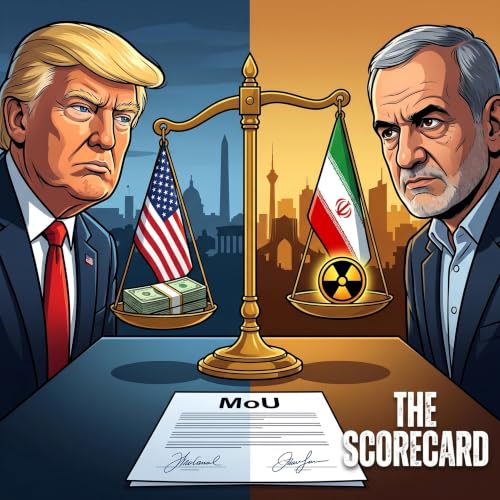
  • Did the U.S. Give In to Iran or Not? (The U.S.-Iran MoU Explained)
    Jun 20 2026

    Did the U.S. Give In to Iran or Not? The U.S.-Iran MoU Explained.▶️ Watch the companion video, "Inside the 14-Point U.S.-Iran Deal Everyone Is Talking About," for a full walkthrough of every clause. https://youtu.be/x8r-1eCdUpkSources: https://docs.google.com/document/d/1qsFRb3W97TBTBniJlSXwAyDNJdHBZpMT4tfuK1-yQ3o/edit?usp=sharingIn Tehran, they're calling it a historic victory. In Washington — including inside Trump's own party — critics are calling it an "American surrender." Same deal. Same 14 points. Two completely opposite verdicts. So which is it?We skip the spin and score the U.S.-Iran Memorandum of Understanding like a contract negotiation: what each side walked in demanding, what each side actually walked out with, and who left money — or uranium — on the table. From "zero enrichment" to "we'll talk about it," from the $300 billion question to the toll Iran gave up, to the ally that got committed without ever signing — we build an actual scorecard and deliver a clear, evidence-based verdict.Data-first, hype-free, and every claim sourced. Did America cave, or win a strategic pause? Let's settle it.⏱️ Chapters:0:00 — Two newspapers, two verdicts01:49 — What America actually demanded06:07 — What Iran walked in wanting10:47 — Scorecard #1: The nuclear file15:13 — Scorecard #2: The money20:06 — Scorecard #3: What Iran surrendered24:25 — Scorecard #4: The Israel problem29:01 — The verdict: did the U.S. give in?32:17 — Key Takeaways🔔 Subscribe for rigorous, no-nonsense breakdowns of the stories everyone else just shouts about.💬 On the money alone — does "conditional and reversible" satisfy you, or is any relief to a regime you were just at war with a step too far? Tell us below.▶️ Watch the companion video, "Inside the 14-Point U.S.-Iran Deal Everyone Is Talking About," for a full walkthrough of every clause. https://youtu.be/x8r-1eCdUpkThis video is for educational and informational purposes. All figures and quotes are drawn from public reporting as of mid-June 2026; an evolving situation may change details after publication.#Iran #USIranDeal #IranNuclearDeal #StraitOfHormuz #Geopolitics #Economics #MiddleEast #MoU #Sanctions #Trump #Hezbollah #OilPrices

    Show More Show Less
    34 mins
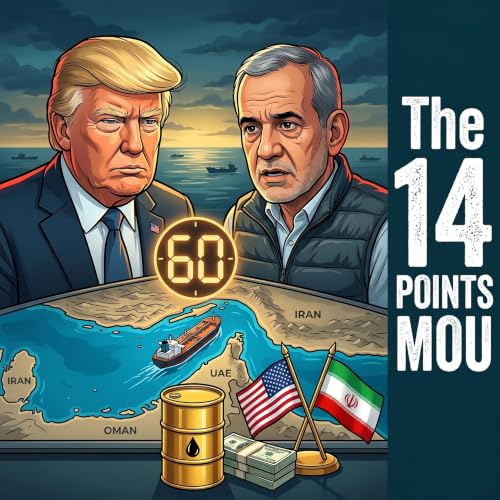
  • Inside the 14-Point U.S.-Iran Deal Everyone Is Talking About
    Jun 19 2026

    Inside the 14-Point U.S.-Iran Deal Everyone Is Talking About.Sources: https://docs.google.com/document/d/1UjKbXF7Equh2hUxn6ZLYG9N3rTd9HqC0Hzou-IuivCg/edit?usp=sharingAfter a war that began in February 2026, killed Iran's supreme leader, and shut down the world's most important oil chokepoint, the United States and Iran have signed the Islamabad Memorandum of Understanding — a 14-point framework to end the fighting and reopen the Strait of Hormuz. But what's actually in it?We pull apart all 14 points: the immediate oil export waivers, the contested frozen billions, the misunderstood $300 billion private investment fund, the toll-free shipping clause that expires in 60 days, and the nuclear concession that might not be a concession at all. We break down the real economic mechanics — why oil crashed ~15%, who actually pays, and the four things that could blow the entire deal up before the ink dries.Data-first, hype-free, and every claim sourced. This is the economics of buying peace.⏱️ In this video:00:00 — The world's most expensive 21 miles01:22 — How the war closed Hormuz05:28 — The ceasefire clauses & the Versailles signing09:23 — Reopening the strait (toll-free… for now)14:03 — Point 10: how Iran gets paid on day one18:12 — The frozen billions nobody can agree on22:02 — The $300B fund that isn't what it sounds like26:30 — The nuclear question30:48 — The 60-day clock & what could break it🔔 Subscribe for rigorous, no-nonsense breakdowns of the stories everyone else just shouts about.💬 Do you think a 14-point page can hold a war shut? Let us know below.This video is for educational and informational purposes. All figures are sourced from public reporting as of mid-June 2026; an evolving situation may change details after publication.#Iran #USIranDeal #StraitOfHormuz #OilPrices #Geopolitics #Economics #MiddleEast #Hormuz #OilMarket #Sanctions

    Show More Show Less
    36 mins