Cannabis Health Radio Podcast cover art

Cannabis Health Radio Podcast

Cannabis Health Radio Podcast

By: Cannabis Health Radio
Listen for free

Hear powerful stories from people who use cannabis to treat their health conditions, and hear interviews with medical professionals in the field..2017 - 2025 Cannabis Health Radio Alternative & Complementary Medicine Hygiene & Healthy Living
Episodes
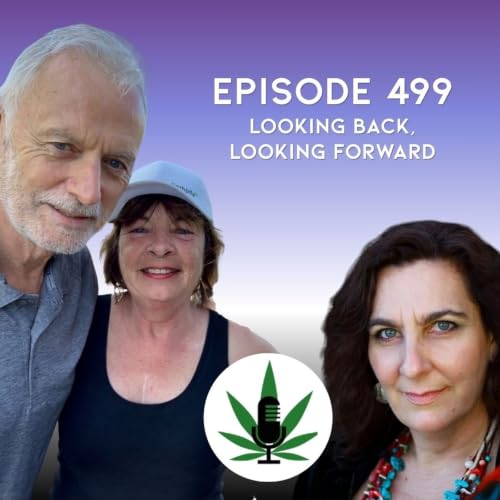
  • Episode 499: Looking Back, Looking Forward
    Jun 27 2026

    In this special episode, Robin Swan sits down with Ian Jessop to reflect on the journey of Cannabis Health Radio — how it began, the remarkable stories that have inspired listeners around the world, the legacy of co-host Corrie Yelland, and the people who made it all possible. Together, they look back on nearly a decade of sharing stories of hope and healing while looking ahead to the next chapter, as Robin prepares to carry the podcast forward with the same commitment to compassion, education and the power of personal stories.

    • Ian Jessop's final episode as host of Cannabis Health Radio (episode 499), marking the handover of the podcast to Robin Swan of Swan Apothecary.
    • Ian is stepping down approaching his 80th birthday to focus on personal wellbeing and time with his three-year-old granddaughter.
    • Cannabis Health Radio originated from Ian's time as a Victoria talk show host, where a listener email from Corrie — a cancer survivor given 4–6 months to live — sparked the concept of a cannabis health story-based podcast.
    • After being fired from radio on June 21st, Ian launched the podcast with Corrie, initially producing one episode every weekday for 11 months before pausing for two years, then relaunching on a weekly format.
    • Recording challenges included a venue refusing them due to cannabis content; Ron Zahar's Victoria studio and later Dan Humiston's Colorado studio (still used today) enabled continuity, including through COVID.
    • Story-driven content was a deliberate editorial choice from the start — personal testimonials over business promotions — cited as the key reason for the podcast's success and its ~100,000 followers across platforms.
    • Robin's background spans structural integration neuromuscular therapy specializing in brain trauma and spinal cord injury, with extensive work across NFL, LPGA, and PGA athletes, where cannabis topicals and psilocybin became part of her therapeutic toolkit.
    • Cannabis has been central to Robin's practice from topical applications with professional athletes to internal medicine for life-threatening illness, with Project Walk's spinal cord rehabilitation work further shaping her approach.
    • Physical movement was emphasized as essential to longevity — Ian's use of kettlebells (swings with 60 lbs) and grocery store work cited as examples; Robin reinforced that health is accumulative and cannot be reversed late in life without consistent effort.
    • Corrie's passing was identified as the greatest loss of the podcast's run — Ian described being in shock upon hearing the news and considered ending the show, but continued out of respect for her mission.
    • Greatest gain highlighted was the breadth of life-changing stories, including ~30 brain tumor interviewees with 28 still alive, and parents who recovered and will see their children grow up.
    • Robin committed to maintaining the platform's founding values of love, care, and kindness, while taking a firmer stance against scammers and haters; she warned listeners that unsolicited inbox offers of miracle medicine are always scams.
    • Educating the community to self-regulate — through tools like muscle testing and informed product evaluation — was framed as a key strategic direction for the podcast going forward.
    • Robin brings a reverend doctorate background and a 30-year, 30,000-client practice to the role, intending to use her title formally to convey reverence for cannabis as food, shelter, clothing, medicine, and enjoyment.
    • Ian expressed full confidence in Robin's stewardship, thanked his wife Liisa for doing all the work behind the scenes, and signed off as a future listener.

    Visit our website: CannabisHealthRadio.com

    Discover products and get expert advice from Swan Apothecary

    Follow us on Facebook.

    Follow us on Instagram.

    Find us on Rumble.

    Keep your privacy! Buy NixT420 Odor Remover


    Hosted by Simplecast, an AdsWizz company. See pcm.adswizz.com for information about our collection and use of personal data for advertising.

    Show More Show Less
    45 mins
  • Episode 498: The Man Who Replaced 1100mg of Oxycontin with Cannabis
    Jun 24 2026
    • John Prinz shares his story of replacing 1,100 mg/day OxyContin with medical cannabis, positioning him as an early "patient zero" in opioid-to-cannabis transition.
    • A 1992 workplace injury at Simpson Paper in Anderson, CA led to five spinal surgeries, hardware implantation, and a spinal cord injury diagnosis, setting the foundation for extreme opioid dependency.
    • At peak dosage around 2004–2005, John was prescribed over 1,100 mg of OxyContin daily alongside 13 other medications — far exceeding the typical 20–40 mg average — before the opioid epidemic was officially recognized.
    • Dr. Lester Grinspoon's book "Marijuana, the Forbidden Medicine" was the turning point, leading John to recognize opioids as legal heroin and motivating his decision to pursue cannabis as a replacement.
    • Transition off opioids took approximately 18 months of withdrawal, during which John developed his cannabis olive oil formula "Fusatima" — progressing from smoking to edibles to concentrated olive oil infusions.
    • Fusatima is made with 3 liters of Costco olive oil and 1 lb of high-quality cannabis, slow-cooked at 180°F; one tablespoon yields ~300 mg combined THCA/THC, with a full dose of 4 tablespoons twice daily reaching ~2,400 mg.
    • Lower heat during preparation preserves more THCA (non-psychoactive), while higher heat converts it to THC — allowing dosage customization depending on whether patients want psychoactive effects.
    • THCA capsules made from raw, unheated cannabis are recommended for patients who want pain relief without the high, broadening the formula's accessibility.
    • Post-surgery use at UCSF in June 2025 demonstrated Fusatima's clinical viability — John used no opioids after his sixth back surgery, self-administering the formula four days post-op with his surgeon's awareness.
    • John's pain doctor Dr. Michael H. Moskowitz documented cannabis use in monthly medical records from 2005 to 2021, and those papers have since been used to educate other patients and gain acceptance from Medicare and Social Security.
    • Advocacy efforts included writing Senator Dianne Feinstein starting in 2009, which John credits as contributing to OxyContin's removal from the market by 2011–2015, and writing Senator Obama in 2007 requesting rescheduling.
    • Fentanyl's rise on the streets is directly linked to forced opioid withdrawal — patients lost prescriptions without a sanctioned alternative, and cannabis remains underutilized due to stigma even among marijuana advocates.
    • Trump's executive order rescheduling cannabis to Schedule III is seen as a pivotal moment, though pharmaceutical companies including Jazz Pharmaceutical (105 patents), Pfizer (25), and Bristol-Myers Squibb (36) are positioned to commercialize it.
    • Getting Fusatima into pharmacies — regardless of who manufactures it, including potentially a Sackler-backed company — is the stated goal, as insurance reimbursement only becomes possible once it reaches the pharmacy system.
    • Core takeaway: growing your own cannabis is the most reliable path to access and affordability — patients who don't grow will struggle to maintain supply, and self-sufficiency is framed as the foundation of medical freedom.

    Visit our website: CannabisHealthRadio.com

    Discover products and get expert advice from Swan Apothecary

    Follow us on Facebook.

    Follow us on Instagram.

    Find us on Rumble.

    Keep your privacy! Buy NixT420 Odor Remover


    Hosted by Simplecast, an AdsWizz company. See pcm.adswizz.com for information about our collection and use of personal data for advertising.

    Show More Show Less
    27 mins
  • Episode 497: Taking Back Control of Chronic Pain
    Jun 15 2026
    • Chronic pain originated from genetic degenerative disc disease after the birth of her second child, leading to muscle spasms, failed artificial disc implant (FDA trial), spinal fusion, and permanent nerve damage in both legs.
    • At peak pharmaceutical use, Shelley was on approximately seven medications — including pain, antidepressant, anxiety, insomnia, nausea, and panic medications — with five taken daily.
    • Side effects from pharmaceuticals included nausea, vomiting, appetite loss, hair loss, poor nail and dental health, and chronic lack of deep sleep.
    • Cannabis was first introduced by her Colorado chronic pain specialist, who permitted concurrent use with pain medication; she began with edibles primarily to address severe appetite loss and weight loss.
    • Beyond appetite, cannabis progressively reduced anxiety, stress, and other symptoms, surprising Shelley given her Gen X perception of it as a "stoner drug."
    • Her doctor's indictment for Medicare fraud in Colorado — abandoning 250+ patients overnight and destroying records — forced a pivotal choice; she opted to transition fully to cannabis rather than restart the pharmaceutical advocacy process.
    • Going cold turkey off pain medication in 2020 was manageable partly because cannabis had already built mental resilience, contrasting with pharmaceuticals which she felt made her mentally unstable.
    • Shelley noted it took approximately five years after stopping pharmaceuticals to feel chemically different — lighter and healed — underscoring the long-term impact of pharmaceutical residue.
    • A spinal cord stimulator implanted roughly seven years into her chronic pain journey provided ~40% pain relief via leads and an internal battery; the leads are now burning out but she has decided against replacement surgery due to prior nerve damage risk.
    • Current cannabis regimen: ~50mg hybrid edible (CBD/CBN blend) each morning plus smoking at night for relaxation and sleep, with the ability to self-regulate dosage by cutting down without withdrawal.
    • Stigma encountered from her generation includes perceptions of cannabis as a lazy, unmotivated, or gateway drug — compounded by prior stigma as a chronic pain patient during the opioid epidemic.
    • Cannabis is credited with delivering mental clarity and stability, directly countering the common misconception that it causes fogginess or impaired thinking.
    • Chronic pain described as an all-consuming mental battle; cannabis enabled Shelley to stay present and mentally strong rather than constantly focused on pain — a key quality-of-life shift.
    • Reflecting on her journey, Shelley's core message is to open the door to cannabis sooner, while acknowledging that everything happens in its own time.

    Visit our website: CannabisHealthRadio.com

    Discover products and get expert advice from Swan Apothecary

    Follow us on Facebook.

    Follow us on Instagram.

    Find us on Rumble.

    Keep your privacy! Buy NixT420 Odor Remover


    Hosted by Simplecast, an AdsWizz company. See pcm.adswizz.com for information about our collection and use of personal data for advertising.

    Show More Show Less
    30 mins
adbl_web_anon_alc_button_suppression_t1
No reviews yet