• Wildlife at the Water’s Edge: Bear- and Moose-Safe Camping
    Jul 19 2026

    Read the full article: Wildlife at the Water’s Edge: Bear- and Moose-Safe Camping

    Discover more at Boondocking Tips

    Excerpt:

    Wildlife at the Water’s Edge: Bear- and Moose-Safe Camping

    Camping by a lake or river offers peace and beautiful views – but it can also put you close to wildlife like bears and moose. Both species often use shorelines for food, water, and cover, especially at certain times of day or seasons. Understanding animal behavior and following strict safety protocols is essential. This guide explains how to spot and avoid dawn/dusk “traffic corridors,” stay clear of moose calving zones, and prevent bears from being lured to camp. We cover proper food storage, scent management, fish-cleaning, and bear spray usage, plus how to set up camp to maximize visibility and escape routes. We also advise on managing pets and reporting dangerous encounters. Every recommendation below is backed by wildlife experts and agencies to keep campers and animals safe.

    ... Continue reading

    Show More Show Less
    23 mins
  • Food Refrigeration Without Hookups at Humid Lakeshores
    Jul 11 2026

    Read the full article: Food Refrigeration Without Hookups at Humid Lakeshores

    Discover more at Boondocking Tips

    Excerpt:

    Food Refrigeration Off-Grid at Humid Lakeshores

    Keeping food cold without AC power by a humid lakeside is a challenge. High humidity and shade mean moisture, mold, and sluggish cooling if equipment isn’t managed well. In such environments, 12V compressor refrigerators and absorption (gas/12V) units behave very differently. Compressor fridges run quietly off batteries (or solar) but use more electricity; absorption fridges can run on propane or 12V but require careful setup. We compare these systems under damp, shady conditions, discuss ventilation and leveling needs, and show how to estimate 12V battery draw in varying temperatures. We also cover smart packing (adding thermal mass) to reduce power spikes, plus food-safety rules, fish-handling guidelines, and fallbacks like coolers with ice. Finally, a maintenance checklist helps keep your off-grid fridge happy in the damp. Throughout, we follow authoritative guidance to keep perishables safe and equipment working reliably.

    ... Continue reading

    Show More Show Less
    24 mins
  • Mapping and Apps: Finding Legal Lakeside Spots
    Jul 4 2026

    Read the full article: Mapping and Apps: Finding Legal Lakeside Spots

    Discover more at Boondocking Tips

    Excerpt:

    Mapping and Apps for Lakeside Boondocking

    Finding a legal lakeside boondocking spot (free, dispersed camping) requires careful mapping and checking of land use rules. Modern mapping apps and online tools can simplify this by overlaying public land boundaries, showing roads, and highlighting closures. Key tools include public-lands overlay apps, Forest Service Motor Vehicle Use Maps (MVUMs), topographic and hydrographic maps, and official closure alerts. By cross-referencing these resources with satellite imagery and user reports, you can pick a suitable lakeside site in advance. This article outlines a step-by-step workflow to plan a safe boondocking trip: how to use these mapping layers, verify land status and camping rules, prepare offline maps, interpret shoreline slopes, and vet crowdsourced campsite reviews. We’ll finish with a detailed pre-trip checklist and common red flags to avoid.

    ... Continue reading

    Show More Show Less
    20 mins
  • Recovery and Traction on Soft, Wet Shorelines
    Jun 22 2026

    Read the full article: Recovery and Traction on Soft, Wet Shorelines

    Discover more at Boondocking Tips

    Excerpt:

    Recovery and Traction on Soft, Wet Shorelines

    Driving heavy vehicles like RVs or 4x4s along lake or beach edges can be deceptively dangerous. Saturated soils at the water’s edge often lose strength dramatically – behaving almost like quicksand under heavy weight. Fine-grained, waterlogged mud can support weight until the tire breaks the surface film, then suddenly liquefy and grip the vehicle tightly (biologyinsights.com). In practice, once you sink even a little, very little additional traction is available: “Mud reduces traction dramatically”, and tires have almost no grip on such a “slippery, yielding surface” (www.michelinman.com). This means a heavy RV can easily bog down on a soft shoreline: its weight creates high soil pressure that the saturated ground cannot support, leading to deep ruts and complete loss of traction.

    ... Continue reading

    Show More Show Less
    26 mins
  • Multi-Week Lakeside Boondock Logistics: Resupply, Waste, and Water
    Jun 13 2026

    Read the full article: Multi-Week Lakeside Boondock Logistics: Resupply, Waste, and Water

    Discover more at Boondocking Tips

    Excerpt:

    Planning for an Extended Lakeside Camping Trip A multi-week lakeside boondocking trip is a rewarding adventure, but it demands careful logistics. You must pre-plan water, waste, and energy needs along with resupply schedules to stay safe and Leave No Trace. This guide covers realistic consumption models for water (drinking vs. washing), waste, and power; suggests methods to ferry and store water; outlines eco-friendly sanitation practices; and provides planning tools like a sample timeline and resource calculator. With thoughtful preparation – including redundancy for critical systems – a 2–4 week off-grid camp can be both comfortable and environmentally responsible.

    Water: Consumption, Transport & Storage Water is life – especially off-grid. Plan for two categories: Potable (drinking and cooking) and Utility (washing, basic hygiene). A common guideline is approximately 1 gallon (3.8 L) per person per day for drinking, plus another 1 gallon for everything else (www.boondockersbible.com) (www.offgridrvhub.com). This means roughly 2 gallons (7.6 L) per person per day total. In disciplined, low-flow routines (short “Navy” showers, dish basins, etc.), two people can often manage with 5–8 gallons (~19–30 L) per day (www.offgridrvhub.com). On the other hand, a loose routine (streaming taps etc.) can double this.

    ... Continue reading

    Show More Show Less
    17 mins
  • Condensation, Mold, and Corrosion in Humid Lakeside RVs
    Jun 1 2026

    Read the full article: Condensation, Mold, and Corrosion in Humid Lakeside RVs

    Discover more at Boondocking Tips

    Excerpt:

    Condensation, Mold, and Corrosion in Humid Lakeside RVs

    Lakeside RV camping offers fresh air and scenic dawns – but it also brings high humidity. Cool nights over still water let interior metal, glass or walls drop below the dew point, causing condensation. As one expert notes, when “warm air inside makes contact with cold glass, [it] releases excess moisture as droplets” (www.tomsguide.com). In a sealed RV at dawn, you may find windows fogged, metal fixtures wet, or soft furnishings damp. Left unchecked, this moisture attacks the RV from the inside out – feeding mold, rot, and corrosion. By understanding the physics and taking preventive steps, owners can control this dampness. Below we explain how lake‐effect condensation occurs, why it promotes mold and rust, and compare solutions from ventilation to insulation. We also cover what to inspect (wiring, connectors, cabinets), safe cleaning practices, and a monitoring plan using hygrometers to iteratively improve the situation.

    ... Continue reading

    Show More Show Less
    22 mins
  • Portable Showers and Water Heating from Lake Sources
    May 26 2026

    Read the full article: Portable Showers and Water Heating from Lake Sources

    Discover more at Boondocking Tips

    Excerpt:

    Introduction Taking hot showers and staying clean can be challenging when you rely on lake or stream water off-grid. Campers and overlanders have developed portable shower solutions that work without electricity or plumbing. Common options include black solar shower bags, water-warming coils on camp stoves, propane “instant” heaters, or simply boiling water in kettles and using a bucket. Each method has trade-offs in cost, speed, and convenience. In all cases, water from natural sources must be treated before use – drinking water absolutely, and even shower water to avoid skin infections and contaminants. In wilderness environments, it’s also critical to minimize graywater impact and follow sound hygiene routines for health in both warm and cold climates. Below we survey off-grid water-heating options (with their energy use), outline how to treat lake water for bathing vs. drinking, note the effects of chlorine on skin, and suggest low-impact hygiene practices for different conditions.

    Off-Grid Water Heating Methods

    ... Continue reading

    Show More Show Less
    18 mins
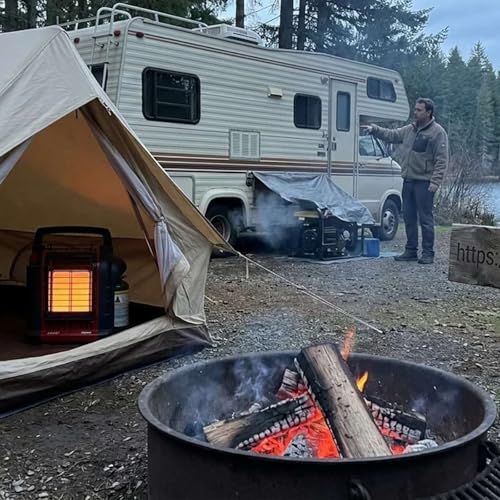
  • Fire, Carbon Monoxide, and Ventilation Risks by the Lake
    May 18 2026

    Read the full article: Fire, Carbon Monoxide, and Ventilation Risks by the Lake

    Discover more at Boondocking Tips

    Excerpt:

    Fire, Carbon Monoxide, and Ventilation Risks by the Lake

    Camping in an RV on a forested lakeside can be cozy, but it also brings serious safety challenges. In a tight space, propane heaters, diesel heaters, and portable water heaters can provide warmth and hot water – but if misused they risk deadly carbon monoxide (CO) buildup or fires. Wildfire concerns add another layer: many parks ban open flames, so campers must use approved stoves and avoid sparks. Even routine activities like cooking and breathing create humidity, which can condense on cold walls and ruin the RV’s structure. This article lays out best practices and preventive steps: safe heater use and detector placement, respecting fire bans with the right stove, balanced ventilation to remove moisture yet retain heat, and an emergency checklist for CO exposure or fire. Each guideline is backed by expert sources to keep you safe.

    ... Continue reading

    Show More Show Less
    16 mins