• Teaching Students to Think With AI, Not Around It with Dr. David Williamson Shaffer
    May 19 2026

    In this episode of Beyond the Couch, Dr. Ernest Wayde sits down with Dr. David Williamson Shaffer, learning scientist, educator, and professor at the University of Wisconsin-Madison, to explore how artificial intelligence is transforming education, writing, critical thinking, and the future of learning.

    Dr. David Williamson Shaffer shares his journey from classroom teacher to leading researcher in learning analytics and AI in education. He reflects on how the rise of computers, the internet, and now generative AI have fundamentally changed the way humans think, learn, and interact with information.

    The conversation explores why traditional education systems may no longer fit a world shaped by AI, how educators can rethink assignments and classroom learning, and why the goal should not be preventing AI use but teaching students how to collaborate with it responsibly. He also discusses the importance of critical thinking, ethical AI use, AI literacy, and why learning with technology may matter more than learning without it.

    The episode also dives into practical examples of AI in classrooms, the risks of overreliance on AI, responsible use in academic writing and research, and why educators, clinicians, and researchers must actively engage with AI instead of avoiding it.

    Takeaways:

    • AI Is Reshaping How Humans Learn, Think, and Solve Problems.
    • Traditional Education Models Were Not Designed for an AI-Driven World.
    • The Goal Should Be Learning How to Work With AI, Not Simply Avoiding It.
    • Critical Thinking Matters More Than Ever in the Age of Generative AI.
    • Students Need Opportunities to Use AI Responsibly and Reflectively.
    • Educators Cannot Be Expected to Solve AI Challenges Alone Without Systemic Support.
    • AI Literacy Is Becoming Essential for Teachers, Researchers, Clinicians, and Students.
    • Technology Should Expand Human Capability Rather Than Replace Human Judgment.

    Connect with Dr. David Williamson Shaffer

    Website: https://edpsych.education.wisc.edu/fac-staff/williamson-shaffer-david/

    Connect With Us

    https://www.waydeai.com/

    https://www.facebook.com/waydeaillc

    https://www.linkedin.com/company/wayde-ai/

    info@waydeai.com

    Subscribe

    https://the-waydeai-brief.beehiiv.com/

    Chapters:

    00:00 - Intro

    02:33 - From Teacher to AI & Learning Science Researcher

    06:00 - How AI Is Disrupting Education

    10:03 - Why Predicting AI’s Future Is Nearly Impossible

    11:19 - Understanding “Pedagogical Content Knowledge”

    14:24 - Why Everyone Should Start Using AI

    16:46 - Why Teachers Can’t Solve This Alone

    22:08 - “Betty’s Brain” & Teaching Through AI Feedback

    25:38 - Using AI to Learn Across Languages

    28:30 - The MIT Study on Writing With AI

    31:10 - “If AI Makes a Mistake, You Made the Mistake”

    33:46 - “Effects Of” vs “Effects With” Technology

    37:37 - The Importance of Personally Using AI

    Show More Show Less
    40 mins
  • AI, Therapy & Human Connection: What Psychologists Need to Know with Dr. Page Anderson
    May 12 2026

    In this episode of Beyond the Couch, Dr. Ernest Wayde sits down with Dr. Page Anderson, clinical psychologist, researcher, and associate professor at Georgia State University, to explore how artificial intelligence is reshaping mental health care, psychology training, and the future of therapy.

    Dr. Anderson shares her unexpected journey into digital mental health, from working in one of the earliest virtual reality exposure therapy companies to seeing firsthand how AI-powered assistive technology transformed her son’s independence and daily life. The conversation dives into the growing reality that people, especially younger generations, are already using AI tools for emotional support, mental health guidance, and therapy-like conversations, often before speaking to a clinician.

    The discussion explores the opportunities and risks of AI in psychology, including accessibility to support, the “validation problem” with chatbots, ethical concerns around privacy and data use, and the growing need for AI literacy among clinicians, students, and educators. Dr. Anderson also explains why psychologists must remain actively involved in shaping ethical standards, training, and policy around AI instead of avoiding the technology altogether.

    Throughout the episode, both guests emphasize that while AI may become a powerful assistive tool, human relationships, critical thinking, ethics, and clinical judgment remain essential to effective mental health care.

    Takeaways:

    • AI Is Already Being Used for Mental Health Support by Millions of People.
    • Psychologists Need to Engage With AI Instead of Ignoring It.
    • AI Can Improve Accessibility and Reduce Barriers to Mental Health Support.
    • Therapy and Chatting With AI Are Not the Same Thing.
    • AI Literacy and Prompt Engineering Are Becoming Essential Skills for Clinicians.
    • Human Judgment, Ethics, and Critical Thinking Still Matter Most in Mental Health Care.

    Connect with Dr. Page Anderson

    Linkedin:

    https://www.linkedin.com/in/page-anderson-ph-d-abpp-clinical-psychologist-associate-professor/

    Georgia State University:

    https://psychology.gsu.edu/

    Connect With Us

    https://www.waydeai.com/

    https://www.facebook.com/waydeaillc

    https://www.linkedin.com/company/wayde-ai/

    info@waydeai.com

    Subscribe

    https://the-waydeai-brief.beehiiv.com/

    Chapters:

    00:00 - Intro

    02:40 - “I’m Not a Tech Person” (Origin Story)

    04:40 - Personal Story: AI Changing Her Son’s Life

    07:08 - Barriers to Traditional Therapy

    09:25 - Do Psychologists Still Have a Role?

    11:22 - Why Training Comes First

    13:30 - The AI Training Gap in Education

    17:50 - AI vs Real Therapy (Key Differences)

    19:30 - Personalized Therapy Materials with AI

    23:00 - Why Critical Thinking Matters Most

    24:53 - Where Psychologists Should Start

    29:01 - Final Advice for Clinicians

    31:20 - Final Thoughts: Humans Train AI

    Show More Show Less
    33 mins
  • Parenting Through the AI Era: What Every Parent Needs to Know with Dr. Amber Childs
    May 5 2026

    In this episode of Beyond the Couch, Dr. Ernest Wayde sits down with Dr. Amber Childs, child and adolescent psychiatrist, Yale School of Medicine associate professor, and founder of Dr. Amber Childs Advisory. The conversation explores how artificial intelligence is reshaping the lives of teens, parents, clinicians, and the future of mental health care.

    Dr. Childs shares how her unexpected journey into AI began during the COVID-19 pandemic, when she rapidly helped scale telehealth services for adolescent psychiatry at Yale. She discusses how teens are already integrating AI into their daily lives for learning, emotional support, curiosity, and mental health conversations, often turning to chatbots when trusted human support feels unavailable.

    The discussion also highlights the fears many parents experience around AI, the importance of curiosity-driven conversations instead of fear-based reactions, and why bans alone may fail to protect young people. Dr. Childs emphasizes that clinicians, caregivers, and psychologists must stay engaged with technology, develop AI literacy, and help shape safer, evidence-based solutions that support human connection rather than replace it.

    Takeaways:

    • AI Is Already Deeply Integrated Into Teen Life and Mental Health Conversations.
    • Teens Often Use AI for Exploration, Emotional Support, and Nonjudgmental Guidance.
    • Parents Should Approach AI Conversations With Curiosity Instead of Fear or Control.
    • Banning AI Without Education or Safeguards May Create More Problems Than Solutions.
    • Psychologists and Clinicians Must Help Shape the Future of Ethical AI in Mental Health Care.
    • Human Connection, Communication, and Trust Still Matter More Than Technology.
    • AI Literacy Is Becoming Essential for Parents, Therapists, and Educators.

    Connect with Dr. Amber Childs:

    LinkedIn: https://www.linkedin.com/in/amberwchilds/

    Website: https://www.dramberchilds.com/

    Connect With Us

    https://www.waydeai.com/

    https://www.facebook.com/waydeai

    https://www.linkedin.com/company/wayde-ai/

    info@waydeai.com

    Subscribe

    https://the-waydeai-brief.beehiiv.com/

    Chapters:

    00:00 - Intro

    02:37 - How AI Entered Her Work “By Accident” During the Pandemic

    06:55 - Teen Skepticism, AI Anxiety & Concerns About Relationships

    08:51 - What Parents Are Most Worried About With AI

    11:30 - Why Teens Turn to AI for Support & Validation

    13:38 - Why Attacking AI or “The Friend” Backfires With Teens

    16:00 - Dangerous AI Scenarios Parents Should Watch For

    19:52 - Trusted Resources for Parents Navigating AI & Mental Health

    22:53 - How Parents Can Start the AI Conversation With Their Teens

    25:08 - Why AI Bans May Do More Harm Than Good

    29:43 - Where to Follow Dr. Amber Childs Online

    30:28 - Final Advice: “Curiosity Is Free”

    Show More Show Less
    31 mins
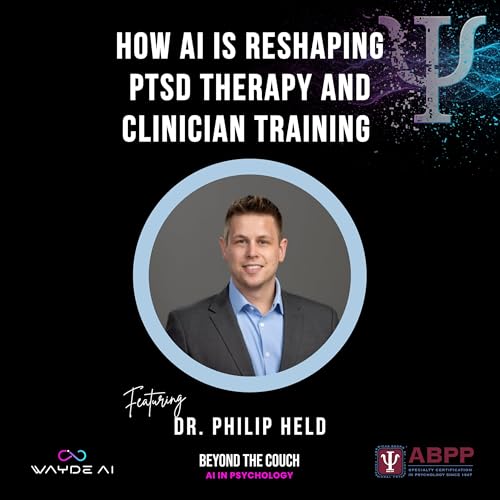
  • How AI Is Reshaping PTSD Therapy and Clinician Training with Dr. Philip Held
    Apr 28 2026

    In this episode of Beyond the Couch, Dr. Ernest Wayde interviews Dr. Philip Held, a clinical psychologist and researcher focused on improving PTSD treatment outcomes through AI and accelerated therapy models. The conversation explores how Dr. Held’s team developed “Socrates 2.0,” a multi-agent AI system designed to support cognitive restructuring through Socratic dialogue alongside evidence-based therapy.

    Dr. Held explains how the system uses multiple AI agents to supervise and improve therapeutic conversations in real time, reducing looping behaviors and improving the quality of AI-assisted interactions. The discussion highlights how veterans are using AI as a practice space before therapy sessions, how clinicians are beginning to use these tools for supervision and training, and why validation, safety testing, and clear guardrails are critical as AI becomes more integrated into mental health care.

    The episode also explores the future of AI-assisted clinician training, ethical considerations around validation standards, and why curiosity and responsible experimentation are essential as psychology adapts to rapidly advancing technologies.

    Takeaways:

    • Multi-Agent AI Can Improve the Quality of Therapeutic Conversations.
    • AI Tools Can Help Veterans Practice Difficult Conversations Before Therapy Sessions.
    • Validation, Safety Testing, and Guardrails Are Essential for Mental Health AI Tools.
    • AI Is Best Used as a Support Tool Rather Than a Replacement for Clinicians.
    • Clinicians Are Beginning to Use AI for Supervision, Roleplay, and Skill Development.

    Connect with Dr. Philip Held

    LinkedIn: https://www.linkedin.com/in/philip-held-phd/

    Website: https://roadhomeprogram.org/

    Connect With Us

    https://www.waydeai.com/

    https://www.facebook.com/waydeai

    https://www.linkedin.com/company/wayde-ai/

    info@waydeai.com

    Subcribe

    https://the-waydeai-brief.beehiiv.com/

    Chapters:

    00:00 - Intro

    02:24 - Dr. Philip Held’s journey into AI and psychology

    05:58 - How Socratic dialogue works inside the AI tool

    08:24 - Multi-agent AI supervision inspired by clinical training

    10:05 - What success looks like for Socrates 2.0

    11:30 - The challenge of measuring “good enough” in AI therapy

    14:48 - How AI is changing traditional therapy methods

    17:00 - How veterans responded to using the AI tool

    19:33 - Why validating AI mental health tools matters

    23:02 - What responsibilities still belong to clinicians

    25:40 - Clinicians’ reactions to AI-assisted therapy tools

    27:33 - Future AI applications for clinician training and supervision

    30:28 - The need for AI benchmarks, boundaries, and guardrails

    34:36 - What “validation” really means in AI mental health

    35:45 - Dr. Philip Held’s advice on staying curious about AI

    Show More Show Less
    37 mins
  • How AI Is Changing Human Relationships and Mental Health with Dr. Rachel Wood
    Apr 21 2026

    In this episode of Beyond the Couch, Dr. Ernest Wayde interviews Dr. Rachel Wood, a cyber psychology researcher, licensed professional counselor, and founder of the AI Mental Health Collective. The discussion explores how artificial intelligence is shifting the relational bedrock of society, noting that clients are increasingly bringing AI into their therapy sessions for advice, comfort, and validation.

    Dr. Wood emphasizes that as AI usage becomes more common, therapists should prioritize clinician competence and practice informed consent. She advocates for a cross-disciplinary approach, urging mental health practitioners to collaborate with AI builders to establish safeguards, raise user awareness, and ensure the responsible development of these technologies.

    Takeaways:

    • AI Is Shifting Client Expectations and Relational Dynamics in Therapy.
    • Clinicians Must Prioritize Informed Consent and Their Own AI Competence.
    • Clients Often Turn to Chatbots Seeking Validation and Frictionless Interactions.
    • Clinical Judgment and Patient Safety Must Always Supersede Any AI Usage.
    • Mental Health Professionals Must Claim a Voice at the Table During AI Development.

    Connect with Dr. Rachel Wood

    LinkedIn: https://www.linkedin.com/in/rachelwoodphd/

    Website: https://www.dr-rachelwood.com/

    Website: https://www.aimentalhealthcollective.com/

    Connect With Us

    https://www.waydeai.com/

    https://www.facebook.com/waydeai

    https://www.linkedin.com/company/wayde-ai/

    info@waydeai.com

    Subcribe

    https://the-waydeai-brief.beehiiv.com/

    Chapters:

    00:00 Intro

    00:31 Welcome and Guest Intro

    02:04 Dr. Rachel Wood Origin Story

    04:01 How AI Impacts Therapy and Client Usage

    05:36 Clinician Competence and Informed Consent

    07:10 Shifting Expectations and AI Triangulation

    09:58 What Clients Get from AI Chatbots

    11:24 Clinical Judgment and Attachment Theory

    15:24 Practitioner Boundaries and Accountability

    18:21 The AI Mental Health Collective

    21:20 Responsible AI Integration

    23:07 Closing Advice and Where to Find Her

    Show More Show Less
    25 mins
  • Defining the Boundaries of AI in Mental Health with Dr. Shannon Wiltsey Stirman
    Apr 7 2026

    In this episode of Beyond the Couch, Dr. Ernest Wayde interviews Dr. Shannon Wiltsey Stirman, a professor of Psychiatry and Behavioral Sciences at Stanford and co-director of the Center for Responsible and Effective AI Technology Enhancement for PTSD treatment (CREATE), discusses how large language models can support evidence-based mental health interventions, and can also be used to assist in training therapists through the use of simulated patients.

    Dr. Wiltsey Stirman notes that while AI can be a powerful tool for tasks like clinical scribing and reflection, it should supplement rather than replace human therapists, especially regarding complex diagnoses and high-risk scenarios. She highlights the necessity of AI literacy, urging therapists and organizations to prioritize transparency, privacy, and responsible implementation.

    Takeaways:

    • AI Should Supplement, Not Replace Human Therapists
    • Simulated Patients Offer Safe Practice for Clinicians
    • AI Diagnostics and High-Risk Treatment Require Firm Boundaries
    • Organizations Must Prioritize Transparency and Privacy
    • Therapists Need to Increase Their AI Literacy

    Connect with Dr. Shannon Wiltsey Stirman

    Email: sws1@stanford.edu

    LinkedIn: https://www.linkedin.com/in/shannon-wiltsey-stirman-3874056/

    https://med.stanford.edu/fastlab.html

    https://create.stanford.edu/contact

    https://create.stanford.edu/contact

    Connect With Us

    https://www.waydeai.com/

    https://www.facebook.com/waydeai

    https://www.linkedin.com/company/wayde-ai/

    info@waydeai.com

    Subcribe

    https://the-waydeai-brief.beehiiv.com/

    Chapters:

    00:00 Intro

    00:35 Welcome and Guest Intro

    02:15 Dr. Shannon Wiltsey Stirman Origin Story

    04:54 Realistic AI Capabilities in Therapy Today

    07:00 Meaningful AI Implementation in Evidence-Based Care

    09:34 What People Get Wrong About AI Tools

    12:57 Boundaries Between AI and Human Therapists

    15:46 Safe AI Boundaries for Therapists

    19:01 Organizational Implementation and Transparency

    21:27 The CREATE Center at Stanford

    25:06 Closing Advice and Where to Find Her

    Show More Show Less
    26 mins
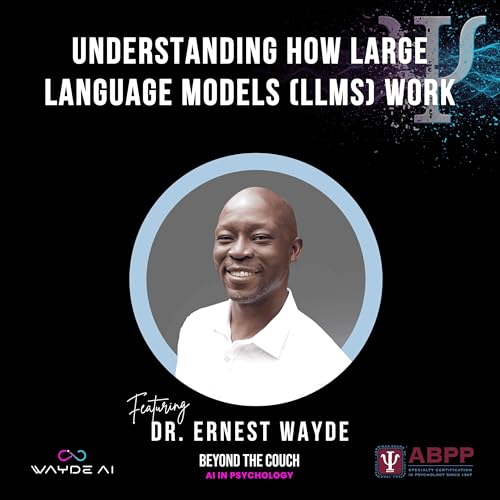
  • Understanding How Large Language Models (LLMs) Work with Dr. Ernest Wayde
    Mar 17 2026

    In this episode of Beyond the Couch, Dr. Ernest Wayde reveals the real mechanics behind large language models like ChatGPT, demystifying what happens inside these systems when you use them. Whether you're a psychologist or healthcare professional, understanding this process is crucial for responsible use and interpreting AI-generated information accurately.

    Takeaways:

    1. Fluency does not equal accuracy.
    2. AI operates through pattern matching, not reasoning.
    3. Training data bakes in human bias.
    4. The "fine-tuning" stage reflects human values.
    5. Context is limited to the current prompt.
    6. Accountability remains with the professional.

    Connect With Us

    https://www.waydeai.com/

    https://www.facebook.com/waydeai

    https://www.linkedin.com/company/wayde-ai/

    info@waydeai.com

    Subcribe

    https://the-waydeai-brief.beehiiv.com/

    Show More Show Less
    23 mins
  • AI Ethics, Responsibility, and the Role of Humans in the Age of AI with Dr. Joanna Bryson
    Mar 10 2026

    In this episode of Beyond the Couch, Dr. Ernest Wayde interviews Dr. Joanna Bryson, professor of Ethics and Technology in Berlin and advisor to organizations including the UN and EU, about what “AI ethics” really means. Dr. Bryson argues it’s not coherent to call AI itself ethical. She argues that the primary concern should be whether and how humans should build and deploy AI and how it may change societies. Dr. Bryson highlights recurring concerns like bias, but stresses broader failures around accountability, surveillance, deception, and weaponization, urging users to maintain agency, verify outputs, protect data, and avoid trusting AI.

    Takeaways:

    1. AI Itself Is Not Ethical—Humans Are Responsible
    2. Bias Is a Major Concern—but Not the Only One
    3. Accountability Must Start With Development
    4. The Information Age Demands Critical Thinking
    5. Learning and Adaptation Are Essential

    Connect with Dr. Joanna Bryson

    bryson@hertie-school.org

    https://www.hertie-school.org/en/who-we-are/profile/person/bryson

    Connect With Us

    https://www.waydeai.com/

    https://www.facebook.com/waydeai

    https://www.linkedin.com/company/wayde-ai/

    info@waydeai.com

    Subcribe

    https://the-waydeai-brief.beehiiv.com/

    Chapters:

    00:00 What Is AI Ethics

    00:23 Welcome and Guest Intro

    02:06 Dr. Joanna Bryson Origin Story

    05:38 From AI Research to Ethics

    07:08 Ethical AI Misconceptions

    09:02 Policy Failures and Liability

    10:57 Beyond Bias Surveillance Risks

    12:30 Everyday User Responsibility

    15:23 AI and Mental Health Use

    16:46 EU Rules and Bot Disclosure

    17:51 Scams Surveillance and Freedom

    20:30 Closing Advice and Where to Find Her

    Show More Show Less
    22 mins