• Prepared or Panicked: How Leaders Build Resilient Teams – Alex Rae, CEO, Wise Investment
    Feb 12 2026

    Getting people right means getting business right - and I’m always drawn to conversations about the human factor at work. I’m joined by Alex Rae, CEO at Wise Investments, whose insights cut through the noise about future-proof organisations and put real emphasis on what matters - people.

    We dig into preparedness and possibility as a lens for leadership. Forget any notion that leaders should have all the answers - Alex is clear about building teams that can weather uncertainty, adapt, and thrive without being reliant on a single individual. That kind of culture isn’t about complicated strategies. It’s the result of leaders who trust their people, keep the conversation open, and invest in genuine relationships across their business.

    You’ll hear us unpack the difference between simply reacting to change and leading with intention. We talk openly about the risks for teams when rapid change leaves people feeling overwhelmed or unsure about their place. Alex shares how Wise Investments face these challenges head-on, through both practical and emotional support, with practices that reinforce resilience and belonging. The social committee, well-being initiatives, and everyday conversations aren’t just nice extras - they’re essential foundations for high performance.

    Leadership is about balancing care and challenge. The best managers help their teams grow by keeping things simple, staying present, and making room for continuous learning. None of this is about tick-box exercises - it’s active, ongoing, and firmly embedded in Wise’s culture.

    If you’re wondering how to build a workplace where people feel secure, valued, and ready for whatever comes next, this conversation offers plenty to reflect on. Download the free resource in the show notes and join me in thinking about how prepared, and how hopeful, we really are for the future of work.

    More about Alex:

    Alex Rae grew up in Sweden and moved to the UK aged 15. Five years later she started working at Wise Investment and 25 years later she's still there. Alex has an 18 year old daughter and outside of work she loves seeing friends and going out for dinner.

    Get in touch here: wiseinvestment.co.uk

    Resources & References

    Insight to Action: Preparedness, Possibility, and People - How Leaders Build Resilient Teams

    Watch this episode on YouTube

    Oxfordshire Business Summit Ebook

    Retained Partnership Info

    Contact details for Lisa LLoyd:

    LinkedIn: lisapsychology

    Website: itstimeforchange.co.uk

    Sign up to be kept in the loop: itstimeforchange.co.uk/jointheclub

    Email me for a friendly chat: lisa@itstimeforchange.co.uk

    Show More Show Less
    41 mins
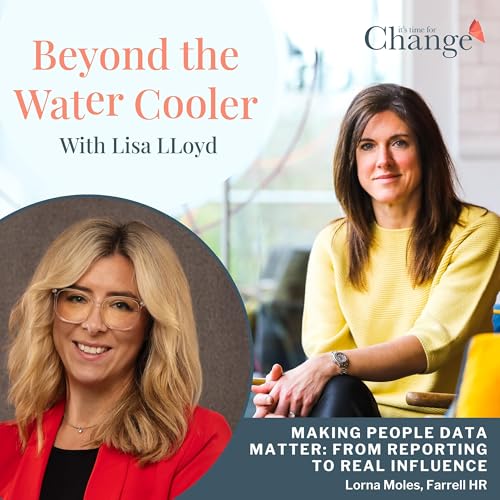
  • Making People Data Matter: From Reporting to Real Influence – Lorna Moles, Farrell HR
    Jan 29 2026

    'HR data' - for many, those two words conjure up images of spreadsheets, reporting for the sake of it, or endless discussions about what to count and who even cares.

    But what if we stopped treating ‘people data’ as just another extra or admin task, and instead saw it as essential for understanding what really makes our teams tick?

    I sat down with Lorna Moles, director of Farrell HR, to unpick why so many HR professionals - and leadership teams more broadly - struggle to move beyond reporting the basics. We explored how HR data, when used purposefully, can be the backbone of good decision-making, strategic storytelling, and building credibility in the boardroom.

    What stood out for me was that data isn’t just numbers - it’s people’s stories, frustrations, ideas, and what gets in the way of them being at their best.

    If we really want to create a work culture where employees thrive and managers feel equipped to lead well, we need to spend as much time listening to what people are telling us (in conversations, feedback, and lived experience) as we do looking at the headline numbers.

    A big theme was curiosity - not taking data at face value, but asking what lies beneath. It means drilling beyond ‘how many’ to really notice the patterns, the outliers, the “why”. That’s when data moves from being a tick-box exercise to something alive and genuinely useful for managers, leaders, and the whole organisation.

    Of course, none of this matters if we don’t communicate well. Lorna and I both agree - it’s far too easy to stop at “here’s the report”. True impact begins when we work together to make sense of the data, ask the right questions, and use it to support people, not just measure them.

    If you’re a leader, HR professional, or manager wanting your workplace to perform at its best, start by asking how you use your people data. Is it an afterthought - or a springboard for conversations that drive real change?

    This conversation is a reminder to see beyond the spreadsheet and get under the surface of what’s really going on.

    More about Lorna:

    Lorna Moles runs FARRELL HR, harnessing over 20 years of in-house experience to help organisations transform workplace culture, future-proof their teams and navigate HR challenges with clarity and compassion.

    She offers flexible, tailored HR support - whether you need core HR services, strategic advice or project-based help during periods of growth or change.

    With FARRELL HR, businesses benefit from senior-level HR expertise without the overhead of hiring in-house: from policy and procedures to performance management, restructuring, talent planning and employee engagement.

    Get in touch here: www.farrellhr.co.uk

    Resources & References

    Insight to Action: Making Data Matter: How HR Can Build Influence Through Storytelling and Insightful Reporting

    Watch this episode on YouTube

    Explore barriers to some data-collection approaches and a number of different methods that provide the opportunity to capture everyone’s voice: Never Just a Survey – Kieran Innes, Stribe

    Find out where you and your team are at and what's needed to shift the dial on performance data:

    Show More Show Less
    39 mins
  • What High-Performing Teams Will Do Differently in 2026
    Jan 15 2026

    High performing teams aren’t just about more tools or faster processes. What really sets them apart as we look to 2026 is how they create and sustain performance - not simply by working harder, but by rethinking the way they lead and work together.

    I’m noticing a clear pattern across organisations: people are working flat out, yet performance feels fragile and easily disrupted. Decision making can be slower, energy is slipping, and many leaders admit to feeling under pressure to have all the answers. The challenge isn’t a lack of talent or drive, but rather that our default models of leadership and management don’t always fit the pace and complexity we face today.

    It’s time to let go of what I call “zombie leadership” - outdated habits and models built on constant urgency, control and the relentless need for answers. Instead, the teams that are thriving are those where leaders do less, but do it intentionally. They create space for thinking, learning, and genuine contribution. They focus less on output in the short-term, and more on clarity - quality over busyness.

    This shift isn’t always comfortable, especially if your identity as a manager or leader has been based on having the answers. But asking better questions, building real pauses into conversations, and protecting your team’s energy pays off in resilience, judgement, and creativity.

    Our focus has to be on work cultures where wellbeing and high performance aren’t separate goals, but interdependent. Sustainable success comes from leading differently, not pushing harder. If you’re ready to step back, prioritise space, and foster genuine high performance in your organisation, there are some simple but impactful actions you can take - fewer, better meetings, smarter decision making, and actively managing energy.

    What would happen if doing less became your greatest leadership strength? If you want the support to make that shift, you know where to find me.

    Resources & References

    Download the free resource: Insight to Action: Sustainable High Performance in 2026: What Teams Need to Do Differently

    Listen to this episode on YouTube

    Download the High Performance Accelerator to increase self-awareness

    The 5 Unseen People Challenges Leaders Must Face in 2026

    Retained Partnership Info

    Contact details for Lisa LLoyd:

    LinkedIn: lisapsychology

    Website: itstimeforchange.co.uk

    Sign up to be kept in the loop: itstimeforchange.co.uk/jointheclub

    Contact me: itstimeforchange.co.uk/contact

    Email me for a friendly chat: lisa@itstimeforchange.co.uk

    Show More Show Less
    13 mins
  • The 5 Unseen People Challenges Leaders Must Face in 2026
    Dec 18 2025

    As we approach a new year, I’m urging leaders and managers to pause and reflect - it’s time for strategic, actionable thinking about how we’ll lead into 2026. Expectations at work have changed, people have changed, and the way organisations respond needs to change too.

    I’m sharing the five people challenges that simply can’t be ignored if you want a work culture where employees thrive, not just survive. You'll also hear my suggestions about where to start for each challenge to make a real difference for the year ahead.

    The reality facing us? Emotional exhaustion is everywhere, often hidden behind the facade of resilience. High output does not mean high wellbeing - it's all too easy to misinterpret performance and overlook quiet depletion within teams. If left unchecked, this erodes empathy, creativity, and ultimately, results.

    I’m seeing manager capability gaps widen, especially as they avoid difficult conversations or rely on tech for easy, yet superficial, solutions. Managers are now the critical link between strategy and reality. They need practical support to become skilled communicators who coach rather than instruct - tackling feedback, boundaries, and emotional intelligence head-on.

    With more of us working hybrid or across multiple sites, culture is fragmenting. Belonging, consistency, and trust now hinge on intentional daily habits, observable behaviours, and rituals that build connection, even at a distance. Culture is built moment to moment: in tone, clarity, and follow-through, not slogans on the wall.

    The world is also less predictable - dealing with brittleness, anxiety, non-linearity, and incomprehensibility. Thriving teams need to practise flexibility, foster trust, adapt quickly, and ensure shared understanding.

    Finally, a warning - there’s often a gulf between what leaders believe is happening and the lived reality for their teams. Listening, curiosity, consistent communication, and small intentional changes matter more than ever.

    Ask yourself: Where are the cracks? Where do the opportunities lie for your leadership, your management approach, and your team’s ability to perform at their best? When people thrive, business thrives. Let’s start that journey now.

    Resources & References

    Download the free resource: Leading in 2026 - The 5 Critical People Challenges and Actions for Thriving, High-Performing Teams

    Listen to this episode on YouTube

    Download the High Performance Accelerator to increase self-awareness

    To reduce the anxiousness experienced in our BANI world, this discussion framework could prove helpful: Tackling Anxiety Collectively: Team Discussion Framework

    Explore ways to build resilience: 13 Skills to Build Resilience

    Retained Partnership Info

    Contact details for Lisa LLoyd:

    LinkedIn: lisapsychology

    Website: itstimeforchange.co.uk

    Sign up to be kept in the loop: itstimeforchange.co.uk/jointheclub

    Contact

    Show More Show Less
    30 mins
  • Lead like a Diplomat - Gareth Weir, Deputy Ambassador, British Embassy Seoul
    Dec 4 2025

    No sidelines. That’s the phrase Gareth Weir digs into as we explore leadership, management, and the connections across our working world. Gareth is the Deputy Ambassador at the British Embassy in Seoul, and he’s just recorded a TEDx talk challenging the myth that it’s enough to stand on the edge and watch the world go by.

    Growing up in West Africa with teachers for parents, Gareth’s early experience with diverse cultures shaped his view that we’re all far more connected than we admit. Whether it’s a mobile phone made across continents or the food on our plate, nothing is truly isolated anymore. Gareth believes that real leadership starts with recognising this interdependence and embracing the messiness of reality.

    Curiosity, as Gareth sees it, isn’t a soft skill - it’s a strategic tool for managers and teams. Listening loudly and deliberately seeking what’s unsaid shifts conversations from the superficial to the substantial. If we want thriving, high performing teams, we have to ask ourselves: what might I be missing? Creating the space to challenge assumptions and actively invite diverse perspectives should be woven into our workplace governance, not just left to chance.

    Gareth also shares why maximum challenge followed by maximum loyalty is at the heart of great decision making. Leaders must signal their intentions, flex their style, and be open about when they’re directing and when they’re co-creating. Building trust, prioritising connection, and respecting the hidden system beneath any organisation are essential to wellbeing, alignment, and lasting influence.

    If you’re questioning what it means to be a courageous leader in today’s world - this conversation will help. Connection isn’t just about feeling good; it’s vital for high performance, psychological safety, and tackling the toughest problems together.

    Gareth’s reflections on shadowing, co-creation, and practical curiosity offer plenty to take away. For those looking to build work cultures where people thrive, this is not one to skip.

    More about Gareth:

    Gareth Weir has worked as an entrepreneur, in the private sector and public sector. He is fortunate to have lived and worked in a range of countries and contexts. Gareth is currently the UK Deputy Ambassador to the Republic of Korea.

    Links to contact Gareth:

    LinkedIn: Gareth Weir

    Resources & References

    Insight to Action: Lead Like a Diplomat: Practical Lessons in Curiosity, Connection & Courage

    Watch this episode on YouTube

    The Human Factor Behind High-Performing Teams

    Retained Partnership Info

    Contact details for Lisa LLoyd:

    LinkedIn: lisapsychology

    Website: itstimeforchange.co.uk

    Sign up to be kept in the loop: itstimeforchange.co.uk/jointheclub

    Contact me:

    Show More Show Less
    57 mins
  • Building Cultures Where People Belong and Perform: Megan Carter, Blenheim Palace
    Nov 20 2025

    What does it really take to build a work culture where employees genuinely belong and perform at their best? The conversation with Megan Carter - Head of People at Blenheim Palace and Pye Homes - clears away the gloss and gets down to the essentials.

    Even when joining an organisation with positive foundations, it’s easy for teams to fall into silos or lose sight of shared purpose. The solution, as Megan points out, lies in clear values and a lived approach to leadership. It’s not about a strategy sitting idle, but about the everyday behaviours, especially from leaders, that help people feel heard and valued.

    A high-performing workforce is sustained by fostering human connections, regular feedback, and authentic listening. I loved hearing about their ‘You said - we did’ process, which isn’t just an HR tick-box exercise, but an ongoing cycle of feedback and collective action. Their very low staff turnover and positive atmosphere are the results of intentional engagement, employee forums, and a culture where everyone’s voice matters.

    It isn’t hierarchical; it’s approachable, personal, and rooted in day-to-day interactions - remembering names, checking in with genuine concern, and encouraging emotional intelligence. The three pillars - Grow, Give, and Belong - run through everything they do, helping ensure that everyone’s potential is supported, community connections are strong, and each person feels they matter.

    Too often, people talk about work culture as a set of slogans or initiatives, but as Megan shared, it’s the little things - regular check-ins, supporting managers, empowering employees to solve problems together - that add up to a thriving, resilient workforce.

    If you’re a leader or manager, don’t shy away from honest feedback, keep role modelling the behaviours you want to see, and remember: sustainable success is always collective. When your people thrive, so does your business.

    More about Megan:

    Megan Carter is a People Director dedicated to shaping positive working environments and fostering strong, inclusive cultures that drive innovation and inclusivity. She prioritises wellbeing and personal growth for organisational success.

    Links to contact Megan:

    LinkedIn:

    Megan Carter

    Blenheim Palace

    Pye Homes

    Resources & References

    Insight to Action Building a Culture of Belonging and Excellence - Downloadable Resource

    Watch this episode on YouTube

    The Emotional Needs Audit (itstimeforchange.co.uk)

    Tomorrow's Workplace - Building workplaces around employee emotional needs (itstimeforchange.co.uk)

    Building...

    Show More Show Less
    37 mins
  • Burnout Signs & Solutions in Modern Workplaces – Claire Plumbly
    Nov 6 2025

    Burnout isn’t just about dramatic crashes or sudden breakdowns - far more often, it creeps in slowly, going undetected until leaders and high performers find themselves exhausted, cynical, and detached. It’s an uncomfortable reality, particularly in workplaces where relentless pace and hyper-productivity can masquerade as success.

    I spoke with Dr Claire Plumbly, psychologist and founder of Plum Psychology, who specialises in helping professionals recover from burnout. We challenge assumptions around burnout - as Claire says, it isn’t simply a workload issue, and it’s certainly not a badge of honour. Burnout can exist on a continuum: you can be hitting every marker for burnout and still function, still deliver. That’s often missed by leaders and managers, especially when high output is mistaken for wellbeing.

    The conversation moves beyond the familiar territory of “resilience” and “stress management”, and digs into the deep-seated organisational factors that keep burnout hidden or, worse, normalised. We explore how team culture, boundaries, and everyday interactions can either perpetuate burnout or be used to genuinely create thriving, healthy teams.

    I’m all about provoking leaders to think differently. It isn’t enough to simply identify stress signs; the real impact comes from regular, genuinely caring one-to-ones, creating true psychological safety, and holding space for rest and reflection - rather than cramming more into every vacant minute.

    Key takeaways are practical: model healthy boundaries, celebrate the power of pausing, and rethink what performance really means. Your self-worth and value cannot simply be measured by what’s ticked off a to-do list each day. Sustainable high performance comes from the rhythm and rituals of work, not the heroics of overwork.

    Claire’s book and resources offer insight for leaders who want to support teams to feel connected, valued, and safe. Burnout flourishes in silence - the antidote is care, conversation, and culture. The show notes have the links you’ll need.

    Let’s be clear: work should enable people to thrive, not merely survive.

    More about Claire:

    Dr Claire Plumbly is a Clinical Psychologist, author of Burnout: How to Manage Your Nervous System Before It Manages You, and founder of Plum Psychology - a team of psychologists offering trauma-informed burnout recovery both in-person and online. Through one-to-one work, intensive-therapy, and workshops, she helps busy professionals shift out of survival mode and into sustainable success.

    Links to contact Claire:

    LinkedIn: Dr Claire Plumbly

    Facebook: @drclaireplumbly

    Instagram: @drclaireplumbly

    TikTok: @drclaireplumbly

    Website: www.plum-psychology.com

    Resources & References

    Insight to Action: Burnout Intervention - Downloadable Resource

    Watch this episode on YouTube

    Retained Partnership Info

    Show More Show Less
    37 mins
  • TRADING PLACES: Battling with Business: Inside High Performing Teams
    Oct 23 2025

    Have you ever found yourself frustrated by the endless “Top 10 Ways to Lead” lists, only to realise that thriving teams and high-performing cultures aren’t built by ticking boxes? In this special episode of Beyond the Water Cooler, I’m sharing my recent guest appearance on Battling with Business, where I joined Gareth Tennant and Chris Kitchener to dive into what truly helps people and organisations flourish.

    We explored why leadership is far more nuanced than a job title or a generic playbook - it’s an ongoing commitment to understanding individual needs, being curious about what motivates others, and creating meaningful, authentic connections. Genuine interest and thoughtful feedback unlock unseen potential and build the trust every great team needs.

    Our conversation covered:

    • The real meaning of leadership as a set of daily behaviours
    • Why curiosity and empathy are essential for team performance
    • Building psychological safety through vulnerability and honest questions
    • How feedback helps uncover hidden strengths and encourage growth
    • Creating connection - whether through personal stories or simple, agenda-free chats
    • What leaders can do to protect and support their teams, especially under pressure
    • The vital role of trust in high performing cultures

    We talked openly about the everyday challenges leaders face when building psychological safety, especially in times of stress, and shared practical ideas for scaling healthy cultures in large organisations. Ultimately, we agreed - it’s the small moments, genuine conversations, and intentional focus on people that create workplaces where everyone can thrive.

    If you’re passionate about leadership, management, and nurturing working environments where people perform at their best, this discussion offers fresh, practical insights you can take away today.

    More about Battling with Business:

    In the Battling with Business podcast, Gareth Tennant, a former Royal Marines Officer, and Chris Kitchener, a veteran of the software development world, explore ideas and concepts around teams and teamwork, leaders and leadership, and all things in between. It’s a discussion between a former military commander and a business manager, comparing and contrasting their experiences as they attempt to work out what makes teams, leaders, and businesses tick.

    Links to contact Gareth & Chris:

    LinkedIn:

    Gareth Tennant

    Chris Kitchener

    Resources & References

    High Performance Accelerator Resource

    Listen to this episode on YouTube 

    Demystifying Psychological Safety | It's Time for Change

    Rethinking Leadership | It's Time for Change

    Show More Show Less
    1 hr and 5 mins