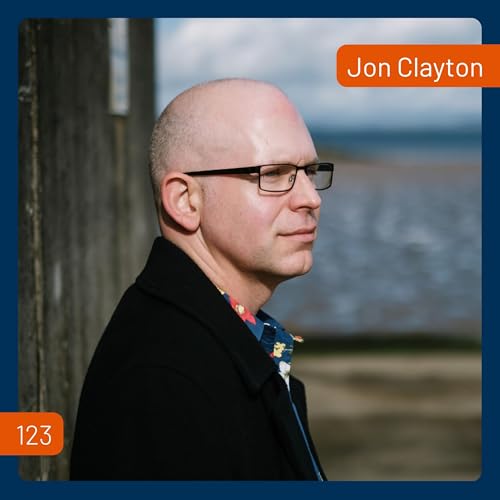
Architecture Business Club with Jon Clayton cover art

Architecture Business Club with Jon Clayton

Architecture Business Club with Jon Clayton

By: Jon Clayton
Listen for free

Architecture Business Club is the podcast to help you build a build profitable, future-proof architecture practice that both you and your clients love! It’s an inclusive place (for ALL architecture business owners). So whether you’re an Architect, Architectural Technologist, or Architectural Designer…If you sell architectural services and want to improve the way you do things…This is THE podcast for you. I’m Jon Clayton, your show host, and a Chartered Architectural Technologist based in the UK. I’ve been in architecture for over two decades and ran my own micro practice for 10 years+. Each week you’ll hear from inspiring people from the world of architecture and business who share actionable tips to help you improve how you work, save time, or make more money. I’ll also share my own experiences running an architecture business in occasional solo episodes. We cover everything from mindset, money, business strategy, sales & marketing, productivity, systems & workflows, client experience, outsourcing, software, technology, and much more. Episodes are short, helpful & actionable. Expect interview episodes of around 30 to 40 minutes, and occasional solo episodes of up to 20 minutes. New episodes are released every other Thursday at 6am GMT / 2am EST. Welcome to the Club!Copyright 2026 Jon Clayton Art Economics Leadership Management & Leadership Marketing Marketing & Sales
Episodes
  • How To Avoid Miscommunication Problems In Architecture with Usman Yaqub | 125
    Jun 11 2026

    Avoiding Costly Miscommunication in Architecture: Clearer Client Communication with Usman Yaqub

    Jon Clayton hosts Architecture Business Club with guest Usman Yaqub, president of the Chartered Institute of Architectural Technologists and director at Studio Yaqub Architecture, to discuss how miscommunication and technical jargon damage projects and client relationships. Usman explains that clients, contractors, planners, engineers, and consultants view the same project through different lenses—emotional investment, buildability and program, or compliance and policy—so communication must be adapted to what “success” means for each audience and to reduce “scope canyons” between silos. He shares examples where stakeholders misunderstood milestones and where “planning approval” was wrongly assumed to mean ready-to-build, stressing the need to confirm understanding. Practical tactics include using relatable explanations, storytelling, and visual tools like drawings, BIM, and visualisations, plus framing meetings to invite questions.

    Today’s Guest

    Usman Yaqub is the current President of The Chartered Institute of Architectural Technologists & Director at Studio Yaqub Architecture. He’s an Associate Lecturer at The University of the West of England and holds positions with a number of charities and not for profit organisations. He also established the popular online CPD series - CPD in 43.

    Episode Highlights

    00:00 Introduction

    01:12 Meet Usman Yaqub

    02:11 Different Lenses Different Goals

    03:33 Keeping Clients Emotionally Engaged

    05:10 Bridging Scope Canyons

    06:19 Jargon That Backfires

    06:58 Simplicity Shows Expertise

    08:04 Making The Process Accessible

    10:09 Miscommunication Stories

    10:46 Milestones And Expectations

    11:59 Planning Approval Confusion

    13:12 Spotting When They Don't Get It

    14:50 Planning Vs Building Regs Explained

    16:25 Bookending Meetings For Clarity

    18:28 Tailoring To Each Audience

    22:05 Storytelling And Visual Tools

    23:57 Biggest Communication Advice

    24:59 Final Thoughts And Where To Connect

    Key Takeaways

    Think about who you are talking to

    Everyone you work with sees a project differently. A client cares about how it will change their life. A contractor cares about how to build it. A planner cares about rules and policy. When you understand what matters to each person, you can talk to them in a way that makes sense for them — and things go much more smoothly.

    Simple words show more skill than big ones

    Using jargon might make you feel clever, but it can leave people confused and too embarrassed to say so. The real skill is taking something complex and explaining it in plain language. If someone walks away understanding you, that is a much better result than if they walk away impressed but lost.

    Good communication means checking understanding, not just sharing information

    Saying something clearly is only half the job. You also need to make sure the other person has understood it the same way you meant it. Watch for small signs — hesitation, odd questions, or repeated words — that tell you there may be a gap. Ask "what questions do you have?" instead of "do you have any questions?" to give people a proper chance to speak up.

    Subscribe on YouTube (for upcoming video episodes!) 📺

    Send a Voicemail to the show (we listen to every message!) 📢

    Connect with Usman Yaqub on LinkedIn 🤝

    Learn more about Studio Yaqub Architecture 🖥️

    Follow or Connect with Jon on LinkedIn 🤝

    👇 And if you enjoyed this episode…

    Please leave a 5-star review or rating wherever you listen to podcasts, and don’t forget to hit the subscribe button so you never miss an episode.

    Show More Show Less
    31 mins
  • Navigating Home Design Costs with Michael Sweebe | 124
    May 28 2026
    Fixing Budget Misalignment in Residential Projects.A conversation with Michael Sweebe on Build Cost Estimation. Host Jon Clayton interviews residential architect Michael Sweebe of Sweebe Architecture about the common problem of homeowners’ design goals outpacing their budgets and the lack of early tools to define scope and estimate costs. Mike shares how his childhood experience in an unsuitable apartment shaped his focus on homes as expressions of memory, identity, and aspiration, and how 20 years in commercial practice led him to residential work. He explains how a COVID-era, space-by-space cost spreadsheet helped him give live ballpark project costs, preventing clients from spending money on drawings they couldn’t afford to build. That approach evolved into Scopify, a free homeowner app (beta) that estimates “soup to nuts” build costs by U.S. postal code and delivers pre-qualified leads to architects, reducing unbillable qualification time.Today’s GuestMichael Sweebe is a practicing architect & the founder of Sweebe Architecture. Mike’s practice specialises in residential architecture & interior design – designing homes that bring families closer together. Mike is also the founder of Scopify – a new app helping homeowners to estimate & control their build costs from the outset & to connect them with the best service providers.—Episode Highlights00:00 Introduction01:01 Meet Michael Sweebe01:36 What We Will Cover02:08 A Childhood Home Mismatch03:00 Drawing Plans At Age Nine04:19 Finding Purpose Early05:41 From Uni To Real Practice06:40 Why Homeowners Matter More08:42 Residential Brand Mindset09:44 Residential Project Pitfalls10:23 No Tools For Early Costing12:16 Chicken and Egg Problem13:14 Building Without Architectural Guidance14:46 COVID Spreadsheet Solution15:47 Space By Space Estimating16:47 Why Homeowners Think In Rooms18:15 Live Pricing Saves Projects20:24 Stop Gatekeeping Cost Info21:51 Limits Of One To One Help22:29 Sales Funnel Sparks Scopify24:52 Scaling Impact Nationwide26:47 Scopify Beta Overview27:28 Homeowner Experience And Pricing28:12 Postal Code Cost Algorithm29:15 40 40 20 cost rule30:00 Qualified Leads For Architects30:54 Beta Results And Conversions34:05 Homeowners Know 85 Percent Of What They Want34:54 How To Try Scopify35:23 Key Takeaway36:16 Must Have Business Resource39:11 Where To Find Michael Sweebe—Key TakeawaysHelp homeowners understand costs before they hire anyone.If you work in architecture or home design, one of the biggest problems you will see is that homeowners have no idea what things cost. When they find out late in the process, it can kill the whole project. You can save everyone a lot of time and money by giving people a rough idea of costs right at the start — before they pay for drawings or sign any contracts.Think about spaces the way the people living in them do.When you are working with homeowners, remember that their home is about more than just building materials and square footage. It is about who they are, what they care about, and what kind of life they want to live. If you keep that in mind, you will do better work and build stronger relationships with your clients.Technology can help you reach more people and save time.If you are a small practice, you can only help so many clients on your own. But if you use the right tools — like an app that lets homeowners self-qualify before they even speak to you — you can spend your time with people who are actually ready to go ahead. That means less unpaid time in meetings that go nowhere, and more clients who are a good fit for your work.—Subscribe on YouTube (for upcoming video episodes!) 📺Send a Voicemail to the show (we listen to every message!) 📢Learn more about Scopify 🖥️Test the Scopify app 🖥️Learn more about Sweebe Architecture 🖥️Curious about podcasting? Click here to book a chat with Jon 🎧Follow or Connect with Jon on LinkedIn 🤝—👇 And if you enjoyed this episode…Please leave a 5-star review or rating wherever you listen to podcasts, and don’t forget to hit the subscribe button so you never miss an episode.
    Show More Show Less
    41 mins
  • Marketing & Lead Generation Tips For Small Businesses | 123
    May 7 2026

    Top Marketing & Lead Generation Episodes for Architecture Practices

    Jon Clayton introduces a roundup of Architecture Business Club episodes focused on improving marketing and lead generation for architecture practices beyond a website portfolio and occasional Instagram posts. Jon highlights the most popular marketing and lead generation episode to date, shares a “hidden gem,” and reveals one of his personal favourites.

    Episode Highlights

    00:00 Introduction

    01:32 Most Popular Marketing & Lead Generation Episode To Date

    02:42 The Right Way For Architecture Firms To Use LinkedIn

    03:53 A Hidden Gem From Our Marketing & Lead Generation Episodes

    05:05 How To Use Pinterest To Build Know, Like & Trust

    06:19 A Personal Favourite From Our Marketing & Lead Generation Episodes

    07:39 Strategic Marketing System For Small Firms

    09:47 Wrap Up

    Key Takeaways

    Show who you are, not just what you build

    On LinkedIn, you might think sharing photos of your finished projects is enough. But clients want to know you. They want to see your personality, understand how you work, and feel they can trust you. Try sharing why you love what you do or a little about your process — that personal touch can make a big difference.

    Pinterest can help you reach clients early

    Pinterest is not really a social media platform — it works more like a search engine. If you post helpful content there, people can find you while they are still deciding which architectural designer to hire. Over time, they get to know your work, trust your brand, and when they are ready, they come back to you.

    A lean marketing system can work for small firms

    You do not need a big team to market well. Start by getting clear on who your dream client is, create a simple core offer, and set up a way to bring in leads. Even a small "gateway offer" — like a paid strategy session — can help turn first conversations into paying work and grow your business step by step.

    Get to grips with LinkedIn in this popular podcast episode

    Learn how to leverage Pinterest in your architecture practice

    Build an effective marketing system for your micro-sized business

    Subscribe on YouTube (for upcoming video episodes!) 📺

    Send a Voicemail to the show (we listen to every message!) 📢

    Curious about podcasting? Click here to book a chat with Jon 🎧

    Follow or Connect with Jon on LinkedIn 🤝

    👇 And if you enjoyed this episode…

    Please leave a 5-star review or rating wherever you listen to podcasts, and don’t forget to hit the subscribe button so you never miss an episode.

    Show More Show Less
    11 mins
adbl_web_anon_alc_button_suppression_t1
No reviews yet