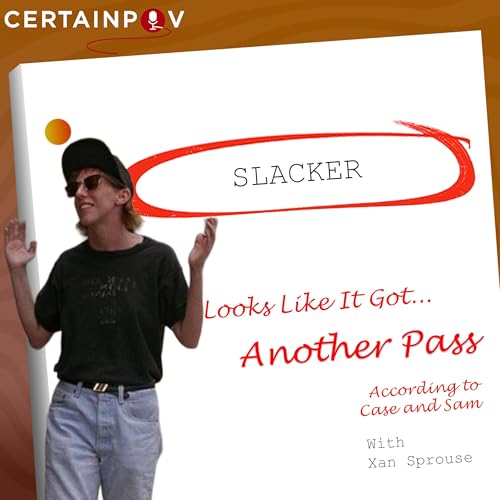
Another Pass Podcast cover art

Another Pass Podcast

Another Pass Podcast

By: Case Aiken
Listen for free

About this listen

Case Aiken and Sam Alicea take a look at movies that they find fascinating but flawed and make suggestions on what could have been done at the time.CertainPOV Media Art
Episodes
  • Another Pass at Shazam! Fury of the Gods
    Feb 13 2026
    This week on Another Pass, Sam and Case are joined by Zorikh Lequidre to revisit Shazam! Fury of the Gods. We break down the sequel's mythic swing, its tonal tightrope between family comedy and divine spectacle, and whether this lightning strike deserved a brighter fate at the box office. Another Pass Full Episode Originally aired: February 13, 2026 Music by Vin Macri and Matt Brogan Podcast Edited by Sophia Ricciardi Certain Point Of View is a podcast network brining you all sorts of nerdy goodness! From Star Wars role playing, to Disney day dreaming, to video game love, we've got the show for you! Learn more on our website: https://www.certainpov.com Support us on Patreon! patreon.com/CertainPOVMedia Join us on Discord: https://discord.gg/wcHHer4 PODCAST SHOWS: ▶ Another Pass - https://www.certainpov.com/another-pass-podcast Outline Shazam Franchise and Character Legacy The discussion highlighted the complex evolution of the Shazam character and its multiple incarnations, emphasizing the challenges of maintaining clarity in the franchise (02:00). Complex Character History and Naming (02:43) The Shazam character has undergone multiple renamings, now sometimes called "The Captain" to differentiate from original versions. Comics have introduced variants like Mary Marvel and Junior (Freddie Freeman's hero name) to expand the lore. The character's fluctuating comic presence, with cancellations and restarts, impacts fan engagement and continuity. Zorak's project, Captain Marvel Culture, explores these variants in cultural and historical contexts, highlighting the character's societal relevance. Actor and Fan Perspectives on Shazam (07:30) Sam Alicea shared her positive cosplay experience as Mary Marvel, emphasizing the character's wholesome reception in fandom. Both Sam and Case Aiken noted that the first Shazam movie was colorful and fun, appealing to casual viewers with good pacing and humor. Case's personal connection to the character goes back to childhood superhero creations, reinforcing the deep fan roots. The first film balanced the youthful and superhero personas well, unlike the sequel where the older cast created dissonance. Challenges with Sequel Timing and Casting (14:00) The four-year gap between the first and second Shazam movies caused problematic aging of the cast, making the characters less believable as teenagers. The COVID-19 pandemic limited crowd scenes, affecting the movie's atmosphere and fight sequences, leading to a "COVID movie" feel with socially distanced extras. The sequel's timing made character maturity inconsistent, with Zachary Levi's older age conflicting with immature superhero behavior, reducing audience sympathy. The lack of continuity in character growth and the absence of younger kid scenes weakened the family dynamic established in the first film. Plot, Powers, and Mythological Elements The movie's story and mythological adaptations were discussed, focusing on the Daughters of Atlas and their powers, plus how mythology was reinterpreted (28:58). Invented Mythology and Powers of Atlas' Daughters (29:00) The film introduced three daughters of Atlas, a creative deviation from classical mythology that was accepted as a fun concept. Helen Mirren's character uses force fields and telekinesis, Lucy Liu's character employs "chaos" powers resembling mind control, and Rachel Zegler's character has axis-based powers, visually impressive but not well explained. The powers were often scene-dependent rather than consistent, especially Helen Mirren's varying abilities. The dome barrier served as a plot device to isolate the final fight and prevent intervention from other heroes, a trope common in superhero films. Mythology vs. Comic Lore (31:33) The movie used traditional Shazam power origins (Solomon, Hercules, Atlas, Zeus, Achilles, Mercury) rather than newer comic variations. Discussion considered linking the characters to the broader DC mythos, such as the New Gods, but the film stuck to simpler concepts. The film's magic and powers were occasionally connected to Dungeons & Dragons references, reflecting the script's mix of fantasy influences. The casting of iconic actors like Helen Mirren and Lucy Liu added gravitas despite the powers being plot-driven. Narrative and Visual Critiques of Powers and Effects (35:00) The dome and powers' visual effects felt forced or inconsistent, serving more as story contrivances than meaningful world-building. The chaotic power, mainly mind control, lacked thematic clarity despite being the most consistent. The movie struggled to integrate powers into the plot logically, often introducing new abilities at convenience moments. The limited impact of the dome on the city was noted, with little attention to realistic consequences of such an event. Family Dynamics and Character Development A major theme was how the sequel mishandled the Shazam family dynamic, focusing too much on ...
    Show More Show Less
    2 hrs and 2 mins
  • Another Pass at Iron Man 2
    Jan 16 2026
    This week on Another Pass, Sam and Case are joined by Red and Blue from Overly Sarcastic Productions to take another look at Iron Man 2. We dig into the film's place in the early MCU, its tangled ambitions, its missed opportunities, and why this sequel is more fascinating—and more frustrating—than its reputation suggests. Another Pass Full Episode Originally aired: January 16, 2026 Music by Vin Macri and Matt Brogan Podcast Edited by Sophia Ricciardi Certain Point Of View is a podcast network brining you all sorts of nerdy goodness! From Star Wars role playing, to Disney day dreaming, to video game love, we've got the show for you! Learn more on our website: https://www.certainpov.com Support us on Patreon! patreon.com/CertainPOVMedia Join us on Discord: https://discord.gg/wcHHer4 PODCAST SHOWS: ▶ Another Pass - https://www.certainpov.com/another-pass-podcast Outline Introduction and Setting Context (00:00 - 01:17) Introduction to 'Another Pass' podcast focused on critically reviewing flawed but fascinating movies. Today's episode focal point: Iron Man 2 and its place in the MCU Phase One. Background on MCU Phase One Rewatch (01:17 - 04:52) Red and Blue's MCU Phase 1 rewatch journey, voice memo files evolution. Discussion on Iron Man 2 as early MCU and its general reception and reputation. Disney Acquisition and Character Edges (04:52 - 06:03) Discussion on Marvel's acquisition by Disney in 2009 and its effects on MCU's tone and character portrayals. Exploration of Justin Hammer as Marvel's first gay Disney character and the evolution of sexism depictions in MCU pre- and post-acquisition. Personal Experiences & Nostalgia (06:03 - 10:27) Case shares personal birthday tradition of watching MCU May releases. Sam shares background on favorite characters, preference for Thor, and experience with Iron Man 2 and Incredible Hulk. Phase One's Impact and Early MCU Experiences (10:27 - 21:23) Sam recounts childhood MCU viewing preferences and early impressions of Iron Man 2. Reflections on when movies were first realized to be potentially 'bad' (Last Airbender as example). Nature vs. Nurture and Character Mirrors (21:23 - 31:38) Deep dive into Tony Stark's foils: Ivan Vanko as brilliance corrupted, Justin Hammer as surface-level money-driven, Rhodey as worthy successor. Themes of legacy, performance personas, and characters as reflections of Tony Stark's facets. ️ SHIELD's Role and Clean Energy Themes (31:38 - 42:13) Discussion on SHIELD's abrupt narrative entry and Natasha Romanoff's character introduction. Iron Man's clean energy arc initially central but deprioritized post-Phase One. Tony Stark Character Study Continued (42:13 - 51:43) Tony's difficulty with vulnerability and communication, particularly in relationships with Pepper and Rhodey. His self-destructive tendencies and manipulation to protect legacy. Comparison with Captain America and Character Dynamics (51:43 - 01:01:44) Similarities and differences between Tony Stark and Steve Rogers in terms of personality, charisma, and heroism. Impact of paternal relationships on both characters. Film's Visuals and Action Choreography Appreciation (01:01:44 - 01:12:11) Praise for the visual effects and choreography, especially fight scenes involving Iron Man and War Machine. Influence of Genndy Tartakovsky's choreography on key fight scenes. Plot Fixes and Structural Critiques (01:12:11 - 01:22:37) Proposal to streamline Tony's palladium poisoning and father issues subplot for clarity and emotional impact. Suggestions to either cut or significantly expand Howard Stark's involvement for better narrative coherence. ️ Villain Dynamics and Plot Simplification Proposals (01:22:37 - 01:33:40) Pitch to kill off Ivan Vanko early to tighten story and increase stakes around spread of arc reactor tech. Hammer's role as comic relief vs. Vanko's as genuine threat. Relationship Between Hammer and Vanko (01:33:40 - 01:44:24) Exploration of Hammer as incompetent and Vanko as the motivated mastermind. Suggestions for portraying toxic partnership dynamic with comedic and dramatic potential. ‍‍ Refining Howard Stark's Role and SHIELD Integration (01:44:24 - 01:54:41) Proposal to reduce Howard Stark's screen time and make his role more subtle, focusing on inspirational content rather than explicit instructions. Advocation for earlier and smoother integration of SHIELD, especially Agent Coulson, to make narrative transitions more organic. ️ Iron Man Tech and Narrative Consequences (01:54:41 - 02:02:11) Discussion on technology leakage leading to arms race and justification for Tony's technological evolution (nanotech in later films). Observations on Iron Man's armor importance fading in MCU. Closing Remarks and Plugs (02:02:11 - 02:02:13) Appreciation for briefcase suit-up scene and early MCU practical effects. Final praise for Tony Stark's characterization as ...
    Show More Show Less
    2 hrs and 2 mins
  • Slacker Got Another Pass
    Dec 12 2025
    This week on Another Pass, Case and Sam are joined by Xan Sprouse from Gold Standard: The Oscars Podcast to celebrate a film that triumphed despite its production troubles! We look at how creative perseverance, behind-the-scenes chaos, and a little cinematic magic turned a bumpy shoot into a beloved classic. Another Pass Full Episode Originally aired: December 12, 2025 Music by Vin Macri and Matt Brogan Podcast Edited by Sophia Ricciardi Certain Point Of View is a podcast network brining you all sorts of nerdy goodness! From Star Wars role playing, to Disney day dreaming, to video game love, we've got the show for you! Learn more on our website: https://www.certainpov.com Support us on Patreon! patreon.com/CertainPOVMedia Join us on Discord: https://discord.gg/wcHHer4 PODCAST SHOWS: ▶ Another Pass - https://www.certainpov.com/another-pass-podcast Outline Introduction and Initial Discussion on Film "Slacker" (00:00 - 07:47) Introduction to the podcast episode format and deviation to discuss a 'good' rather than a 'flawed' movie. Introduction of the 1990 Richard Linklater film Slacker and its unconventional narrative structure focusing on small amounts of time with multiple characters. Deep Dive into Cultural and Generational Impact (07:48 - 18:08) Discussion on the generational divide (Gen X vs Older Millennials) and how the film captures the directionlessness and creative spirit of early 90s youth culture, especially in Austin, Texas. The movie's reflection on mental health, societal roles, and the slacker ethos as a distinct identity with unique struggles and ambitions. Storytelling Methods and Character Vignettes (18:08 - 33:46) Exploration of the film's narrative style: non-linear, vignette-driven, character-focused, with no resolved plot but connected by settings and interactions. Notable memorable characters and scenes: hit-and-run guy, conspiracy theorist, woman recently discharged from a mental hospital, and the 'you should quit' mantra. Film Production Context and Cultural Legacy (33:47 - 50:34) Examination of the extremely low $23,000 shooting budget using film stock, guerrilla filmmaking style, and unpaid or deferred payment cast and crew. Discussion on Austin's artistic community's role in the movie's creation and legacy. The film as a time capsule and cultural snapshot of Austin's 1990 scene. Comparison to Other Films and Audience Engagement (50:35 - 01:00:49) Comparison with contemporaneous movies, e.g., Dances with Wolves, Misery and other 'weird' indie films, and Linklater's other work like Dazed and Confused. The film's thematic core of human connection and authentic interaction despite being a clear time capsule. ️ Personal Experiences and Generational Nostalgia (01:00:50 - 01:07:45) Hosts share personal anecdotes about high school experiences, alternative schools, and the value of finding 'freak' communities. Reflection on generational transitions and the continuation of youth culture patterns despite changing technology and social tools. Accessibility and Appeal of "Slacker" Today (01:07:46 - 01:14:15) Discussion on how the film's reputation preceded the viewing experience, yet it remains accessible and enjoyable regardless of familiarity or age. Analysis of the film's tightly scripted dialogue despite its casual and naturalistic style, and comparison with mumblecore movies and shows like Seinfeld. Closing Remarks, Promotions, and Actionable Content for Audience (01:14:15 - 01:20:16) Guest Xan Sprouse promotes her podcasts Gold Standard and Drunk Cinema and her social media (udinax19). Case and Sam promote the Certain POV network, including Patreon tiers, Discord, YouTube channel growth, and new shows like Trade School. Announcement of next episode covering Highlander 2: The Quickening and closing credits.
    Show More Show Less
    1 hr and 20 mins
No reviews yet