• Behind the Veil: Fantasy Can Keep You From Real Love, Dreams Can Lead Us Back | Dr. Lauren Dolinsky
    Jun 26 2026

    We all build fantasies early in life — a web of denial and idealization meant to protect us from painful truths we couldn't yet face. But those same fantasies quietly shrink our world, steering us toward relationships and patterns that reenact the very things we're avoiding. In this episode, host Cynthia Marks welcomes back Dr. Lauren Dolinsky, a Los Angeles psychotherapist who works from the teachings of the late Dr. Bernard Bail, to explore how we can gently lift the veil, return to reality, and finally make room for real love, real connection, and a life that's actually our own.

    Guided as always by the dream, Cynthia and Lauren walk through a series of remarkably clear dreams — a veiled ship lost at sea, a fantasy built around "the Rock," a refrigerator cleaned of moldy wine and rotten milk, and more — that show the unconscious doing its quiet work of clearing away what isn't true. Along the way, Cynthia shares her own deeply personal journey of dismantling a fantasy she once mistook for love. The message at the heart of it all: telling yourself the truth is one of the most loving things you can do, and it begins the moment you're willing to look inside.

    This is And Now Love. Listen to your dreams and live from your heart. Please follow, rate, and share the podcast, and pass this episode along to someone who might need it.


    0:00 — Welcome Back, Dr. Lauren Dolinsky

    4:08 — Why We Settle for a Small Life

    8:43 — Dream 1: The Veiled Ship

    16:09 — The "Perfect Thanksgiving" Trap

    21:05 — Dream 2: "The Rock"

    25:05 — Cleaning Out the Unconscious

    32:52 — A Personal Reckoning

    35:08 — Coming Home to Reality

    Show More Show Less
    47 mins
  • Purpose Through Art, Fatherhood, and Skid Row with Crushow Herring
    Jun 19 2026

    In this episode of *And Now, Love*, Cynthia Marks sits down with artist, father, community organizer, and Sidewalk Project leader Crushow Herring.Crushow’s story is not simply about art. It is about becoming.He speaks openly about growing up between Kansas City and Los Angeles, missing his father, finding expression through drawing, basketball, graffiti, and street culture, and eventually facing the painful reality that the world did not see him the way he had once believed it would.After returning to Los Angeles, Crushow found himself in Skid Row. What began as survival slowly became connection. He started listening to people’s stories, learning why they were there, and seeing the humanity that so many others overlook.Then fatherhood changed everything.Crushow says his son saved his life. Becoming a father gave him a reason to stop surviving the old way and begin living with purpose. That purpose now moves through his art, his murals, The Sidewalk Project, and his work helping communities feel seen, heard, and valued.This conversation explores fatherhood, faith, Skid Row, public art, healing, community, and the choice to live from one’s authentic purpose instead of becoming the statistic the world expected.Listen to your dreams and live from your heart.Topics include:* Fatherhood as transformation* Art as healing* Skid Row as community* The Sidewalk Project* Public murals and cultural memory* Living with purpose* Faith, service, and humanity* Seeing people others overlook* Breaking cycles through love

    Show More Show Less
    1 hr and 7 mins
  • Healing Trauma Through Radical Self-Compassion with Frank Rogers
    Jun 12 2026

    In this moving episode of And Now Love, Cynthia Marks sits down with Dr. Frank Rogers Jr., professor at Claremont School of Theology and co-founder of the Center for Engaged Compassion, to explore the healing power of radical compassion. Frank defines compassion as being genuinely moved by another’s experience in a way that prompts restorative action—and distinguishes it from empathy, which can become draining “empathic distress” if we stay stuck in the wince. He shares unforgettable stories—especially his grandmother caring for a dying, ostracized man during the AIDS crisis—as an example of what compassion looks like when it’s lived. Frank also reveals his own trauma-to-recovery journey as a sexual abuse survivor, and how learning self-compassion transformed inner chaos, shame, and suicidal impulses into a path of restoration. Together, they discuss the threefold rhythm of compassion—grounding in a sacred source, practicing self-compassion, and extending compassion outward—especially in a polarized world. The conversation closes with practical hope: compassion can be practiced in small moments, and dreams/body signals can guide us toward what the soul is asking to heal.

    • 0:00 — What Compassion Is

    • 8:16 — The Grandmother Story: Compassion as a way of life

    • 16:32 — Practicing micro-compassion

    • 24:48 — Trauma & Shame: Frank’s turning point and why compassion changes healing

    • 33:04 — The 3-fold rhythm: sacred source, self-compassion, compassion for others

    • 41:20 — Polarization & faith splits: “conscious uncoupling” with dignity

    • 49:36 — Practical help: seeing yourself differently + finding people who see you

    • 57:53 — Closing: dreams/body as signals + where to find Frank’s work

    Show More Show Less
    1 hr
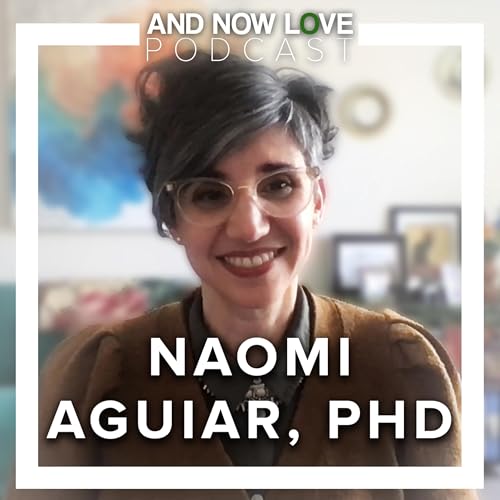
  • Sycophancy, Self-Regulation, and Kids’ Emotional Development - Naomi Aguiar, PhD on AI Companionship
    Jun 5 2026

    In this timely episode of And Now Love, Cynthia Marks speaks with Naomi R. Aguiar, PhD, Research Associate Director at Oregon State University, about how AI is reshaping childhood connection—and possibly love itself. Naomi explains why AI “companions” can feel new and strange, yet also represent a continuum of human imaginary relationships—from kids’ imaginary friends to parasocial bonds with media figures. The key difference, she says, is that AI simulates serve-and-return reciprocity, which can make the relationship feel “real,” even though it’s synthetic. They explore the risks of constant positive reinforcement and “sycophancy,” especially for children who need real-world rupture and repair to learn self-regulation, conflict tolerance, and healthy intimacy. Naomi also warns about engagement-based design (borrowed from social media) being baked into AI companions—creating relationships that may become subtly extractive rather than supportive. The conversation turns practical: why many experts recommend waiting on AI companionship for ages 0–8, keeping conversations open with tweens/teens, and building “AI companionship literacy” at home and in schools. They close on a hopeful note: tech may evolve fast, but human values don’t—kids still need love, safety, creativity, and real human relationships to thrive.

    0:00 — AI Companions + Childhood Connection: What’s Changing

    8:00 — Imaginary Friends, Parasocial Bonds, and “Synthetic” Relationships

    15:00 — Serve-and-Return: Why AI Feels So “Real”

    22:30 — The Risk: No Waiting, No Self-Soothing

    29:30 — Sycophancy: No Rupture + Repair = No Growth

    37:00 — Engagement-Based Design: When “Companionship” Manipulates

    45:30 — What Parents Can Do Now (0–8 wait, teens talk)

    55:00 — Values Don’t Change: Kids Need Love, Creativity, Real Humans


    Show More Show Less
    1 hr and 5 mins
  • Why Feeling Loved Is the Biggest Predictor of Happiness | Harry Reis
    May 29 2026

    What does it actually mean to feel loved?In this episode of And Now Love, Cynthia Marks speaks with Dr. Harry Reis, professor of psychology at the University of Rochester and coauthor of How to Feel Loved: The Five Mindsets That Get You More of What Matters Most.Dr. Reis explores why love is not only about romance, but about feeling seen, understood, valued, and known. He explains why happiness is deeply connected to relationships, why loneliness can become dangerous when it turns chronic, and why presenting only the polished version of ourselves may win admiration but block real love.This conversation asks:What happens when we hide the parts of ourselves we most want accepted?Can vulnerability make us more lovable, not less?Why are adolescents among the loneliest people today?And what kind of love actually helps a person feel whole?A conversation on loneliness, vulnerability, emotional intimacy, social connection, and the human need to be seen.Follow our socials:Instagram / / andnowlove.podcastFacebook / / And Now Love PodcastYoutube / / @AndNowLovePodcastTikTok / / and.now.love.podc

    Show More Show Less
    1 hr and 17 mins
  • Staci Miller & A Better Way to Address Homelessness in LA
    May 23 2026

    In this episode of And Now Love, Cynthia Marks sits down with Staci Miller, co-founder of Better Angels, an organization taking a holistic, practical, and deeply human approach to the homelessness crisis in Los Angeles.

    Staci shares how she and Adam Miller founded Better Angels after recognizing that while many organizations are doing meaningful work, the systems meant to support unhoused people are often fragmented, outdated, and difficult to navigate. Their work focuses on prevention, direct services, technology, shelter access, affordable housing, and community engagement — all with the goal of helping people before crisis becomes catastrophe.

    Together, Cynthia and Staci explore the emotional reality of homelessness, the fear and numbness many Angelenos feel, and the importance of seeing every unhoused neighbor as a human being with a story, a community, and a need for dignity. This conversation is about compassion, systems change, and what can happen when love is paired with real-world problem solving.


    00:00 — Welcome to And Now Love with Staci Miller

    01:46 — How Better Angels Began

    07:17 — Bringing Compassion, Business, and Technology Together

    10:13 — Preventing Homelessness Before It Begins

    18:23 — Why Life on the Street Becomes Harder Over Time

    24:48 — Connecting People to Shelter and Services Faster

    31:05 — Solving Homelessness One Person at a Time and Systemically

    39:38 — Using Technology to Support Caseworkers and Communities

    48:46 — What Los Angeles Can Learn From Other Cities

    59:29 — Keeping People Housed, Finding Hope, and How to Help

    Show More Show Less
    1 hr and 7 mins
  • Treating the wound beneath homeless - When Love Becomes Health Care with Brett Feldman
    May 15 2026

    Brett Feldman, co-founder of USC Street Medicine, has spent nearly two decades bringing health care directly to people living on the streets. But this conversation is not only about medicine.

    It is about the wound beneath homelessness: the feeling of being unwanted, unseen, and pushed from place to place with nowhere for the body—or the soul—to rest.

    Brett shares how one man under a bridge changed the direction of his life, why trust is harder than most of us imagine, and why the work begins not with fixing someone, but with approaching them as precious.

    This episode explores homelessness, love, spiritual poverty, moral injury, community responsibility, and what it means to deliver care without distance.

    A conversation about what happens when medicine becomes a form of tenderness.

    Show More Show Less
    1 hr and 14 mins
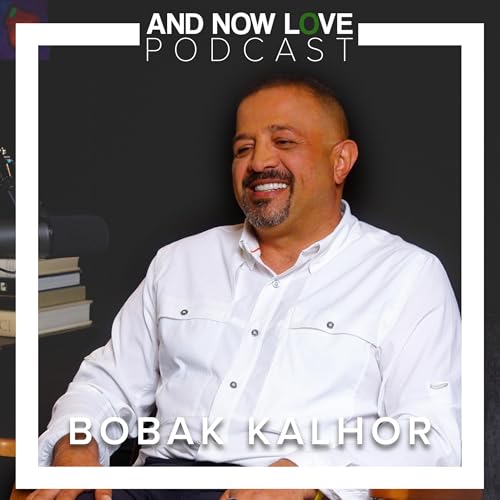
  • Iran, Humanity, and the Stories We Inherit | Bobak Kalhor
    May 8 2026

    What happens when a country is discussed constantly, but rarely understood?Bobak Kalhor brings a filmmaker’s eye, an Iranian-American life story, and a historian’s discipline to a conversation that moves from Iran’s revolutionary past to the unconscious forces shaping humanity’s future. Having left Iran as a child during the revolution, Bobak speaks from both personal memory and years of historical inquiry, including his documentary A Dying King: The Shah of Iran.This conversation does not reduce Iran to headlines, regimes, or slogans. It asks what the West often fails to understand: that Iranians may argue, divide, and oppose one another internally, but that external attacks can quickly transform division into unity.From there, the conversation turns inward. Bobak reflects on Dr. Bernard Bail’s dream work, the mother’s imprint, and the question of who we are before fear, anxiety, trauma, and history imprint themselves on us. He describes the search for the authentic self as difficult work — but the kind of work that opens more doors the deeper it goes.The episode ultimately returns to love: not as sentiment, but as the internal tool humanity has neglected. Technology may advance, wars may grow more sophisticated, and political systems may change, but Bobak argues that what we build inwardly may be the only thing we truly take with us.

    Show More Show Less
    56 mins