AI in Chicago, a Podcast cover art

AI in Chicago, a Podcast

AI in Chicago, a Podcast

By: Khullani M. Abdullahi JD | Founder Techne AI and BoardSight AI
Listen for free

About this listen

Welcome to AI in Chicago, the podcast where cutting-edge artificial intelligence meets the heart of the Midwest. From interviews with AI investors, researchers at top universities, and founders at rising startups to city officials leveraging machine learning to improve public services, AI in Chicago brings you stories, insights, and conversations that bridge the global and the hyperlocal. This show dives deep into the evolving world of AI through the lens of Chicago’s rich cultural, entrepreneurial, and academic landscape.Khullani M. Abdullahi, JD | Founder Techne AI and BoardSight AI Economics
Episodes
  • Building a Quantum Workforce in Illinois: Why Business Leaders Should Pay Attention Now
    Feb 19 2026

    In this episode we talk to Harley Johnson, CEO of the Illinois Quantum and Microelectronics Park.

    Most business leaders have quantum computing filed away in the "maybe in 10–15 years" folder. After sitting down with Harley Johnson, the CEO of the Illinois Quantum and Microelectronics Park (IQMP), for the latest episode of the AI in Chicago Podcast, I'm convinced that timeline needs to be moved up. Significantly.

    Timed to the federal CHIPS and Science Act, a group of state and institutional leaders developed a deliberate strategy: take the basic science excellence Illinois had been building for a decade and translate it into economic development. The result is IQMP — a state-backed technology park being built on a former steel mill site on Chicago's South Side, designed to take quantum technology from lab breakthroughs to real-world scale.

    Show More Show Less
    46 mins
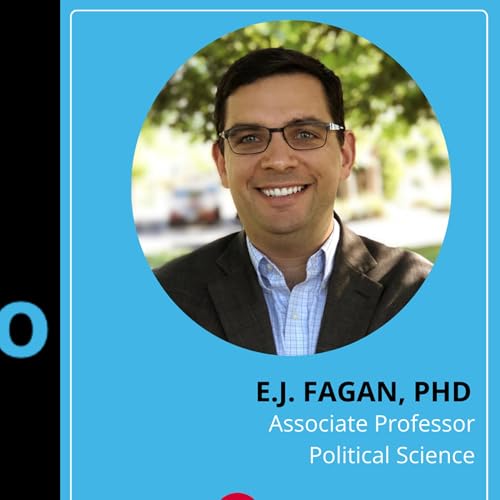
  • The Information War: How Think Tanks Fractured American Democracy (with Prof. E.J. Fagan)
    Feb 4 2026

    Why do Republicans and Democrats live in different factual universes? The answer traces back to 1973 and three conservative staffers who transformed how America makes policy.

    Professor E.J. Fagan, author of "The Thinkers," explains how partisan think tanks replaced neutral expertise with competing knowledge regimes—and why smart, educated people are actually easier to fool than everyone else.

    In this conversation, we explore:

    • Why the Heritage Foundation was founded and how it changed American politics

    • How the 2009 stimulus bill demonstrates the cost of ideological capture

    • Why it's easier to fool intelligent, motivated people than those who are less informed

    • The difference between think tanks in the US versus other democracies

    • Why Project 2025 may be less influential than people think

    • Organizations like the Niskanen Center and R Street Institute that are getting it right

    Professor Fagan argues the solution isn't neutral centrism;' it's politically engaged organizations with epistemic integrity.

    As we face decisions about AI deployment, climate adaptation, and economic transformation, we need information infrastructure that serves democracy.

    Key insight: "Don't try to take the politics out of information, but try to get it right."


    Guest: Professor E.J. Fagan, Associate Professor of Political Science at the University of Illinois Chicago and author of "The Thinkers: The Rise of Partisan Think Tanks and the Polarization of American Politics" (Oxford University Press)

    Show More Show Less
    1 hr and 4 mins
  • Downtown Isn't Dying; It's Evolving | Michael Edwards, CEO of the Chicago Loop Alliance
    Jan 29 2026

    Michael Edwards has spent 35 years leading downtown organizations across America. In his final months as CEO of the Chicago Loop Alliance, he joins the podcast to discuss downtown narratives in the age of AI with Khullani Abdullahi.

    He challenges the dominant narrative about urban decline. The data tells a different story: 1.2 million people visited the Loop for arts and culture in Q4 2025, spending $512 million.

    Weekend foot traffic now exceeds pre-pandemic levels. We discuss the shift from office occupancy as the defining metric, why Chicago's arts patrons visit five times more often than the national average, and how 145,000 Loop residents are reshaping the economic calculus of downtown living.

    Show More Show Less
    42 mins
No reviews yet