

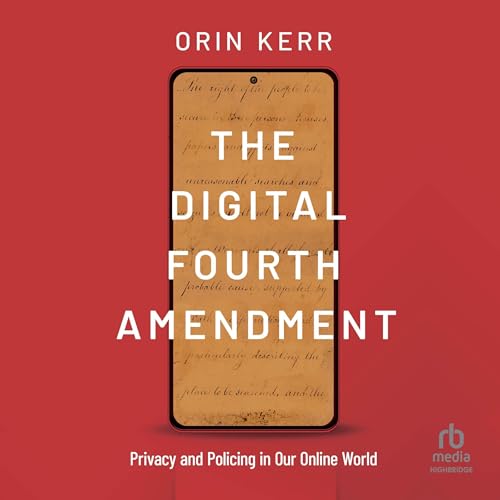
The Digital Fourth Amendment
Privacy and Policing in Our Online World
Failed to add items
Add to basket failed.
Add to wishlist failed.
Remove from wishlist failed.
Adding to library failed
Follow podcast failed
Unfollow podcast failed
3 Months Free

The Digital Fourth Amendment
Buy Now for £14.63
-
Narrated by:
-
David Stifel
-
By:
-
Orin Kerr
When can the government read your email or monitor your web surfing? When can the police search your phone or copy your computer files? In the United States, the answers come from the Fourth Amendment to the Constitution and its ban on "unreasonable searches and seizures."
The Digital Fourth Amendment takes the listener inside the legal world of how courts are interpreting the Fourth Amendment in the digital age. Computers, smartphones, and the Internet have transformed criminal investigations, and even a routine crime is likely to lead to digital evidence. But courts are struggling to apply old Fourth Amendment concepts to the new digital world. Mechanically applying old rules from physical investigations doesn't make sense, as it often leads to dramatic expansions of government power just based on coincidences of computer design.
The Digital Fourth Amendment shows how judges must craft new rules for the new world of digital evidence. It explains the challenges courts confront as they translate old protections to a new technological world, bringing the listener up to date on the latest cases and rulings. Informed by legal history and the latest technology, this book gives courts a blueprint for legal change with clear rules for courts to adopt to restore our constitutional rights in the computer age.
©2025 Oxford University Press (P)2025 Highbridge Audio