

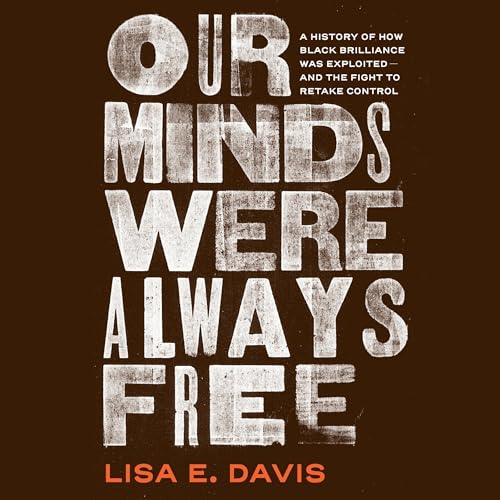
Our Minds Were Always Free
A History of How Black Brilliance Was Exploited—and the Fight to Retake Control
Failed to add items
Sorry, we are unable to add the item because your shopping cart is already at capacity.
Add to basket failed.
Please try again later
Add to wishlist failed.
Please try again later
Remove from wishlist failed.
Please try again later
Adding to library failed
Please try again
Follow podcast failed
Unfollow podcast failed
Get 30 days of Standard free
£5.99/mo after trial. Cancel monthly.

Our Minds Were Always Free
Narrated by:
Deann Anthony
Buy Now for £12.77
-
Narrated by:
-
Deann Anthony
When we think about the things that have barred success for African Americans, intellectual property law is hardly the first thing that comes to mind, if we even think of it all. We certainly don’t think of it as the launching pad for building generational wealth in the Black community, so it follows that we don’t see our favorite pop stars as revolutionary race warriors.
African American artists have finally, belatedly, come to be the owners of their art and beneficiaries of the money their art makes, after centuries of producing life-changing art. There were hundreds and thousands of Bessie Smiths before we ever got Beyoncé or Kendrick Lamar.
Lisa E. Davis, one of the foremost entertainment attorneys in the country, traces the epic journey Black Americans have been on, from being claimed as property to claiming the benefits of intellectual property. As she notes, “Under slavery, our minds were always free, but there was no profit from what our minds created.”
Beginning in the 18th century with the drafting of the Constitution and ending in the 21st century with a warning about the role technology will play in creative industries, Our Minds Were Always Free tells the story of the indelible legacy of Black American genius and the struggle to receive the credit and the profit that they deserved.
adbl_web_anon_alc_button_suppression_t1
No reviews yet