
Showing results by narrator "Macat" in All Categories
-

-
Analysis: A Macat Analysis of Albert Bandura's Aggression: A Social Learning Analysis
- By: Jacqueline Allan
- Narrated by: Macat.com
- Length: 1 hr and 45 mins
- Unabridged
-
Overall5
-
Performance2
-
Story2
First published in 1973, Albert Bandura's Aggression: A Social Learning Analysis is a groundbreaking work that helped lay the foundations of the discipline of social psychology. Much of what we now know about the influences of the early childhood environment on delinquency and anti-social behavior can be traced back to Bandura's work. In the book, he uses the subject of aggression to demonstrate and explore the usefulness of what is called social learning theory.
Preview -
Analysis: A Macat Analysis of Albert Bandura's Aggression: A Social Learning Analysis
- Narrated by: Macat.com
- Length: 1 hr and 45 mins
- Release date: 28-07-16
- Language: English
Failed to add items
Sorry, we are unable to add the item because your shopping cart is already at capacity.Add to basket failed.
Please try again laterAdd to wishlist failed.
Please try again laterRemove from wishlist failed.
Please try again laterAdding to library failed
Please try againFollow podcast failed
Unfollow podcast failed
£6.57 or free with trial. Auto-renews at £5.99/month after trial. See eligibility.
-
-
-
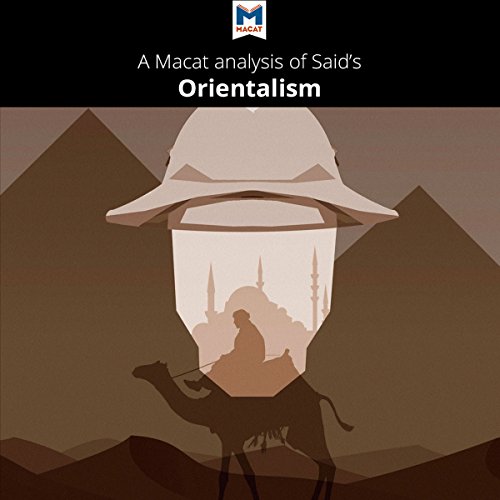
Analysis: A Macat Analysis of Edward Said's Orientalism
- By: Riley Quinn
- Narrated by: Macat.com
- Length: 2 hrs and 3 mins
- Unabridged
-
Overall9
-
Performance8
-
Story8
Western thinking about the Middle and Far East has been distorted by stereotype and inaccuracy. This argument lies at the center of Palestinian-American literary theorist Edward Said's groundbreaking book, Orientalism. Originally published in 1978, it cemented Said's reputation as the father of postcolonial studies.
Preview -
Analysis: A Macat Analysis of Edward Said's Orientalism
- Narrated by: Macat.com
- Length: 2 hrs and 3 mins
- Release date: 09-06-16
- Language: English
Failed to add items
Sorry, we are unable to add the item because your shopping cart is already at capacity.Add to basket failed.
Please try again laterAdd to wishlist failed.
Please try again laterRemove from wishlist failed.
Please try again laterAdding to library failed
Please try againFollow podcast failed
Unfollow podcast failed
£7.75 or free with trial. Auto-renews at £5.99/month after trial. See eligibility.
-
-

-
A Macat Analysis of Simone de Beauvoir's The Second Sex
- By: Rachele Dini
- Narrated by: Macat.com
- Length: 1 hr and 48 mins
- Unabridged
-
Overall13
-
Performance11
-
Story11
De Beauvoir's book charted the oppression of "the second sex" in terms never before seen in the academic world. Her most startling theory became a rallying cry for the feminist movement: "One is not born, but rather becomes, a woman." She argued that gender identity was shaped by upbringing in a world ruled by men. A leading light in the existentialist movement, de Beauvoir applied the radical philosophy of personal choice and freedom to argue that women were subjugated in every area of life.
-
-
Good intro to Simones work
- By taheya on 29-04-17
Preview -
A Macat Analysis of Simone de Beauvoir's The Second Sex
- Narrated by: Macat.com
- Length: 1 hr and 48 mins
- Release date: 06-06-16
- Language: English
Failed to add items
Sorry, we are unable to add the item because your shopping cart is already at capacity.Add to basket failed.
Please try again laterAdd to wishlist failed.
Please try again laterRemove from wishlist failed.
Please try again laterAdding to library failed
Please try againFollow podcast failed
Unfollow podcast failed
£6.57 or free with trial. Auto-renews at £5.99/month after trial. See eligibility.
-
-
-
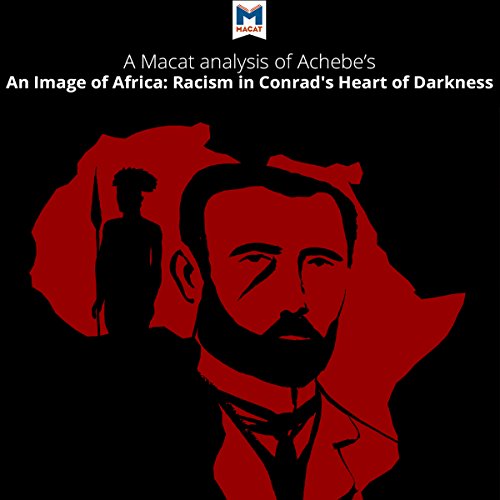
Analysis: A Macat Analysis of Chinua Achebe's An Image of Africa: Racism in Conrad's Heart of Darkness
- By: Lindsay Scorgie-Porter
- Narrated by: Macat.com
- Length: 1 hr and 40 mins
- Unabridged
-
Overall2
-
Performance2
-
Story2
Nigerian novelist and professor Chinua Achebe was acutely conscious that Western views of Africa were inevitably the views of a culture that assumed itself superior. When confronted by what it took to be an inferior culture, the West identified itself as better - materially, intellectually, even spiritually. Achebe believed that even as original and subtle a work as Joseph Conrad's Heart of Darkness - a novel seen by many as a criticism of colonialism and one that Achebe admired stylistically - reflected these assumptions.
-
-
Achebe. Will always remain one of the legends of rational thinking and literature
- By Solomon on 14-03-19
Preview -
Analysis: A Macat Analysis of Chinua Achebe's An Image of Africa: Racism in Conrad's Heart of Darkness
- Narrated by: Macat.com
- Length: 1 hr and 40 mins
- Release date: 06-06-16
- Language: English
Failed to add items
Sorry, we are unable to add the item because your shopping cart is already at capacity.Add to basket failed.
Please try again laterAdd to wishlist failed.
Please try again laterRemove from wishlist failed.
Please try again laterAdding to library failed
Please try againFollow podcast failed
Unfollow podcast failed
£6.57 or free with trial. Auto-renews at £5.99/month after trial. See eligibility.
-
-

-
Analysis: A Macat Analysis of Judith Butler's Gender Trouble
- By: Tim Smith-Laing
- Narrated by: Macat.com
- Length: 1 hr and 41 mins
- Unabridged
-
Overall13
-
Performance13
-
Story13
Philosopher Judith Butler's 1990 work, Gender Trouble, shook the foundations of feminist theory and changed the conversation about gender. While many thinkers already accepted that "gender" was a category constructed by society rather than defined by one's genitalia, Butler went further and argued that gender is performative - it exists only in the acts that express it. Society determines that wearing makeup is "feminine" - but some men wear makeup. Are they "women"?
-
-
Judith Butler is gendered
- By M on 26-02-23
Preview -
Analysis: A Macat Analysis of Judith Butler's Gender Trouble
- Narrated by: Macat.com
- Length: 1 hr and 41 mins
- Release date: 06-06-16
- Language: English
Failed to add items
Sorry, we are unable to add the item because your shopping cart is already at capacity.Add to basket failed.
Please try again laterAdd to wishlist failed.
Please try again laterRemove from wishlist failed.
Please try again laterAdding to library failed
Please try againFollow podcast failed
Unfollow podcast failed
£6.57 or free with trial. Auto-renews at £5.99/month after trial. See eligibility.
-
-

-
Analysis: A Macat Analysis of Claude Lévi-Strauss's Structural Anthropology
- By: Jeffrey A. Becker, Kitty Wheater
- Narrated by: Macat.com
- Length: 1 hr and 29 mins
- Unabridged
-
Overall8
-
Performance5
-
Story5
Linguistic structuralism studies the meaning of language based not just on definitions, but also on the relationships of words and sounds to each other. Lévi-Strauss's insight was to see that this concept of structuralism in linguistics could be applied to anthropology as well. He saw that while some cultures are very different from others, they all seem to have certain internal structural relationships in common. By tracing these structures across cultures, he tried to answer nothing less than the eternal question: "What is man?"
Preview -
Analysis: A Macat Analysis of Claude Lévi-Strauss's Structural Anthropology
- Narrated by: Macat.com
- Length: 1 hr and 29 mins
- Release date: 26-07-16
- Language: English
Failed to add items
Sorry, we are unable to add the item because your shopping cart is already at capacity.Add to basket failed.
Please try again laterAdd to wishlist failed.
Please try again laterRemove from wishlist failed.
Please try again laterAdding to library failed
Please try againFollow podcast failed
Unfollow podcast failed
£5.98 or free with trial. Auto-renews at £5.99/month after trial. See eligibility.
-
-

-
Analysis: A Macat Analysis of Samuel Huntington's The Clash of Civilizations and the Remaking of World Order
- By: Riley Quinn
- Narrated by: Macat.com
- Length: 1 hr and 33 mins
- Unabridged
-
Overall2
-
Performance2
-
Story2
In his 1996 book The Clash Of Civilizations and the Remaking of World Order, American political scientist Samuel Huntington sets out his vision of the post-Cold War world. While the era from 1945 to 1989 was shaped by ideological conflict (communism vs. capitalism), Huntington predicts a future of cultural conflict.
Preview -
Analysis: A Macat Analysis of Samuel Huntington's The Clash of Civilizations and the Remaking of World Order
- Narrated by: Macat.com
- Length: 1 hr and 33 mins
- Release date: 06-06-16
- Language: English
Failed to add items
Sorry, we are unable to add the item because your shopping cart is already at capacity.Add to basket failed.
Please try again laterAdd to wishlist failed.
Please try again laterRemove from wishlist failed.
Please try again laterAdding to library failed
Please try againFollow podcast failed
Unfollow podcast failed
£6.57 or free with trial. Auto-renews at £5.99/month after trial. See eligibility.
-
-

-
Analysis: A Macat Analysis of Benedict Anderson's Imagined Communities
- By: Jason Xidias
- Narrated by: Macat.com
- Length: 2 hrs and 8 mins
- Unabridged
-
Overall4
-
Performance2
-
Story2
Some people think nationhood is as old as civilization itself. But for anthropologist, historian, and political scientist Benedict Anderson, nation and nationalism are products of the communication technology of the era known as the modern age, which began in 1500. After the invention of the printing press around 1440, common local languages gradually replaced Latin as the language of print. Ordinary people could now share ideas of their own.
Preview -
Analysis: A Macat Analysis of Benedict Anderson's Imagined Communities
- Narrated by: Macat.com
- Length: 2 hrs and 8 mins
- Release date: 19-07-16
- Language: English
Failed to add items
Sorry, we are unable to add the item because your shopping cart is already at capacity.Add to basket failed.
Please try again laterAdd to wishlist failed.
Please try again laterRemove from wishlist failed.
Please try again laterAdding to library failed
Please try againFollow podcast failed
Unfollow podcast failed
£7.75 or free with trial. Auto-renews at £5.99/month after trial. See eligibility.
-
-

-
Analysis: A Macat Analysis of John Maynard Keynes's The General Theory of Employment, Interest and Money
- By: John Collins
- Narrated by: Macat.com
- Length: 1 hr and 48 mins
- Unabridged
-
Overall2
-
Performance1
-
Story1
In his 1936 book The General Theory of Employment, Interest and Money, Keynes argued that traditional economics has misunderstood the causes of unemployment. Employment is not determined by the price of labor; it is directly linked to demand in the economy. Keynes believed market economies are by nature unstable and so require government intervention. Spurred on by the social catastrophe of the Great Depression of the 1930s, Keynes set out to change the way the world thinks about economics.
Preview -
Analysis: A Macat Analysis of John Maynard Keynes's The General Theory of Employment, Interest and Money
- Narrated by: Macat.com
- Length: 1 hr and 48 mins
- Release date: 30-06-16
- Language: English
Failed to add items
Sorry, we are unable to add the item because your shopping cart is already at capacity.Add to basket failed.
Please try again laterAdd to wishlist failed.
Please try again laterRemove from wishlist failed.
Please try again laterAdding to library failed
Please try againFollow podcast failed
Unfollow podcast failed
£6.57 or free with trial. Auto-renews at £5.99/month after trial. See eligibility.
-
-

-
Analysis: A Macat Analysis of C. S. Lewis's The Abolition of Man
- By: Ruth Jackson, Brittany Pheiffer Noble
- Narrated by: Macat.com
- Length: 1 hr and 37 mins
- Unabridged
-
Overall0
-
Performance0
-
Story0
Northern Irish academic, novelist, and broadcaster C. S. Lewis' 1943 philosophical work The Abolition of Man is subtitled Reflections on Education with Special Reference to the Teaching of English in the Upper Forms of Schools. It is about the power of education to shape the minds of individuals and improve society (or harm it, if badly done), and encompasses everything from the scientific worldview at the time to philosophical arguments about right and wrong.
Preview -
Analysis: A Macat Analysis of C. S. Lewis's The Abolition of Man
- Narrated by: Macat.com
- Length: 1 hr and 37 mins
- Release date: 29-07-16
- Language: English
Failed to add items
Sorry, we are unable to add the item because your shopping cart is already at capacity.Add to basket failed.
Please try again laterAdd to wishlist failed.
Please try again laterRemove from wishlist failed.
Please try again laterAdding to library failed
Please try againFollow podcast failed
Unfollow podcast failed
£6.57 or free with trial. Auto-renews at £5.99/month after trial. See eligibility.
-
-

-
Analysis: A Macat Analysis of Arjun Appadurai's Modernity at Large: Cultural Dimensions of Globalization
- By: Amy Young Evrard
- Narrated by: Macat.com
- Length: 1 hr and 31 mins
- Unabridged
-
Overall5
-
Performance5
-
Story4
Published in 1996, Arjun Appadurai's Modernity at Large is an edited collection of earlier essays that had already made the Indian-born anthropologist an influential figure in his field of cultural anthropology. Appadurai here presents a theory of globalization, and suggests ways that other researchers can follow up on his ideas. Many of them continue to do so. For anthropologists, the book offered new ways of thinking about how communities are affected by globalization.
Preview -
Analysis: A Macat Analysis of Arjun Appadurai's Modernity at Large: Cultural Dimensions of Globalization
- Narrated by: Macat.com
- Length: 1 hr and 31 mins
- Release date: 22-07-16
- Language: English
Failed to add items
Sorry, we are unable to add the item because your shopping cart is already at capacity.Add to basket failed.
Please try again laterAdd to wishlist failed.
Please try again laterRemove from wishlist failed.
Please try again laterAdding to library failed
Please try againFollow podcast failed
Unfollow podcast failed
£6.57 or free with trial. Auto-renews at £5.99/month after trial. See eligibility.
-
-

-
Analysis: A Macat Analysis of Ferdinand de Saussure's Course in General Linguistics
- By: Laura E. B. Key, Brittany Pheiffer Noble
- Narrated by: Macat.com
- Length: 1 hr and 52 mins
- Unabridged
-
Overall1
-
Performance1
-
Story1
Ferdinand de Saussure's Course in General Linguistics was first published in 1916, three years after his death. The book aims to explain Saussure's theory that all languages share an underlying structure, and that this underlying structure is the same, regardless of historical or cultural context. Although the book marked a break with the traditional, history-focused study of linguistics of the time, Saussure still uses examples based on more traditional studies.
Preview -
Analysis: A Macat Analysis of Ferdinand de Saussure's Course in General Linguistics
- Narrated by: Macat.com
- Length: 1 hr and 52 mins
- Release date: 21-07-16
- Language: English
Failed to add items
Sorry, we are unable to add the item because your shopping cart is already at capacity.Add to basket failed.
Please try again laterAdd to wishlist failed.
Please try again laterRemove from wishlist failed.
Please try again laterAdding to library failed
Please try againFollow podcast failed
Unfollow podcast failed
£6.57 or free with trial. Auto-renews at £5.99/month after trial. See eligibility.
-
-

-
Analysis: A Macat Analysis of Max Weber's Politics as a Vocation
- By: Macat.com
- Narrated by: Macat.com
- Length: 1 hr and 48 mins
- Unabridged
-
Overall1
-
Performance1
-
Story0
Politics as a Vocation examines what makes good political leaders and explores the effects of political action on modern societies. On one level it summarizes the political scholarship of one of the founding fathers of social science. On another it reflects a leading German academic and political activist's practical concerns about the future at a time of great volatility following defeat in World War I.
Preview -
Analysis: A Macat Analysis of Max Weber's Politics as a Vocation
- Narrated by: Macat.com
- Length: 1 hr and 48 mins
- Release date: 06-06-16
- Language: English
Failed to add items
Sorry, we are unable to add the item because your shopping cart is already at capacity.Add to basket failed.
Please try again laterAdd to wishlist failed.
Please try again laterRemove from wishlist failed.
Please try again laterAdding to library failed
Please try againFollow podcast failed
Unfollow podcast failed
£6.57 or free with trial. Auto-renews at £5.99/month after trial. See eligibility.
-
-

-
A Macat Analysis of Friedrich Nietzsche's On the Genealogy of Morality
- By: Don Berry
- Narrated by: Macat.com
- Length: 1 hr and 36 mins
- Unabridged
-
Overall1
-
Performance1
-
Story0
On the Genealogy of Morality was written in 1887 when Friedrich Nietzsche was at the height of his powers as a philosopher and master of German prose writing. Here, he criticizes the idea that there is just one conception of moral goodness, dissecting the contemporary practice of morality and looking at it from a historical viewpoint. Rather than following a metaphysical or religious approach, Nietzsche adopts a naturalistic framework, which is grounded in history and natural science, to understand our concepts of good and evil in the Christianized Western world.
Preview -
A Macat Analysis of Friedrich Nietzsche's On the Genealogy of Morality
- Narrated by: Macat.com
- Length: 1 hr and 36 mins
- Release date: 30-06-16
- Language: English
Failed to add items
Sorry, we are unable to add the item because your shopping cart is already at capacity.Add to basket failed.
Please try again laterAdd to wishlist failed.
Please try again laterRemove from wishlist failed.
Please try again laterAdding to library failed
Please try againFollow podcast failed
Unfollow podcast failed
£6.57 or free with trial. Auto-renews at £5.99/month after trial. See eligibility.
-
-

-
Analysis: A Macat Analysis of Émile Durkheim's On Suicide
- By: Robert Easthope
- Narrated by: Macat.com
- Length: 1 hr and 46 mins
- Unabridged
-
Overall5
-
Performance4
-
Story4
Sociologist Émile Durkheim's 1897 work On Suicide is a powerful evidence-based study of why people take their own lives. In the late 19th century it was generally accepted that each suicide was an individual phenomenon, caused by such personal factors as grief, loss, and financial problems. But Durkheim felt there were patterns in suicide rates, and believed that a more likely cause of suicide lay in the individual's relationship to society.
Preview -
Analysis: A Macat Analysis of Émile Durkheim's On Suicide
- Narrated by: Macat.com
- Length: 1 hr and 46 mins
- Release date: 26-07-16
- Language: English
Failed to add items
Sorry, we are unable to add the item because your shopping cart is already at capacity.Add to basket failed.
Please try again laterAdd to wishlist failed.
Please try again laterRemove from wishlist failed.
Please try again laterAdding to library failed
Please try againFollow podcast failed
Unfollow podcast failed
£6.57 or free with trial. Auto-renews at £5.99/month after trial. See eligibility.
-
-

-
Analysis: A Macat Analysis of John Locke's Two Treatises of Government
- By: Jeremy Kleidosty, Ian Jackson
- Narrated by: Macat.com
- Length: 1 hr and 45 mins
- Unabridged
-
Overall3
-
Performance3
-
Story3
First available in 1689, John Locke's Two Treatises of Government is considered one of the most important works ever written on the foundations of government. Published anonymously, it argues against the popular idea at the time that monarchs have a God-given right to rule. Instead Locke proposes that sovereignty - supreme authority - ultimately resides with the people.
Preview -
Analysis: A Macat Analysis of John Locke's Two Treatises of Government
- Narrated by: Macat.com
- Length: 1 hr and 45 mins
- Release date: 06-06-16
- Language: English
Failed to add items
Sorry, we are unable to add the item because your shopping cart is already at capacity.Add to basket failed.
Please try again laterAdd to wishlist failed.
Please try again laterRemove from wishlist failed.
Please try again laterAdding to library failed
Please try againFollow podcast failed
Unfollow podcast failed
£6.57 or free with trial. Auto-renews at £5.99/month after trial. See eligibility.
-
-

-
A Macat Analysis of Robert E. Lucas Jr.'s Why Doesn't Capital Flow from Rich to Poor Countries?
- By: Pádraig Belton
- Narrated by: Macat.com
- Length: 1 hr and 58 mins
- Unabridged
-
Overall0
-
Performance0
-
Story0
Because the potential returns appear to be greater in poorer countries than in the developed world, modern economic theory implies that rich countries should continually invest in poor countries until returns balance out. In fact, this doesn't happen. Economist Robert E. Lucas Jr. asks why in his groundbreaking 1990 article, "Why Doesn't Capital Flow from Rich to Poor Countries?" The question has become known as the Lucas paradox. Lucas analyzes this, focusing especially on the role of human capital.
Preview -
A Macat Analysis of Robert E. Lucas Jr.'s Why Doesn't Capital Flow from Rich to Poor Countries?
- Narrated by: Macat.com
- Length: 1 hr and 58 mins
- Release date: 26-07-16
- Language: English
Failed to add items
Sorry, we are unable to add the item because your shopping cart is already at capacity.Add to basket failed.
Please try again laterAdd to wishlist failed.
Please try again laterRemove from wishlist failed.
Please try again laterAdding to library failed
Please try againFollow podcast failed
Unfollow podcast failed
£6.57 or free with trial. Auto-renews at £5.99/month after trial. See eligibility.
-
-

-
A Macat Analysis of Amartya Sen's Development as Freedom
- By: Janna Miletzki, Nick Broten
- Narrated by: Macat.com
- Length: 1 hr and 39 mins
- Unabridged
-
Overall4
-
Performance2
-
Story3
Economist Amartya Sen's 1997 work Development as Freedom presents a "middle way" approach to how we should look at international development, based on the idea that its success or failure cannot be measured by income alone. Having grown up in India, Sen brings his own understanding of what poverty really means to the issue, arguing that above all, the process and goal of development must be human freedom. He backs up this idea through his concept of "capabilities."
-
-
Very basic overview
- By A.S. on 28-03-23
Preview -
A Macat Analysis of Amartya Sen's Development as Freedom
- Narrated by: Macat.com
- Length: 1 hr and 39 mins
- Release date: 26-07-16
- Language: English
Failed to add items
Sorry, we are unable to add the item because your shopping cart is already at capacity.Add to basket failed.
Please try again laterAdd to wishlist failed.
Please try again laterRemove from wishlist failed.
Please try again laterAdding to library failed
Please try againFollow podcast failed
Unfollow podcast failed
£6.57 or free with trial. Auto-renews at £5.99/month after trial. See eligibility.
-
-

-
Analysis: A Macat Analysis of Plato's Republic
- By: James Orr
- Narrated by: Macat.com
- Length: 1 hr and 30 mins
- Unabridged
-
Overall1
-
Performance1
-
Story1
An extraordinarily ambitious work, Republic has made important contributions to many branches of modern philosophy. The work unfolds as a series of conversations in which participants set out a number of different theories of justice, and then imagine how these theories might become reality within the political structure of a city. In examining justice, Plato investigates an enormous range of questions in the areas of ethics, politics, and even the nature of existence itself.
Preview -
Analysis: A Macat Analysis of Plato's Republic
- Narrated by: Macat.com
- Length: 1 hr and 30 mins
- Release date: 30-06-16
- Language: English
Failed to add items
Sorry, we are unable to add the item because your shopping cart is already at capacity.Add to basket failed.
Please try again laterAdd to wishlist failed.
Please try again laterRemove from wishlist failed.
Please try again laterAdding to library failed
Please try againFollow podcast failed
Unfollow podcast failed
£6.57 or free with trial. Auto-renews at £5.99/month after trial. See eligibility.
-
-

-
Analysis: A Macat Analysis of Edmund Gettier's Is Justified True Belief Knowledge?
- By: Jason Schukraft
- Narrated by: Macat.com
- Length: 1 hr and 33 mins
- Unabridged
-
Overall1
-
Performance1
-
Story1
How do we know what knowledge is? In his 1963 article, "Is Justified True Belief Knowledge?", American philosopher Edmund Gettier radically challenged the accepted definition of knowledge itself. Greek philosopher Plato, discussing knowledge well over 2,000 years ago, defined it as "justified true belief". But in two ingenious cases, Gettier demonstrates that somebody's justified belief can be true because of nothing more than luck.
Preview -
Analysis: A Macat Analysis of Edmund Gettier's Is Justified True Belief Knowledge?
- Narrated by: Macat.com
- Length: 1 hr and 33 mins
- Release date: 06-06-16
- Language: English
Failed to add items
Sorry, we are unable to add the item because your shopping cart is already at capacity.Add to basket failed.
Please try again laterAdd to wishlist failed.
Please try again laterRemove from wishlist failed.
Please try again laterAdding to library failed
Please try againFollow podcast failed
Unfollow podcast failed
£6.57 or free with trial. Auto-renews at £5.99/month after trial. See eligibility.
-