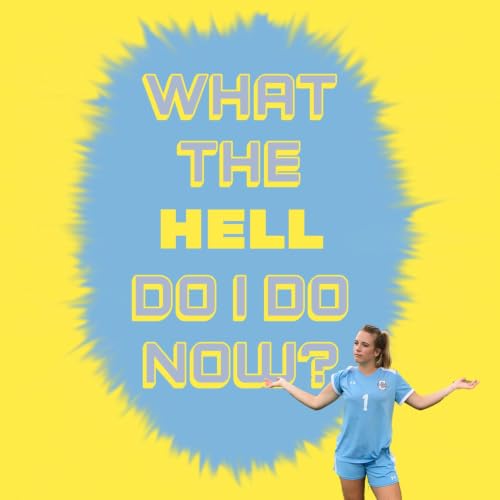
What The Hell Do I Do Now? cover art

What The Hell Do I Do Now?

What The Hell Do I Do Now?

By: Genevieve Henderson
Listen for free

Summary

Hi, I am a "washed up" college athlete that had NO freaking clue what to do after I was done playing soccer (and lets be honest, I still don't). I never thought about life after soccer, until life after soccer happened. Being an athlete was my character trait, who was I without that? My goal is to create more conversation around this huge transition in life. Each episode will be filled with experiences and advice from many different athletes. No matter the sport, we are all on the same team here (yes, I know that is corny). So to all my fellow "washed up athletes"...what the hell do we do now?Genevieve Henderson Hygiene & Healthy Living Psychology Psychology & Mental Health
Episodes
  • 90. Haley Paez | It’s not Failure, It’s Feedback
    May 6 2026

    Haley Paez is a Denver-based food content creator and former Division I soccer player at the University of Denver. In this episode, Haley shares her journey through college athletics — from navigating multiple coaching changes and transferring schools, to facing the intense internal and external pressures that came with competing at a high level.

    She opens up about her experience with disordered eating, the physical and mental toll of injuries, and the difficult decision to step away from the sport before she felt ready. Haley reflects on the identity loss that followed and how therapy helped her reframe her past, adopting the mindset that “failure is feedback.”

    Now a full-time content creator, Haley shares how she’s applied the discipline and work ethic she developed as an athlete to build a career in the digital space. She also talks about rediscovering her love for soccer in a low-pressure environment and learning to define herself beyond sport. This episode explores transition, healing, and what it means to rebuild your identity on your own terms.

    If you or someone you know is struggling, Visit the National Eating Disorders Association (NEDA) to learn about eating disorders, find help, and how you can take action to raise awareness.

    Show More Show Less
    55 mins
  • 89. Chris Duvall | Redirecting Work Ethic after Sports
    Apr 15 2026

    Chris Duvall is a former professional soccer player who spent eight seasons competing in Major League Soccer, playing for multiple clubs including the New York Red Bulls, Montreal Impact, Houston Dynamo, Portland Timbers, and FC Cincinnati. After retiring from professional soccer, Chris faced the transition many athletes experience — figuring out how to redirect the intensity, discipline, and identity that come with competing at the highest level.

    In this episode, Chris opens up about a pivotal moment in his career when a serious leg injury forced him to confront the mental and emotional challenges of being sidelined. Initially skeptical of therapy, he eventually sought help after experiencing symptoms of PTSD following the injury — a decision that ultimately reshaped his perspective on mental health and personal growth.

    Chris shares what it looked like to rebuild his life after sport: finishing his graduate degree while still playing, briefly coaching, and eventually stepping into a new career as a mortgage lender in St. Louis. He reflects on the difficulty of shifting from constantly proving yourself as an athlete, to building a sustainable life where your worth isn’t defined by performance.

    This conversation explores identity beyond sport, the power of mental health support, and the challenge of learning where to place your energy after leaving a career built on giving everything to the game.

    Show More Show Less
    45 mins
  • 88. Sophia Woodland | Leaving the Program Better Than You Found It
    Apr 1 2026

    Sophia Woodland is a former Division I soccer player from Boston University, where she competed for four years while studying business and minoring in psychology, graduating in 2023. In this episode, Sophia reflects on the reality behind her collegiate career — from feeling voiceless in a difficult team environment her first two years to beginning therapy and learning to separate her self-worth from her performance on the field.

    She shares how adopting a new mindset her junior year helped her reclaim some joy, and how a coaching change her senior year allowed her to enjoy the game again. For Sophia, the hardest part of leaving collegiate soccer was leaving the daily access to her teammates and built in community.

    Sophia speaks candidly about the importance of coaching culture, power dynamics, and the silence many athletes feel pressured into. After the release of a documentary by Alex Cooper highlighting experiences under former coaches Nancy Feldman and Casey Brown, Sophia found herself revisiting her own experience. She discusses the fear of retaliation, the risks athletes face in speaking up, and the lasting impact of negative language — particularly around body image — during formative years.

    Now based in Denver, Sophia serves as Head of Ratings at 2aDays, a platform designed to bring transparency to college athletics through coach and program reviews. Inspired by the belief that athletes have a responsibility to “leave the program better than you found it,” she is helping create space for honest feedback and systemic change. This conversation explores identity, accountability, the NCAA’s gaps in supporting athlete transitions, and the courage it takes to use your voice after years of being taught not to.

    Show More Show Less
    37 mins
adbl_web_anon_alc_button_suppression_c
No reviews yet