Episodes

  • What Do You Really Get From Mentoring?
    Oct 27 2026

    Mentoring is often talked about as something experienced people do to help someone earlier in their career. But the best mentoring relationships can offer something valuable on both sides.

    In this episode, I’m joined by Will Dickinson from Premier Foods, Caitlin Cannon from Kinisla and Laura James from Tesco to talk about their experiences with the Flourish in Food mentoring scheme, as mentors, mentees and sometimes both.

    We explore why having someone outside your own business can be so valuable. An external mentor can offer a different perspective; help you recognise blind spots and give you honest feedback without the dynamics that can sometimes come with conversations inside your organisation.

    Caitlin and Laura share what mentoring has given them, including greater confidence, accountability and a way to build connections beyond their day-to-day roles. We also talk about how daunting networking can feel when you’re starting out and how mentoring can provide a much easier route into building relationships across the industry.

    But mentoring isn’t only valuable for the mentee. Will shares why supporting someone else can help you recognise how much experience and knowledge you already have, while developing your own leadership and people skills at the same time.

    One of the biggest misconceptions we challenge is that you need 20 years of experience before you can mentor somebody. Sometimes being just a few steps ahead means your experience is particularly relevant to someone coming through behind you.

    We also look at how Flourish in Food matches mentors and mentees, why being clear about what you want from the relationship matters and the genuine friendships that can develop along the way.

    Whether you’re looking for support yourself or wondering if you have something to offer as a mentor, you might have far more to gain from mentoring than you realise.

    Timestamps

    00:00 – Why external mentoring matters in food and retail
    02:40 – How Flourish in Food started during lockdown
    05:06 – A mentee’s experience and the value of support
    07:55 – Moving from internal to external mentoring
    10:11 – Getting honest feedback from outside your business
    12:10 – Building confidence and your network
    14:00 – What mentors gain from mentoring
    16:02 – Connecting across generations and experiences
    20:06 – Why you don’t need 20 years of experience to mentor
    23:39 – Mentoring as development for future leaders
    25:54 – Applying for a mentoring scheme
    28:40 – Friendships and genuine connection
    29:13 – Why supporting mentoring in food matters
    32:26 – Advice if you’re sitting on the fence

    Connect with The Fearless Foodies

    The Fearless Foodie Newsletter straight to your inbox. No fluff, no spam.

    https://foodies.fearlessfoodies.co.uk/podcast

    Connect with me here:

    https://www.linkedin.com/in/amywilkinsoncoach/

    Useful Links & Support

    Featured Guests

    Will Dickinson https://www.linkedin.com/in/will-dickinson-212b8881/

    Caitlin Cannon, Assistant Brand Manager, Kinisla https://www.linkedin.com/in/caitlin-cannon-032333158/

    Laura James - https://www.linkedin.com/in/laura-james-669a99263/

    Flourish in Food

    The mentoring scheme discussed throughout this episode, connecting mentors and mentees across the food industry.

    https://flourish-in-food.wixsite.com/website-1

    Work with Fearless Foodies

    Leadership development and team support tailored to food manufacturing and retail environments.

    https://fearlessfoodies.co.uk

    A Big Thank You to Our Sponsors

    IFP Labs

    Specialist laboratory services supporting food businesses with fast, reliable testing and technical expertise.

    https://www.ifp-labs.com/

    Show More Show Less
    35 mins
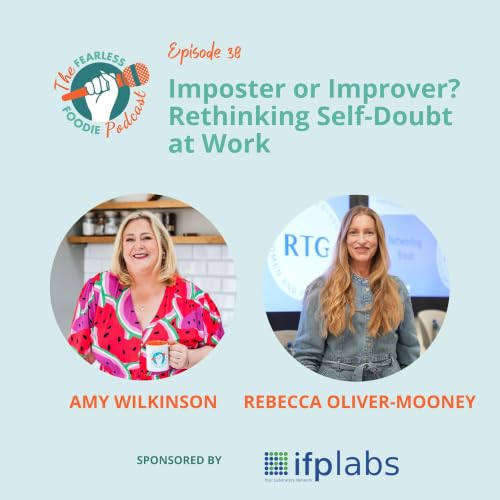
  • Imposter or Improver? Rethinking Self-Doubt at Work
    Oct 20 2026

    Who gets into the room, who gets heard and who gets the opportunity to progress? In food and drink, those things aren’t always determined by talent alone.

    In this episode, I’m joined by Rebecca Oliver Mooney, who has more than 20 years of commercial experience across major FMCG businesses and challenger brands, to talk about equity, opportunity and what needs to change in our industry.

    We explore some of the barriers that still influence who stays and progresses, from caring responsibilities and working environments to everyday bias around who gets noticed, supported or promoted.

    Rebecca also shares her own experiences of moving between large corporates and challenger brands and how that shaped her understanding of privilege, opportunity and what feels “normal” depending on where you’ve built your career.

    A big part of our conversation is about what we can actually do. Rebecca talks about the importance of allyship, mentoring and using your own position to create opportunities for other people. Change doesn’t only sit with women’s networks or the people experiencing the barriers. We all have a part to play.

    We also talk about imposter syndrome, which Rebecca reframes as “improver syndrome”. Instead of seeing self-doubt as evidence that you don’t belong, perhaps it’s a sign that you’re stretching yourself, learning and growing.

    Rebecca shares the work Raising the Glass is doing to create a more supportive drinks industry through mentoring, community and practical support for women-founded businesses.

    Ultimately, this conversation comes back to a simple question for anyone in a leadership position: are you leaving things better than you found them? Small actions, from inviting somebody into the room to advocating for their progression, can have a much bigger ripple effect than we realise.

    Timestamps

    02:00 – Rebecca’s career across FMCG and challenger brands
    05:06 – Setting up diversity-focused incubators
    09:54 – The drive for equity in food and drink
    13:36 – Why Raising the Glass was founded
    15:19 – Practical support for women and allies
    21:10 – Experiences that can push women out of the industry
    25:03 – How bias and culture shape careers
    28:32 – Queen bee dynamics and supporting others
    32:06 – Systemic issues and self-belief
    33:37 – Reframing imposter syndrome
    36:00 – Finding your tribe and building support


    Connect with The Fearless Foodies
    The Fearless Foodie Newsletter straight to your inbox. No fluff, no spam.
    https://foodies.fearlessfoodies.co.uk/podcast

    Connect with me here:
    https://www.linkedin.com/in/amywilkinsoncoach/

    Useful Links & Support

    Raising the Glass
    An industry initiative supporting women and allies in drinks through mentoring, community and practical support.
    https://raisingtheglass.co.uk/

    Connect with Rebecca Oliver Mooney https://www.linkedin.com/in/rebecca-oliver-mooney-65730614/

    Work with Fearless Foodies

    Leadership development and team support tailored to food manufacturing and retail environments.
    https://fearlessfoodies.co.uk

    A Big Thank You to Our Sponsors

    IFP Labs

    Specialist laboratory services supporting food businesses with fast, reliable testing and technical expertise.
    https://www.ifp-labs.com/

    Show More Show Less
    39 mins
  • Beyond Busy: What Burnout Really Looks Like
    Oct 13 2026

    Constant pressure can become so normal in food manufacturing and retail that being busy almost feels like part of the job. But what happens when we keep pushing long after our body is telling us to stop?

    In this episode, I’m joined by burnout specialist, coach and author Kelly Swingler to explore what burnout really looks like, why it is so often misunderstood, and what happens when we ignore the warning signs.

    Kelly shares her own experience of rising through the ranks while experiencing repeated burnout, including serious physical consequences and hospital stays. We talk about the mindset that keeps high achievers pushing through and why being the person who can always cope can make it even harder to recognise when something is wrong.

    We also explore how easily the word burnout gets used to describe being tired or overwhelmed. True burnout goes much deeper, and recovery isn’t something that can necessarily be fixed with a holiday or a few days away from work.

    Kelly shares practical advice for recognising the signs in ourselves and others, including the idea of “breadcrumbing”. Rather than confronting someone and telling them they are burning out, we can create opportunities for them to recognise what might be happening through conversations, articles and shared experiences.

    For anyone who already feels close to the edge, we talk about what realistic rest and recovery can look like. It doesn’t always mean making dramatic changes overnight. Small restorative actions can be an important place to start.

    We also look at the wider culture around burnout. Individuals can make changes, but organisations and leaders also have a responsibility to question environments where relentless pressure and overwork have become normal.

    One of Kelly’s strongest reminders is also one of the simplest: a business can replace you. Your family and the people who love you can’t.

    Timestamps

    00:00 – Why burnout matters in food manufacturing and retail
    03:35 – Kelly’s career and first experience of burnout
    07:17 – Values, moral injury and long-term pressure
    08:07 – When burnout becomes physical
    13:00 – Recovery and the mindset that keeps us pushing
    22:08 – Why burnout is more than being tired
    29:35 – Recognising burnout in yourself or your team
    32:14 – Breadcrumbing and supporting someone who may be struggling
    37:05 – What realistic rest and recovery can look like
    43:49 – Individual responsibility and workplace culture
    44:28 – Why you are irreplaceable outside work

    Connect with The Fearless Foodies

    The Fearless Foodie Newsletter straight to your inbox. No fluff, no spam.

    https://foodies.fearlessfoodies.co.uk/podcast

    Connect with me here:

    https://www.linkedin.com/in/amywilkinsoncoach/

    Useful Links & Support

    Connect with Kelly Swingler on LinkedIn https://www.linkedin.com/in/kellyswingler/

    You can also find details of Kelly’s books and work through her website.

    https://www.kellyswingler.com

    Fearless Resilience

    Practical workshops supporting resilience and wellbeing in food teams.

    https://fearlessfoodies.co.uk

    Work with Fearless Foodies

    Leadership development and team support tailored to food manufacturing and retail environments.

    https://fearlessfoodies.co.uk

    A Big Thank You to Our Sponsors

    IFP Labs

    Specialist laboratory services supporting food businesses with fast, reliable testing and technical expertise.

    https://www.ifp-labs.com/

    Show More Show Less
    47 mins
  • Why Self-Promotion Doesn't Have to Feel Awkward
    Oct 6 2026

    For many people working in food manufacturing and retail, the word "selling" feels uncomfortable. Technical specialists, product developers and operational teams often see it as something other people do.

    But as Karen Green explains in this episode, we're all selling something. Whether it's a new product idea, a business case, a promotion or ourselves in an interview, our ability to communicate value has a huge impact on the opportunities we create.

    I'm joined by Karen, former retail buyer, sales leader and author of Buyerology, to explore how we can become more confident communicators without feeling inauthentic.

    One of the biggest themes throughout our conversation is that successful self-promotion isn't about becoming louder or more confident than everyone else. It's about understanding the person you're speaking to and helping them understand the value you bring.

    Karen introduces her Buyerology 3 × 3 Matrix, a simple framework that encourages us to think about three things before any important conversation:

    • The organisation.
    • The individual.
    • Their role within the business.

    Taking time to understand each of these helps us prepare better conversations, stronger presentations and more meaningful relationships.

    Some of the practical takeaways from the episode include:

    • Self-promotion works best when it feels authentic.
    • Preparation builds confidence before difficult conversations.
    • Understanding your audience is just as important as understanding your own message.
    • Adapting your communication style helps build stronger relationships without compromising your values.

    We also talk about career progression and why opportunities don't always come from waiting to be noticed. Sometimes they come from learning how to communicate your strengths clearly and confidently.

    This episode is a reminder that influence isn't about being the loudest person in the room. It's about building trust, understanding people and making it easier for others to see the value you bring.

    Timestamps

    00:00 – Why selling yourself feels uncomfortable

    01:45 – Karen Green's career and the story behind Buyerology

    04:04 – Why everyone is selling something

    06:43 – Practical advice for self-promotion and interviews

    09:26 – Understanding people, not just businesses

    12:01 – Applying the Buyerology framework

    16:36 – Authenticity and confidence

    22:42 – Adapting your communication style

    26:47 – Cultural and generational differences

    30:13 – Karen's advice for building confidence

    30:38 – How to connect with Karen and Buyerology

    Connect with The Fearless Foodies

    The Fearless Foodie Newsletter straight to your inbox. No fluff, no spam.
    https://foodies.fearlessfoodies.co.uk/podcast

    Connect with me here:
    https://www.linkedin.com/in/amywilkinsoncoach/

    Useful Links & Support

    If this episode resonated, especially around communication, influence and career development, here are a few places to continue the conversation.

    Connect with Karen Green
    Follow Karen for insights on retail buying, communication, influence and career development.
    https://www.linkedin.com/in/thekarengreen/

    Buyerology
    Learn more about Karen's Buyerology framework, her book and additional resources.
    https://buyerology.co.uk/

    Work with Fearless Foodies
    Leadership development and team support tailored to food manufacturing and retail environments.
    https://fearlessfoodies.co.uk

    A Big Thank You to Our Sponsors

    IFP Labs
    Specialist laboratory services supporting food businesses with fast, reliable testing and technical expertise.
    https://www.ifp-labs.com/

    Show More Show Less
    32 mins
  • Why “It’s Not My Fault” Stops Progress
    Sep 29 2026

    Accountability comes up everywhere in food manufacturing and retail. Projects are overdue, the same actions keep appearing in meetings and, when everyone is busy, it’s easy for blame, excuses and “wait and hope” to creep in.

    In this episode, I introduce the Accountability Ladder, a simple tool for recognising what accountability actually sounds like in ourselves and the people around us.

    Below the line, you’ll hear phrases like “no one told me”, “it’s not my fault” or “maybe if I wait, this will sort itself out”. They’re all signs that responsibility is sitting somewhere else.

    Things start to change when we move above the line. Instead of focusing on what somebody else should have done, we start asking what we can do next, what part of the problem we can own and what action we can take.

    I share an example from my own career involving a product recall, where I had to work my way through those different stages myself. It’s a useful reminder that accountability isn’t about pretending everything is your fault. Even if only a small percentage of a situation is within your control, you can still decide what you’re going to do with it.

    We also look at how you can use the ladder with other people without simply accusing them of being “below the line”. Asking questions such as “What can we do next?” can help move a conversation away from blame and towards action.

    The next time you’re in a meeting, listen to the language being used. When the conversation starts shifting from “they should” and “someone needs to” towards “here’s what I’ll do”, that’s when things start moving.

    Timestamps

    00:00 – The impact of below-the-line thinking
    01:00 – Why accountability slips and what blame sounds like
    02:00 – Introducing the Accountability Ladder
    04:00 – Common excuses and avoidance in food teams
    07:30 – Moving above the line and taking ownership
    10:30 – A product recall and my own experience of accountability
    16:30 – Helping other people move up the ladder
    19:20 – What to listen for in your next meeting

    Connect with The Fearless Foodies

    The Fearless Foodie Newsletter straight to your inbox. No fluff, no spam.

    https://foodies.fearlessfoodies.co.uk/podcast

    Connect with me here:

    https://www.linkedin.com/in/amywilkinsoncoach/

    Useful Links & Support

    Fearless Strategic Leadership Programme

    Practical leadership development for people working across food manufacturing and retail.

    https://fearlessfoodies.co.uk

    Work with Fearless Foodie

    Leadership development and team support tailored to food manufacturing and retail environments.

    https://fearlessfoodies.co.uk

    A Big Thank You to Our Sponsors

    IFP Labs

    Specialist laboratory services supporting food businesses with fast, reliable testing and technical expertise.

    https://www.ifp-labs.com/

    Show More Show Less
    22 mins
  • Beyond the Data: What Great Category Teams Really Do
    Sep 22 2026

    So many businesses in food manufacturing and retail want to be shopper-led, but when the pressure is on, products, numbers and monthly targets can quickly take over.

    In this episode, I’m joined by Sue Tiller, Co-Founder of The Growth Factors, to explore how category management can keep the shopper at the heart of decision-making and why the role is about far more than data.

    We talk about how category has evolved, the balance between commercial priorities and bringing an objective perspective, and why the strongest category professionals combine analytical thinking with storytelling and influence.

    Sue shares why understanding your stakeholders is so important, how to turn data into insight people can actually use, and why asking “so what?” should be part of every category conversation.

    We also explore the growing role of AI. While it can help process information and save time, it can’t replace critical thinking, interpretation or the human understanding needed to turn information into meaningful insight.

    Above all, this episode is a reminder of category’s unique role as the voice of the shopper, helping businesses make better decisions by keeping real people at the centre.

    Show More Show Less
    42 mins
  • When Does Difficult Behaviour Cross the Line?
    Sep 15 2026

    Difficult people are part of working life, but in food manufacturing and retail, poor behaviour can sometimes be tolerated for far too long, particularly when the person involved is seen as commercially valuable.

    In this episode, I explore what happens when businesses quietly weigh up someone's results against the disruption they cause. Meetings get worked around them, colleagues learn to stay quiet and eventually good people can decide they've had enough.

    When you're the person on the receiving end, it's also incredibly easy to start questioning yourself. If nobody else is challenging the behaviour, you might wonder whether you're being too sensitive or making too much of it.

    I share some practical ways to approach these situations without trying to find the perfect comeback. Preparation matters. Think about your boundaries before the conversation, stay focused on the facts and use simple questions to understand what's actually driving the disagreement rather than getting pulled into an emotional exchange.

    We also look at why you don't have to win every difficult conversation. Sometimes pausing, stepping away or deciding something isn't worth pursuing in that moment is the more useful response.

    Importantly, there's a difference between somebody being difficult and somebody crossing a professional line. Shouting, belittling or inappropriate personal comments can become a conduct issue. When that happens, documenting what's taking place and knowing where you can go for support becomes important.

    Ultimately, you might not be able to change the person or the culture around them. But you can decide what you're prepared to accept, how you respond and where your own line sits.

    This episode isn't about learning how to win against difficult people. It's about protecting your confidence, staying grounded and finding a way to keep doing good work without absorbing somebody else's behaviour.

    Timestamps

    00:00 – Why disruptive behaviour gets tolerated in food businesses

    02:15 – When commercial value outweighs behaviour

    07:12 – Why so many people experience conflict but stay silent

    08:36 – Preparing yourself before a difficult conversation

    10:41 – Separating the problem from the pressure

    11:54 – Staying with the facts and asking better questions

    14:26 – Deciding your boundaries before the conversation

    18:31 – Why you don't need to win every interaction

    20:00 – When difficult behaviour becomes a conduct issue

    22:45 – Calling out behaviour and documenting incidents

    24:24 – What you can control and where you draw the line

    Connect with The Fearless Foodies

    The Fearless Foodie Newsletter straight to your inbox. No fluff, no spam.

    https://foodies.fearlessfoodies.co.uk/podcast

    Connect with me here:

    https://www.linkedin.com/in/amywilkinsoncoach/

    Useful Links & Support

    Fearless Relationships Programme

    Support for technical, product development and supply teams to prepare for difficult conversations, communicate with confidence and hold their ground.

    https://fearlessfoodies.co.uk

    ACAS Guidance

    Advice and support around workplace bullying and conduct issues.

    https://www.acas.org.uk/

    Work with Fearless Foodie

    Leadership development and team support tailored to food manufacturing and retail environments.

    https://fearlessfoodies.co.uk

    A Big Thank You to Our Sponsors

    IFP Labs

    Specialist laboratory services supporting food businesses with fast, reliable testing and technical expertise.

    https://www.ifp-labs.com/

    Show More Show Less
    28 mins
  • Redundancy, Confidence and Taking Back Control
    Sep 8 2026

    Redundancy, restructuring and uncertainty have become familiar conversations across food manufacturing and retail. Behind every organisational change are real people trying to navigate what comes next, often while questioning their confidence, identity and sense of purpose.

    In this episode, I'm joined by Dahlia Stroud, commercial consultant and host of the Stressed But Well Dressed podcast, to explore what happens when work changes and how we can find stability during uncertain times.

    One of the strongest themes throughout our conversation is identity. Many of us spend years building careers, relationships and routines around work, so when that suddenly changes, it can feel like we've lost more than just a job.

    Dahlia shares why getting dressed became an important daily ritual during periods of uncertainty. It's not about fashion or appearances. It's about taking a few minutes to reconnect with yourself and create a sense of control when everything else feels unpredictable.

    We also explore how different clothes often represent different versions of ourselves. Our work wardrobe, our home clothes and what we choose to wear during periods of transition can all influence how we feel and how we show up each day.

    Another important part of the conversation is the BANI framework, which describes today's world as Brittle, Anxious, Non-linear and Incomprehensible. It's a useful reminder that many of the challenges we're facing aren't personal failings. They're a reflection of the complexity of the environments we're working in.

    Throughout the episode we discuss practical ways to rebuild confidence during career transitions, including creating small daily routines, letting go of clothes or habits that no longer serve you, remembering that purpose doesn't have to come from work alone, giving yourself permission to pause and make decisions at your own pace, and building confidence through networking and new experiences.

    This conversation is a reminder that confidence isn't something you either have or you don't. It's something we build through small, consistent actions, especially during the moments when life feels most uncertain.

    Timestamps

    00:00 – Why confidence and identity matter during uncertain times

    01:00 – Meeting Dahlia Stroud and her commercial career

    02:24 – The meaning behind Stressed But Well Dressed

    05:35 – Redundancy and the loss of professional identity

    07:18 – How clothing influences confidence and mindset

    09:05 – Understanding the BANI framework

    11:57 – Small daily habits that help during difficult times

    15:03 – Workplace expectations and confidence

    16:41 – Creating a wardrobe that works for you

    20:25 – Rebuilding confidence after redundancy

    24:06 – Finding purpose during career transition

    30:46 – Practical advice when facing redundancy

    33:54 – Consultancy, networking and what's next

    Connect with The Fearless Foodies

    The Fearless Foodie Newsletter straight to your inbox. No fluff, no spam.

    https://foodies.fearlessfoodies.co.uk/podcast

    Connect with me here:

    https://www.linkedin.com/in/amywilkinsoncoach/

    Useful Links & Support

    If this episode resonated, especially around confidence, resilience and navigating career change, here are a few places to continue the conversation.

    Connect with Dahlia Stroud

    LinkedIn:
    https://www.linkedin.com/in/dahliastroud/

    Stressed But Well Dressed Podcast
    https://dahliastroud.com/podcast/

    Work with Fearless Foodies

    Leadership development and team support tailored to food manufacturing and retail environments.
    https://fearlessfoodies.co.uk

    A Big Thank You to Our Sponsors

    IFP Labs
    Specialist laboratory services supporting food businesses with fast, reliable testing and technical expertise.
    https://www.ifp-labs.com/

    Show More Show Less
    38 mins