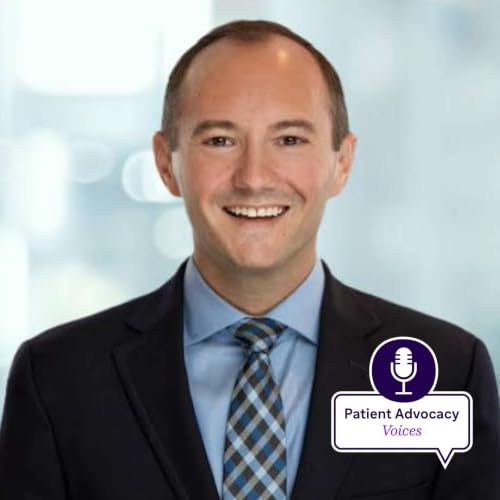
• A Leader, an Advocate, a Patient: Driving Change in Diabetes Care
    Nov 20 2026

    What does it take to turn lived experience into meaningful change for people living with diabetes, and how can patient advocacy leaders help ensure that healthcare progress translates into better patient outcomes?

    In this episode, host Eric Racine and co-host Angela Connolly of Sanofi are joined by Erin Callahan, Chief Operating Officer of the Diabetes Leadership Council and the Diabetes Patient Advocacy Coalition. Together, they discuss how patient advocacy can improve healthcare policies, address barriers to affordability and access, and drive meaningful change. Drawing on her personal journey living with Type 1 diabetes and extensive advocacy experience, Erin shares how to tackle systemic barriers, turn advocacy into action, and put patients at the center of healthcare decisions.

    In this episode, you'll learn about:

    • Why viewing the patient as the "true medical home" can help organizations develop solutions that reflect patients' everyday needs and experiences
    • The roles of insurance design, pharmacy benefit managers, and employers in determining whether patients can access innovative treatments and technologies
    • How to leverage policy expertise with grassroots mobilization to drive change
    • How to build regional partnerships that bring together advocacy groups, healthcare providers, public health leaders, and other stakeholders to strengthen screening and care pathways for Type 1 diabetes
    • Why advances in early detection and treatment must be accompanied by education, accessible care pathways, and policies that help patients benefit from scientific progress

    This episode demonstrates how advocacy leaders can turn patients’ experiences, policy expertise, and local collaborations into meaningful results that help people spend less time navigating healthcare barriers and more time living their lives. This is what it takes to turn extraordinary advances in medical science into real improvements in patients' lives.

    Show More Show Less
    40 mins
  • When Science Isn’t Enough: Breaking Barriers to Care in Rare Disease
    Nov 3 2026

    What happens when scientific progress outpaces patients’ real-world experiences? For people living with rare diseases, scientific innovation alone doesn't guarantee access to care. The journey from diagnosis to treatment can be filled with obstacles, and patient advocacy organizations play a critical role in closing these gaps.

    In this episode, host Eric Racine and co-host Allie Boutin of Sanofi have an insightful conversation with Aviva Rosenberg, CEO and Co-Founder of the Gaucher Community Alliance. They explore what patient advocates can do to address barriers to diagnosis, treatment access, and care. As someone living with Gaucher disease, the mother of a son with the same condition, and a healthcare attorney, Aviva brings a unique perspective on the challenges patients face and how advocacy can help overcome them.

    Drawing on her nearly 20-year journey to diagnosis and her leadership in the rare disease community, Aviva shares how she turns lived experience into actions for newborn screening advocacy, policy change, patient education, and community building, and why patient voices must be included early in healthcare innovation to develop solutions that address their real needs.

    In this episode, you'll learn:

    • What advocacy organizations can do to help patients and families navigate a complex healthcare system to access the treatments and care they need
    • How policy advocacy can address systemic barriers, from newborn screening and insurance restrictions to treatment affordability and access to home infusions
    • Ways to empower patients and families through education, peer connections, and grassroots advocacy that strengthens communities
    • How patient advocacy organizations can partner with researchers and industry to shape innovation priorities and help accelerate development of treatments that matter most to patients

    This episode offers actionable insights for patient advocates and healthcare professionals looking to close the divide between scientific progress and a better patient experience. It's a powerful reminder that scientific breakthroughs only fulfill their promise when patients can benefit from them, and that strong advocacy can help bridge the gap between innovation and access.

    Show More Show Less
    36 mins
  • Where Patients Get Stuck: Reducing Friction and Building Trust in Transplantation
    Sep 30 2026

    Transplantation can save lives. So why do patients who could benefit still face so many barriers to receiving one?

    The science and clinical capabilities of transplantation have advanced dramatically, yet the patient journey remains extraordinarily complex. From understanding transplant options and getting referred to the right center to navigating insurance, organ availability, policy changes, and a complicated healthcare system, patients can encounter friction at nearly every step. Underlying many of these challenges is something even more fundamental: trust.

    In this episode, host Eric Racine, PharmD, and co-host Kemi Osundina-Mkhize, PharmD, of Sanofi are joined by Henry Randall, MD, President of the American Society of Transplant Surgeons (ASTS). Together, they explore where patients are getting stuck in the transplant system and how clinicians, professional societies, patient advocates, policymakers, and other stakeholders can work together to improve access, build trust, and improve the patient experience.

    Dr. Randall shares how ASTS works to elevate patients' voices, advance transplant access, strengthen health literacy, address misinformation, and prepare for policy changes and emerging technologies that could shape the future of transplantation.

    In this episode, you'll learn about:

    • Ways that patient advocacy and stakeholder collaboration can improve access and help patients navigate a changing transplant system
    • How evidence-based communication, health literacy, and trusted messengers can build trust
    • Why listening to patients is only the first step toward meaningful change
    • Why patient advocates need a seat at the table as AI and other technologies transform transplantation
    • A leadership lesson for advocacy professionals: listen across disciplines and bring diverse perspectives together

    This conversation is a reminder that scientific innovation alone does not guarantee patient access. Progress also depends on reducing system friction, earning trust, listening to patients, and turning their experiences into meaningful action.

    Show More Show Less
    40 mins
  • Going Beyond Awareness to Build Trust and Inspire action: Leadership Lessons from 30 Years of Effective Vaccine Advocacy
    Aug 31 2026

    What can decades of successful vaccine advocacy teach every patient organization?

    Effective advocacy goes beyond raising awareness. It builds trust, removes barriers, collaborates with many partners, and empowers patients to make informed decisions.

    In this episode, host Eric Racine and co-host Courtney Fahey of Sanofi are joined by Amy Pisani, CEO of Vaccinate Your Family. Drawing from more than 30 years of leadership in vaccine advocacy, Amy shares lessons on how to combine scientific evidence with personal stories, work with trusted messengers, equip community partners with practical resources, and continually adapt as the information and public health landscapes change.

    In this episode, you'll learn about:

    • What it takes for advocacy to go beyond awareness to remove barriers and improve patient access to care and prevention
    • How to build trust through credible messengers, respectful communication, and collaboration
    • Effective ways to combine personal stories and science to educate and inspire action
    • How coalition building and strategic partnerships can strengthen advocacy efforts and impact
    • Practical communication approaches, including the CASE method, to address concerns, build confidence, and support informed decisions
    • How strong leaders evolve their organizations, adapt to changing needs and environments, and remain grounded in their mission over time

    This episode distills the foundations of effective advocacy into practical lessons every advocacy leader can put into action: building trust, mobilizing partners, removing barriers, advancing health policy, and improving health of the people you serve.

    Show More Show Less
    49 mins
  • From Patient Experience to Policy Action: Bringing Patient and Provider Voices Into the Decisions That Shape Healthcare
    Aug 5 2026

    Who gets to define value in healthcare? Although policymakers, payers, and healthcare professionals all play a role, patient advocacy leaders know that value must also be defined by the experiences of patients and the clinicians who care for them. In this episode of Patient Advocacy Voices, we explore how advocacy organizations can help ensure healthcare policies are shaped by the people most affected, and why proactively engaging patients is essential to protecting access to care.

    Host Eric Racine is joined by co-host Kate Tighe for a conversation with Derek Flowers, Executive Director of the Value of Care Coalition. Together, they discuss how the Coalition brings together patients, providers, caregivers, and advocacy organizations to advance a more patient-centered approach to healthcare value and access. Derek shares how the Coalition combines education, data, and state-level advocacy to help policymakers better understand the real-world impact of healthcare policies, while equipping advocacy organizations with the resources and opportunities to amplify patient and provider voices throughout the policymaking process.

    In this episode, you'll learn about:

    • Why patient perspectives are essential to defining healthcare value
    • How advocacy organizations can proactively impact healthcare policy before decisions create unintended access barriers
    • Ways that coalitions can amplify patient, caregiver, and provider voices, and support advocacy organizations via education, research, and policy expertise
    • Why is it increasingly important for patient advocates to engage in state-level healthcare policies
    • How combining data, lived experience, and stakeholder engagement can help advance policies that improve patient outcomes
    • Leadership lessons on collaboration, flexibility, and coalition-building that advocacy organizations can apply in any disease area

    It is critical that advocacy leaders across all therapeutic areas have a seat at the table to help define healthcare value and improve access for patients. This episode offers practical insights to build partnerships, strengthen patient engagement, and ensure healthcare policies reflect what matters most to patients.

    Show More Show Less
    42 mins
  • Leading Change in Rare Disease: What We Can Learn from the GBS-CIDP Foundation
    Jul 2 2026

    Patient advocacy leaders work every day to make sure patient voices do more than get heard. They want those voices to shape decisions, improve care, guide research, and advance policies that affect patients’ lives. In this episode of Patient Advocacy Voices, we hear from an organization doing exactly that.

    Host Eric Racine is joined by co-host Melissa Dupont, Global Public Affairs Lead, Neurology at Sanofi, for a conversation with Lisa Butler, President and CEO of the GBS-CIDP Foundation. Through patient listening, global expert collaboration, data generation, and advocacy, the GBS-CIDP Foundation is helping ensure that patient perspectives inform standards of care, research priorities, regulatory conversations, and the everyday support for people living with Guillain-Barré Syndrome (GBS), Chronic Inflammatory Demyelinating Polyneuropathy (CIDP), and Multifocal Motor Neuropathy (MMN).

    Lisa shares how her family's experience with GBS inspired a lifelong commitment to advocacy and explains how the Foundation is helping transform rare disease care by bringing patients into conversations from the very beginning. The discussion highlights how the Foundation combines peer connections, global medical expertise, data, advocacy, and research to support patients, establish common clinical language, partner with regulators, strengthen education, and advance research grounded in what matters most to patients.

    In this episode, you'll hear about:

    • How patient input can shape research, clinical terminology, care standards, and regulatory conversations
    • Ways to use registries, symptom tracking, and community engagement to identify unmet needs and guide research priorities
    • Why patient-to-patient connection remains essential, even as digital tools and data become more important
    • How partnerships with healthcare providers, industry, and regulators can accelerate innovation
    • Why hope must be grounded in listening and paired with action to build a better future for patients as science and care continue to evolve

    This episode offers a practical look at what it really means to embed patient advocacy across the full lifecycle of care and innovation. For advocacy leaders in any disease community, the conversation provides a powerful example of how patient experience can be turned into evidence, action, and lasting impact.

    Show More Show Less
    38 mins
  • Inside the Alliance for Aging Research: Closing the Gap Between Innovation and Patient Access
    May 28 2026

    What does it take to make sure innovation, policy, and public health actually work for older adults? Too often, patients and caregivers face a hard path from diagnosis to treatment, shaped by Medicare complexity, out-of-pocket costs, communication gaps, and administrative barriers that get in the way of care.

    In this episode of Patient Advocacy Voices, host Eric Racine is joined by co-host Katie Oppenheim, Head of US Government Relations at Sanofi, for a conversation with Sue Peschin, President and CEO of the Alliance for Aging Research. Together, they discuss how aging research, Medicare policy, vaccine education, and patient advocacy come together to shape access and outcomes for older adults.

    Sue shares how the Alliance for Aging Research is working to change the narrative on healthy aging, advance evidence-based policy, and help patients better navigate the system. Drawing both on her leadership experience and her personal perspective as a caregiver, she offers practical insight into the barriers older adults face and what it takes to reduce them.

    In this episode, you’ll hear about:

    • How Medicare benefit design, affordability, and utilization management can affect real patient access
    • Why aging research matters for chronic disease, infectious disease, and healthier lives as people age
    • How advocacy organizations help translate complex policy changes into useful guidance for patients and families
    • Why vaccine education and trusted communication still matter, especially for older adults
    • What mission-driven leadership looks like during times of policy and public health change

    This episode offers practical lessons for advocacy leaders, policymakers, and anyone working to make the healthcare system easier to navigate for older adults and caregivers.

    Show More Show Less
    39 mins
  • The “Last Mile” in Cancer Care: What It Takes to Turn Innovation Into Access
    Apr 29 2026

    When someone is diagnosed with cancer, the expectation is that care begins quickly and smoothly. In reality, many patients and caregivers find themselves navigating a complicated system, juggling access barriers, approvals, and logistics before treatment even begins.

    In this episode of Patient Advocacy Voices, host Eric Racine is joined by Meagan O’Neill, Executive Director of the Association of Cancer Care Centers (ACCC), alongside co-host Rachel Solomon of Sanofi. Together, they explore how cancer care is shaped not just by scientific advances, but by the systems, operations, and local realities that determine whether patients can access timely, effective care.

    Drawing on her background in oncology consulting and her personal experience as a caregiver for her mother, Meagan shares why so many of the biggest challenges in cancer care are structural rather than scientific. The conversation dives into the crucial role of community oncology, the operational gaps that delay access to care, and how ACCC is working to bridge the gaps between innovation and practical, everyday solutions for both providers and patients. With most cancer care delivered in community settings, advocacy leaders will learn about ACCC’s “how to” approach that helps close the gap between breakthrough science and real patient access.

    In this episode, you’ll gain insights on:

    • Why access to care is often determined by where a patient lives
    • Non-clinical barriers to patient outcomes, including fragmented systems, administrative burden, and workforce shortages
    • The critical role community care settings play in delivering the majority of care in the U.S.
    • How collaboration across clinical centers, care teams, and advocacy organizations can reduce friction for patients and providers alike
    • How data and patient stories together can drive more effective advocacy and system change

    This episode is a timely reminder that improving patient care requires more than medical innovation alone. It takes practical solutions, stronger collaboration, and systems designed to help patients move through care with fewer delays and less burden. It also reveals how patient advocacy organizations can play a critical role in making this happen.

    Show More Show Less
    38 mins