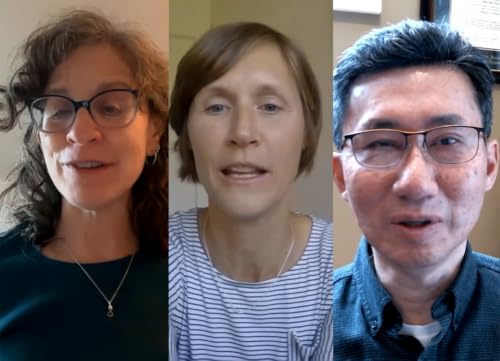
• What you need to know about hereditary cancer risk with Dr. Rachel Yung
    Sep 28 2026

    In this episode of Bench to Bedside and Beyond, Fred Hutch's Diane Mapes talks with clinical researcher and breast cancer oncologist Dr. Rachel Yung, co-director of the Breast and Ovarian Cancer Prevention Clinic at Fred Hutch, about hereditary cancer risk, genetic testing for hereditary cancers and ways to reduce your risk if you are told you have a pathogenic variant.

    Key takeaways:

    • Inherited cancers seen most often include breast, prostate and colorectal cancers.
    • How BRCA1 and BRCA2-related risks compare with other genetic variants such as ATM and CHEK2.
    • What happens after genetic testing, from counseling to specialized prevention and surveillance care.
    • Options for reducing risk: earlier screening, imaging, medication, lifestyle changes and preventive surgery when appropriate.
    • How a genetic variant can raise risk but does not guarantee cancer.
    • How fertility, menopause and personal circumstances factor into prevention decisions.
    • The difference between clinical genetic testing and direct-to-consumer results.
    • What a variant of unknown significance means—and why people generally should not make medical decisions based on it alone.
    • The overall takeaway is that genetic information can help people make informed, individualized choices with support from qualified clinicians and counselors.
    Show More Show Less
    27 mins
  • In the Lab with Dr. Matthew Ross: making hand-held science with a 3D printer
    Sep 25 2026

    Dr. Matthew Ross talks with John Higgins about the problems he has solved for Fred Hutch researchers using a donated 3D printer. Ross, the communications liaison for Fred Hutch Cancer Center's Basic Sciences Division, used the printer to fabricate small parts, make customized tools and create scale models of life's smallest molecular machines. Scientists and aspiring scientists can hold these models in their hands to see — and feel — their shape to infer their function.

    Key takeaways

    • Dr. Matthew Ross uses a donated 3D printer to make spare parts, customized tools and models of life's smallest molecular machines for teaching and learning.

    • 3D printing helps the Basic Sciences Division maintain older, specialized equipment, saving money that can be reinvested in research.

    • Scale models of proteins that researchers can hold in their hands provide tangible information about their structure, making the visual science of structural biology more accessible to someone with visual impairments.

    Show More Show Less
    6 mins
  • A More Precise Way to Understand Tubo-Ovarian Cancer
    Sep 14 2026
    In this episode of Bench to Bedside and Beyond, Diane Mapes talks with Fred Hutch Cancer Center and UW Medicine clinical researcher and gynecologic oncologist Dr. Elizabeth Swisher about research that may refine how scientists understand and treat tubo-ovarian cancer — and potentially help guide targeted treatment for some people with triple-negative breast cancer. Swisher explains why many cancers long called ovarian cancer begin in the fallopian tubes, why "tubo-ovarian cancer" is a more accurate term and how researchers are studying tumors' current biological vulnerabilities to better match patients with treatment options. The conversation also explores HRDefine, an investigational assay designed to identify the current causes of homologous recombination deficiency, or HRD, a tumor weakness that can make some cancers responsive to PARP inhibitors. Key takeaways Many cancers commonly called ovarian cancer begin in the fallopian tubes. Using the term tubo-ovarian cancer more accurately reflects where these cancers often originate and may inform future prevention and early-detection research. Homologous recombination deficiency, or HRD, is a weakness in how some tumor cells repair damaged DNA. That weakness can make certain tumors more responsive to PARP inhibitors. Swisher and colleagues developed HRDefine, an investigational assay designed to identify the current cause of HRD. It can examine BRCA1/2 and other gene changes, as well as methylation changes that can affect gene activity. Unlike older measures of HRD, which may continue to show a past vulnerability after a tumor has become resistant to treatment, HRDefine is designed to assess the tumor's current biology. The assay may help identify which patients are most likely to benefit from PARP inhibitors in tubo-ovarian cancer and, potentially, triple-negative breast cancer. It is still being validated in hundreds of samples before any broader clinical or commercial use. This work reflects a broader goal of precision oncology: matching treatment decisions to a tumor's biological features, not solely to the organ where the cancer began or to inherited genetic risk.
    Show More Show Less
    14 mins
  • Living with the long-term effects of prostate cancer, from sexual to spiritual
    Sep 2 2026
    In this episode of Bench to Bedside and Beyond, we talk to a 25-year prostate cancer survivor and the director of the new sexual health clinic at Fred Hutch about why it's important to include sexual health in the survivorship conversation. Prostate cancer survivor James DeLong and Kelly Nelson, director of Fred Hutch's new sexual health clinic, discuss how a cancer diagnosis can wreak havoc on a person's sex life—and how people no longer need to suffer in silence. Key takeaways:
    • The side effects of cancer treatment can make having a healthy sex life challenging.
    • For a long time, providers didn't commonly address issues such as low libido, vaginal dryness and painful intercourse. Many patients were embarrassed to bring it up, and providers didn't ask.
    • Fred Hutch's new sexual health clinic was created to address these topics and normalize the conversation, recognizing that sexual health is an important part of survivorship and quality of life.
    • The clinic provides comprehensive, individualized support including medication, sex therapy and pelvic-floor physical therapy.
    Show More Show Less
    48 mins
  • In the Lab with Dr. Rashmi Mishra: Shapeshifting cancer into a more treatable form
    Aug 21 2026

    John Higgins interviews Dr. Rashmi Mishra, a postdoctoral research fellow in the Hsieh Lab at Fred Hutch Cancer Center, about how aggressive prostate cancer shapeshifts from a form that is treatable with drugs to a more lethal form that is much less treatable. In a recent study, she and her colleagues found potential ways to reverse that trick, forcing tumor cells to shapeshift back into the more treatable form. Their discovery opens a new line of attack against aggressive prostate cancer, as well as breast cancer and possibly other cancers.

    Key Takeaways:

    • Prostate cancer comprises two main types of cells: luminal, which is more treatable with existing therapies and a more aggressive, lethal type called basal, which is much less treatable.
    • A recent study by Dr. Rashmi Mishra, a postdoctoral research fellow in the Hsieh Lab at Fred Hutch Cancer Center, describes how prostate cancer shapeshifts from a luminal to a basal form to elude therapy without reprogramming its DNA.
    • Mishra and her colleagues found potential ways to reverse that shapeshifting trick, forcing tumor cells to shapeshift back into the more treatable form.
    • Their discovery opens a new line of attack against aggressive prostate cancer, as well as breast cancer and possibly other cancers.
    Show More Show Less
    5 mins
  • After cancer treatment, emotional and spiritual health is key to maintaining equilibrium
    Aug 14 2026

    In this episode of Bench to Bedside and Beyond, Bonnie Rochman talks to a bone marrow transplant survivor and the director of psychiatry at Fred Hutch.

    Leukemia survivor and bone marrow transplant recipient Nicole Sandburg and Jesse Fann, MD, MPH, Medical Director, Psychiatry and Psychology, discuss the ways a cancer diagnosis can upend emotional health and how mental health services including mindfulness can help patients cope.

    Key takeaways:
    • Dealing with cancer can have profound emotional effects that outlast the treatment.
    • Recovery requires more than physical healing.
    • Cancer strengthens a person's self-advocacy skills.
    • People dealing with cancer can help support their emotional well-being by staying active, eating healthy, socializing and getting outdoors.
    Show More Show Less
    50 mins
  • In the Lab with Dr. Lucas Sullivan: let cancer eat cake
    Aug 13 2026
    Dr. Lucas Sullivan, a cancer metabolism expert at Fred Hutch Cancer Center talks with John Higgins about a new study showing that cancers driven by a specific mutation crave a nutrient so much that eating too much of it can be lethal. Healthy cells aren't prone to stuffing themselves with this nutrient. That difference presents an opportunity for precision oncology: we can supplement a patient's diet to force-feed tumors the nutrient while sparing healthy cells. Key takeaways:
    • A recent study by Dr. Lucas Sullivan, a cancer metabolism expert, finds that feeding NRF2-mutated tumors too much of a nutrient they crave makes them vulnerable to slower growth and cell death.
    • NRF2 genetic mutations are common in lung cancers but also appear in several other cancers.
    • Force-feeding NRF2-mutated tumors the nutrient they crave could kill the cancerous cells while sparing the healthy ones, a prime example of precision oncology.
    Show More Show Less
    6 mins
  • Sidelining cancer treatment's side effects through exercise, nutrition, prehab and rehab
    Jul 15 2026

    Cancer survivorship is about far more than finishing treatment. In this episode of Bench to Bedside and Beyond, Diane Mapes speaks with prostate cancer survivor and advocate Marty Chakoian and cancer rehabilitation specialist Dr. Hanna Hunter about the physical, emotional and practical realities of life after a cancer diagnosis. Together, they discuss treatment side effects, the value of patient advocacy and support groups, advances in less toxic therapies, and how rehabilitation, exercise and supportive care services help patients maintain quality of life throughout the cancer continuum.

    Key Takeaways

    • Cancer care is increasingly focused on quality of life, not just survival. Modern oncology aims to treat the whole person, balancing effective cancer treatment with physical function, emotional well-being, independence and long-term survivorship outcomes. Both Chakoian and Hunter emphasize that living well during and after treatment is now a core goal of cancer care.

    • Patients play a critical role in treatment decisions. Chakoian stresses the importance of shared decision-making, encouraging patients to understand their diagnosis, know their personal values and communicate openly with their care teams. The best treatment plan is often the one that balances medical effectiveness with the quality-of-life outcomes that matter most to the individual patient.

    • Supportive care and rehabilitation can start before treatment begins. Dr. Hunter explains that rehabilitation services including physical therapy, lymphedema care, speech therapy and exercise programs can help patients before, during and after treatment. Early intervention can improve resilience, reduce side effects and help patients recover more quickly.

    • Exercise and community support are powerful survivorship tools. Research increasingly shows that physical activity can improve function, quality of life and even cancer outcomes. At the same time, support groups provide practical advice, emotional support and a sense of community that helps people navigate the challenges of cancer and its aftermath.

    Show More Show Less
    54 mins