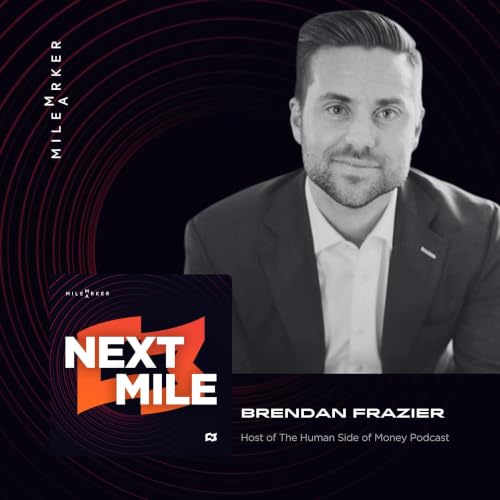
Next Mile kapak görseli

Next Mile

Next Mile

Yazan: Milemarker
Şimdi ücretsiz dinle, üyelik gerekmez

This Season's Biggest Deal | £0.99/mo for 3 months + £10 Audible bonus

£5.99/mo after 3 months - terms apply. Cancel monthly
Özet
Next Mile is a podcast about bringing together the people and technology shaping the wealth management industry. Brought to you by Milemarker.Copyright © Milemarker Inc. Economics Marketing Marketing & Sales Personal Finance
  • Building a Boutique at Scale with Leah Sciabarrasi
    10 Nov 2026
    Episode 170: This week, Kyle Van Pelt talks with Leah Sciabarrasi, President and Managing Partner at Crestwood Advisors. Leah joined Crestwood in 2003 when the firm was just three people with no assets under management, giving her the unusual opportunity to help build the business from the ground up. Over more than two decades, she has grown from hands-on operator into a leader guiding the firm’s strategy and growth. Kyle and Leah explore what changes when an advisory practice becomes an enterprise and how Crestwood has worked to preserve a boutique client experience as it has grown. Leah shares why the firm invests in people and infrastructure before capacity becomes strained, how culture and mutual adaptability shape successful mergers, and why long-term strategy sometimes requires spending ahead of revenue. They also discuss using technology and AI to improve efficiency while keeping judgment, context, and human relationships at the center of advice. In this episode: (00:00) - Intro (01:08) - Leah’s money moment (04:15) - From operator to firm leader (06:03) - The shift from practice to enterprise (08:30) - What it means to be a boutique at scale (09:35) - Balancing technology, talent, and the personal touch (12:02) - Why mergers are about people, not systems (17:31) - Investing ahead of growth (18:53) - Where AI fits in holistic advice (20:11) - Evaluating new tools by the problem they solve (21:48) - Leah’s outlook on the future of the wealth management industry (23:55) - Leah’s Milemarker Minute Key Takeaways Invest ahead of growth. Waiting until capacity is strained forces leaders into reactive decisions. Building people, infrastructure, technology, and specialized expertise before they are urgently needed creates room to grow without constantly fighting fires. Know whether you’re building a practice or an enterprise. Scale introduces a different level of complexity around people, systems, culture, career paths, and decision-making. Those elements need to become more intentional as a firm grows. Make scale invisible to the client. Growth should give clients access to greater resources without making their experience feel more complicated or impersonal. Team-based service, thoughtful technology, and consistent standards can preserve a boutique experience inside a much larger organization. Treat merger integration as a people and culture challenge first. Combining firms requires respect for what each organization already does well. Strong integration comes from shared client priorities, willingness to learn from both sides, and clarity about what must become consistent versus what can evolve. Quotes “One thing I’ve learned about successful growth is that growth works best when you invest ahead of it.” ~ Leah Sciabarrasi “I think our willingness to choose long-term strategy has been the biggest driver of our growth.” ~ Leah Sciabarrasi “At some point along the journey, I think you have to make a conscious decision about whether you’re building a practice or building an enterprise, because those are very different things.” ~ Leah Sciabarrasi Links Leah Sciabarrasi on LinkedIn Crestwood Advisors Being Mortal by Atul Gawande Connect with our hosts Milemarker.co Kyle on LinkedIn Jud on LinkedIn Subscribe and stay in touch Apple Podcasts Spotify YouTube Produce game-changing content with Milemarker Studio Milemarker Studio helps your company grow by producing top-quality content and fostering transformative conversations. We specialize in content generation, podcasting, digital strategy, and audience growth for fintech and financial services companies. Learn more at MilemarkerStudio.co.
    Daha fazlasını göster Daha Az Göster
    27 dk.
  • How to Turn Client Reviews Into Better Client Experiences with Brendan Frazier
    3 Nov 2026
    Episode 169: This week, Kyle Van Pelt talks with Brendan Frazier, creator of The Ultimate Meeting Series and host of The Human Side of Money. Brendan began his career consulting with advisors on retirement income before building an advisory business and focusing his work on behavioral finance, psychology, and communication. He created The Human Side of Money to translate those ideas into practical tools for advisors. Kyle and Brendan explore why annual review meetings often become routine maintenance instead of the anchor of the client experience. Brendan shares a framework built around whether clients feel understood, know how they’re doing, and believe they’ll be okay, plus why purpose and the desired client feeling should shape the meeting. They also discuss connecting with beneficiaries before wealth transfers, using AI for meaningful callbacks and better follow-up, and why trust, empathy, and behavior-change skills become more valuable as technology improves. In this episode: (00:00) - Intro (01:41) - Brendan's money moment (08:17) - Why client review meetings fall short (10:04) - Reactive value versus intentional client value (14:18) - Designing the meeting around the client (15:29) - The three questions every review should answer (16:56) - Defining the purpose and feeling of a great meeting (18:49) - What “Am I going to be okay?” means for wealthy clients (23:16) - Rethinking the generational wealth transfer (27:34) - Building relationships with the next generation before the inheritance (30:28) - Using AI to create more room for human advice (33:23) - Using callbacks to make clients feel remembered (37:51) - Brendan's outlook on the future of the wealth management industry (40:55) - What human behavior tells us about the future of advice (43:10) - Brendan's Milemarker Minute Key Takeaways Design meetings around what clients need, not what you need to prove. A review meeting shouldn’t primarily showcase the work the firm completed. Start with the client’s questions, concerns, and desired outcomes, then build the conversation around them. Make sure every client leaves feeling understood, informed, and reassured. Brendan reduces the psychology of a strong review meeting to three questions: Do you understand me? How am I doing? Am I going to be okay? Those questions provide a practical foundation for deciding what belongs in the meeting. Build next-generation relationships before there is money to transfer. Beneficiaries are unlikely to stay simply because their parents did. Consistent contact, relevant experiences, and genuine understanding give the next generation a reason to develop their own relationship with the firm. Use AI to strengthen human skills rather than substitute for them. AI can surface personal details, reduce administrative work, and help prepare more thoughtful follow-up. But trust, empathy, curiosity, decision guidance, and behavior change remain skills advisors have to deliberately develop. Quotes “Nobody actually wants to maximize their wealth. Everybody wants to maximize their life. Money is just a tool to fund the life that you want to live.” ~ Brendan Frazier “The review meeting is quite literally the anchor of the client experience. And it’s average at best, and oftentimes we treat it as nothing more than a glorified maintenance task.” ~ Brendan Frazier Links Brendan Frazier on LinkedIn The Ultimate Review Meeting The Human Side of Money podcast Wired Planning RFG Advisory The Undoing Project by Michael Lewis Daniel Kahneman Amos Tversky Kitces.com Jeff Levine on LinkedIn Merrill Lynch Julie Littlechild / Absolute Engagement Dan Allison on LinkedIn Scott Galloway UBS Inside the Box by David Epstein Connect with our hosts Milemarker.co Kyle on LinkedIn Jud on LinkedIn Subscribe and stay in touch Apple Podcasts Spotify YouTube
    Daha fazlasını göster Daha Az Göster
    45 dk.
  • The Difference Between a Family Office and an RIA with More Services with Matt Celenza
    27 Oct 2026
    Episode 168: This week, Kyle Van Pelt talks with Matt Celenza, Managing Director and Partner at Americana Partners. Matt began his career at Morgan Stanley before joining Smith Barney, where he spent more than a decade with the Citi Family Office. He later led Boulevard, the firm he sold to Americana Partners in 2025. Matt shares why adding services in-house doesn’t make a firm a family office, and why the real work is coordinating each family’s needs in the order that matters to them. He outlines how complexity, not net worth alone, signals the need for that model, and why investing is often one of the last pieces of the conversation. Kyle and Matt also unpack how families with illiquid wealth find liquidity, how disciplined collateral management protects large loans, and why Matt expects firms using the family office label to be held accountable for it. In this episode: (00:00) - Intro (01:13) - Matt's money moment (04:07) - What separates a true family office from an RIA (08:10) - When wealth becomes too complex for traditional wealth management (11:24) - Balancing customization with scale (12:59) - What brings families to a family office (14:42) - Managing liquidity when wealth is tied up in illiquid assets (18:59) - Managing collateral around concentrated wealth (21:57) - When wealth becomes collateral (22:59) - Why service still matters more than technology (26:53) - Matt's outlook on the future of the wealth management industry (29:39) - Matt's Milemarker Minute Key Takeaways Complexity—not simply net worth—determines when a family needs deeper coordination. Significant wealth can create interconnected decisions around liquidity, trusts, taxes, lending, philanthropy, and investments. The value of a family office comes from coordinating those decisions rather than treating them independently. Adding services doesn't automatically create a family office. A firm also needs advisors who understand how to use those resources together and an operating model capable of supporting the relationship. Capabilities matter only when the team can coordinate them effectively. Manage wealth according to its purpose, not a single return target. Different trusts, entities, liquidity needs, and liabilities may require different mandates. Matt's approach to "integrated investing" treats investments as one part of a broader balance-sheet and risk-management strategy. Technology should strengthen service rather than replace it. Reporting platforms and AI can make complex information easier to manage and reduce manual work, but Matt sees personal coordination and availability as the enduring value of the family office relationship. Quotes "Whatever you did to make your money, no doubt, was a difficult task in and of itself with experience and knowledge. None of that traditionally works with keeping your money." ~ Matt Celenza "There is a big difference between trying to sell and trying to solve." ~ Matt Celenza "Investing to me is one of the last things that comes into play with a family who has a lot of money. It's more preservation. It's more awareness of risk." ~ Matt Celenza "Technology is secondary to the service that we offer. It's the way that we deliver this coordination. That you can't replace." ~ Matt Celenza Links Matthew Celenza on LinkedIn Americana Partners Morgan Stanley Citi Wealth’s 2026 Global Family Office Report Merrill Private Wealth Management Jason Fertitta Addepar JPMorganChase WeWork A Better LA USC Thornton School of Music Buffalo Bills / Josh Allen Mammoth Mountain In Cold Blood by Truman Capote Truman Capote Breakfast at Tiffany’s by Truman Capote Connect with our hosts Milemarker.co Kyle on LinkedIn Jud on LinkedIn Subscribe and stay in touch Apple Podcasts Spotify YouTube
    Daha fazlasını göster Daha Az Göster
    32 dk.
adbl_web_anon_alc_button_suppression_t1
Henüz yorum yok