Bölümler

  • The Sound of the Cosmos
    24 Oct 2026

    What does Jupiter sound like? What if Saturn had a soundtrack? On this very special edition of Kalam Astro, host Alya Al-Nuaimi takes you on the most extraordinary sensory journey in the show's history — because today, we don't just talk about space. We listen to it.

    NASA's space telescopes have been doing something remarkable: converting real, raw scientific data from the planets of our solar system — light waves, magnetic fields, radiation, gravitational ripples — into actual music. Not simulations. Not guesses. Real data, transformed into sound. Jupiter roars. Saturn hums. The cosmic web sings. And today, for the first time ever on Pulse 95 Radio, we are playing these sounds live on air. Close your eyes, turn up the volume, and let the universe speak to you.

    But as we fill the skies with more and more satellites to help us explore — we're also filling them with danger. Space debris is now forcing satellites to perform emergency collision-avoidance manoeuvres at an unprecedented and alarming rate. Scientists warn that the situation will get significantly worse before it gets better. With thousands of new satellites launching every year and millions of fragments of broken spacecraft hurtling through orbit at bullet-like speeds, the window to act is closing. The future of our connected world — GPS, internet, weather forecasting, everything — depends on solving this problem.

    Then we venture beyond our solar system to visit ten of the most jaw-dropping, mind-melting, reality-defying planets ever discovered. A planet made entirely of diamond. A world where it rains molten glass sideways at 9,000 kilometres per hour. A planet so hot its atmosphere is vaporised iron. A "marshmallow world" so puffy it is less dense than water. These are not science fiction — these are real planets, orbiting real stars, waiting to be understood. Welcome to the extreme edge of the cosmos.

    And finally — the oldest question humanity has ever asked: are we alone? With the James Webb Space Telescope now scanning the atmospheres of distant worlds for the chemical fingerprints of life, we are closer than ever to an answer. Scientists believe that truly intelligent alien life may be extraordinarily rare in the universe — but that doesn't mean we stop looking. Because if we are alone, that makes what we have here on Earth infinitely more precious. And if we are not alone — everything changes.

    This is Kalam Astro. We don't just talk about space — we make you feel it.

    Daha fazlasını göster Daha Az Göster
    36 dk.
  • Japan's Daring Mars Moon Mission, Missing Black Holes & the First Ever Green Star
    24 Oct 2026

    This week on Kalam Astro, host Alya Al-Nuaimi takes you on a thrilling tour of the cosmos — from a daring Japanese mission heading to the moons of Mars, to a call for YOUR help in one of astronomy's greatest hunts, to gemstones hiding in an alien sky, and a star so strange it could only be described as a cosmic zombie!

    First up — Japan is doing something no space agency has ever attempted before. The MMX mission (Martian Moons eXploration), led by JAXA, is on its way to Phobos — one of Mars' two tiny, mysterious moons. But this isn't just a flyby. Japan plans to actually land on Phobos, collect samples from its surface, and bring them back to Earth. Why does this matter? Because scientists believe Phobos may hold ancient material from the very formation of Mars itself — and possibly even traces of life that were blasted off the Martian surface by asteroid impacts billions of years ago. Returning those samples to Earth could answer one of humanity's greatest questions: was there ever life on Mars?

    Then — astronomers need YOUR help! Scientists believe our Milky Way galaxy should contain hundreds of millions of black holes, yet we've only found a tiny fraction of them. Where are all the missing black holes hiding? Researchers have launched a citizen science project, inviting people from around the world — including YOU — to help scan telescope data and track down these invisible cosmic giants. No telescope required. No PhD needed. Just curiosity and a screen!

    Next, a jaw-dropping discovery: scientists have found what can only be described as gemstones floating in the atmosphere of one of the strangest planets ever found. This exoplanet — nicknamed the "marshmallow planet" because it is incredibly puffy and low-density despite being scorching hot — has an atmosphere filled with tiny crystalline particles that resemble precious gemstones. It is a world unlike anything in our solar system, and it is rewriting the rules of planetary science.

    And finally — just in time for Halloween — astronomers have discovered the first ever GREEN star. Stars come in red, orange, yellow, white and blue — but green? Never, until now. This bizarre object is being called a cosmic zombie: a star that should be dead, yet somehow keeps shining in an eerie, otherworldly green glow. Scientists are baffled — and honestly, a little spooked!

    Tune in, look up, and keep exploring with Kalam Astro!

    Daha fazlasını göster Daha Az Göster
    33 dk.
  • Perseverance Uncovers Mars Secrets, Supernovas & How Robots Navigate Deep Space
    18 Oct 2026

    On this episode of Kalam Astro, host Alya Al-Nuaimi takes you on a journey through cosmic explosions, the mysteries buried in Martian rock, and the incredible technology that lets our robots explore planets millions of kilometres away — all on their own!

    We start on Mars, where NASA's Perseverance rover continues to roll through the ancient Jezero Crater, uncovering stunning new details about the Red Planet's geological history. From ancient riverbeds to signs of past volcanic activity, every rock Perseverance touches tells a story billions of years in the making. And the rover does it all autonomously — making its own decisions, charting its own path, without waiting for instructions from Earth.

    That leads us to one of the most exciting frontiers in modern space exploration: autonomous navigation. How do rovers and spacecraft find their way across alien worlds without a GPS signal or a human hand on the wheel? Kalam Astro breaks down the AI systems, sensors, and onboard computers that make it possible for our robots to be true explorers in their own right.

    Then we turn our attention to the universe's most powerful fireworks: supernovas. When a massive star reaches the end of its life, it doesn't go quietly — it explodes with the energy of billions of suns, scattering heavy elements like gold, iron, and carbon across the cosmos. These are the very building blocks of planets, oceans, and life itself. In a very real sense, we are all made of stardust from ancient supernovas.

    And we draw a fascinating parallel between Mars today and ancient Earth during the age of dinosaurs — a time when our own planet looked more like an alien world than the blue marble we know today.

    Tune in, look up, and keep exploring with Kalam Astro! 🌌

    ==
    Listen to #Pulse95Radio in the UAE by tuning in on your radio (95.00 FM) or online on our website: www.pulse95radio.com
    ************************
    Follow us on Social.
    www.facebook.com/pulse95radio
    www.twitter.com/pulse95radio

    Daha fazlasını göster Daha Az Göster
    34 dk.
  • UAE's 7-Asteroid Mission, The Heart-Shaped Nebula & Microbes Engineered for Mars
    18 Oct 2026

    This week on Kalam Astro, host Alya Al-Nuaimi brings you three extraordinary stories — including a UAE space mission that's truly out of this world!

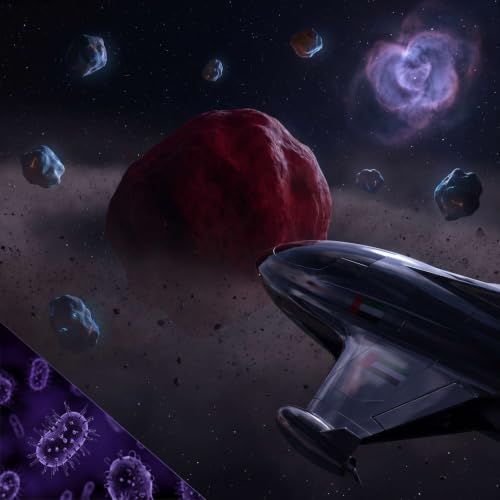
    We kick off with one of the most ambitious missions the UAE has ever attempted: the Emirates Mission to the Asteroid Belt. Launching in 2028, the UAE is building a spacecraft that will travel across the solar system and visit not one, not two — but SEVEN asteroids over eight years! One of its targets is 269 Justitia, a 50-kilometre-wide space rock that is a shocking, brilliant crimson red. Scientists believe it originally formed in the far outer solar system before drifting inward — and studying it could unlock secrets about the very origins of our solar system.

    Then we take a moment to appreciate one of the most beautiful sights in the cosmos: the Cocoon Nebula (IC 5146) in the constellation Cygnus. NASA recently captured a breathtaking image of this nebula — and it's shaped like a heart floating in space! Inside it, brand-new baby stars are being born right now inside clouds of gas and dust. A cosmic nursery and a love letter from the universe, all in one.

    And finally — science fiction becomes science fact. Researchers have successfully engineered microscopic creatures — tiny microbes — specifically designed to survive the brutal conditions on Mars. These biological pioneers could one day help prepare the Martian environment for human settlement, breaking down rock, producing oxygen, and making the Red Planet a little more like home.

    Tune in, look up, and keep exploring with Kalam Astro! 🌌

    ==
    Listen to #Pulse95Radio in the UAE by tuning in on your radio (95.00 FM) or online on our website: www.pulse95radio.com
    ************************
    Follow us on Social.
    www.facebook.com/pulse95radio
    www.twitter.com/pulse95radio

    Daha fazlasını göster Daha Az Göster
    34 dk.
  • Astronauts Return After 10 Months in Space, Blazars & Why Earth & Mars Are So Different
    10 Oct 2026

    On this episode of Kalam Astro, host Alya Al-Nuaimi brings you stories of human courage, cosmic fireworks, and one of the greatest planetary mysteries in our solar system.

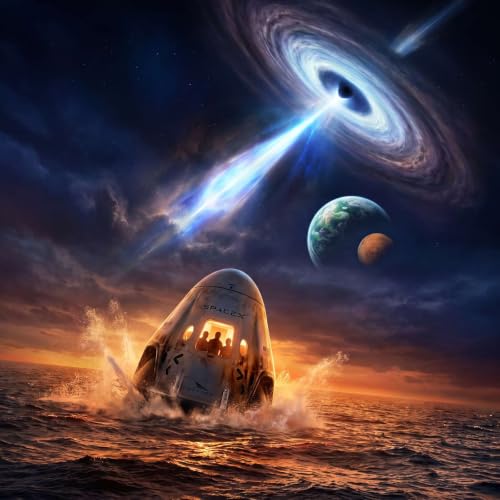
    We open with a triumphant homecoming: four astronauts — Commander Jessica Meir, pilot Jack Hathaway, French ESA astronaut Sophie Adenot, and Russian cosmonaut Andrey Fedyaev — splashed down safely in the Pacific Ocean off California on October 8th, after spending 10 incredible months aboard the International Space Station. Traveling aboard a SpaceX Dragon capsule at 28,000 km/h, orbiting Earth roughly 16 times a day, their return is a testament to international cooperation in space and the resilience of the human spirit.

    Then we turn our eyes to the far reaches of the universe to discover blazars — cosmic lighthouses more powerful than anything in the known universe. These supermassive black holes are aimed directly at Earth, beaming jets of energy across billions of light-years, and scientists have just discovered a spectacular new one.

    And finally, we explore one of astronomy's most fascinating questions: why are Earth and Mars so different? Born in the same solar neighborhood, at roughly the same time, from the same cosmic materials — yet one is a vibrant, living world, and the other is a cold, barren desert. The answer may lie in their ancient histories and the role of water, magnetism, and cosmic collisions.

    We also look ahead to the 2026 Chandra eclipse and what promises to be a landmark year for astronomy in 2026–2027!

    Tune in, look up, and keep exploring with Kalam Astro! 🌌

    ==
    Listen to #Pulse95Radio in the UAE by tuning in on your radio (95.00 FM) or online on our website: www.pulse95radio.com
    ************************
    Follow us on Social.
    www.facebook.com/pulse95radio
    www.twitter.com/pulse95radio

    Daha fazlasını göster Daha Az Göster
    31 dk.
  • World Space Week: Cosmic Collisions, Mars' Ancient Ice & NASA's Mystery Mission
    10 Oct 2026

    As World Space Week continues, Kalam Astro host Alya Al-Nuaimi brings you more cosmic wonders to celebrate humanity's place in the universe!

    We open with a spectacular phenomenon captured by NASA's James Webb Space Telescope: planets smashing into each other in a distant solar system — a cosmic car crash on an unimaginable scale. These planetary collisions shaped our own solar system billions of years ago, and JWST is now letting us watch the same process happening in real time around other stars.

    Then we head to Mars — and the possibility of something extraordinary. Could Mars be hiding pristine, untouched ice, frozen and preserved since the very beginning of the solar system? This isn't just any ice — it could be a time capsule, containing ancient information about the early history of our solar system, locked away in a freezer for billions of years.

    And the big reveal: NASA has announced a brand-new mission called PRIME (Planetary Remote Imaging Mission Explorer) — described as something that will completely change how we explore space. Details are still emerging, but scientists promise it will go places and do things no mission has ever done before.

    World Space Week (October 4–10) is celebrated in over 100 countries. Whether you're a stargazer, a scientist, or just someone who looks up at the sky and wonders — this week is for you!

    Tune in, look up, and keep exploring with Kalam Astro! 🌌

    ==
    Listen to #Pulse95Radio in the UAE by tuning in on your radio (95.00 FM) or online on our website: www.pulse95radio.com
    ************************
    Follow us on Social.
    www.facebook.com/pulse95radio
    www.twitter.com/pulse95radio

    Daha fazlasını göster Daha Az Göster
    34 dk.
  • World Space Week Special: Hubble's 200,000th Orbit, Life on Enceladus & Sputnik at 69
    10 Oct 2026

    Kalam Astro is back with a special World Space Week edition! Host Alya Al-Nuaimi brings you three milestone stories that span 69 years of human space history — from the very first satellite to a moon that might harbor alien life today.

    We begin on October 4th, 1957 — the day humanity changed forever. The Soviet Union launched Sputnik, a small 84-kilogram metal sphere, becoming the first human-made object to orbit Earth and igniting the Space Race. 69 years later, we celebrate its legacy on World Space Week!

    We also celebrate another milestone: NASA's Hubble Space Telescope has completed its 200,000th orbit around Earth. After 34+ years in space, Hubble celebrated this achievement by capturing a breathtaking image of a supernova — a dying star's explosive final flash. Remarkable for a telescope that was once considered nearly broken!

    Then we dive into the most exciting search in the solar system: the hunt for life on Enceladus, Saturn's tiny icy moon. Beneath its frozen crust lies a warm, salty liquid ocean — and scientists have now confirmed that the conditions inside that ocean could support microbial life. Laboratory experiments recreating Enceladus's ocean chemistry are showing that microorganisms can survive there.

    Plus, we preview the Sharjah Space and Astronomy Hub's World Space Week events (October 4–8) — planetariums, observatories, meteorites, and more! And Saturn is at its closest and brightest to Earth this October — perfect for stargazing!

    Tune in, look up, and keep exploring with Kalam Astro! 🌌

    ==
    Listen to #Pulse95Radio in the UAE by tuning in on your radio (95.00 FM) or online on our website: www.pulse95radio.com
    ************************
    Follow us on Social.
    www.facebook.com/pulse95radio
    www.twitter.com/pulse95radio

    Daha fazlasını göster Daha Az Göster
    30 dk.
  • World Space Week: Ancient Water on Mars, JWST Finds Water by a Black Hole & a Planet Going Backwards
    10 Oct 2026

    Happy World Space Week! Kalam Astro host Alya Al-Nuaimi marks this global celebration of space science (October 4–10) with three jaw-dropping discoveries that remind us why we keep looking up!

    First up — Mars. NASA's Curiosity rover has done it again. Deep inside a Martian crater, it found compelling evidence of ancient hot water. Not just frozen ice — but signs of a warm, liquid water environment that once existed on the surface of the Red Planet. This is huge news for the question that keeps scientists up at night: was there ever life on Mars?

    Then we travel to the center of our own galaxy. The James Webb Space Telescope (JWST) has detected water near the supermassive black hole at the heart of the Milky Way. Water — near a black hole. The universe never ceases to amaze.

    And we round out the episode with a cosmic rebel: scientists have discovered an exoplanet that orbits its star completely backwards — in the opposite direction of the star's own rotation. How did it form that way? Nobody knows yet. But it defies everything we thought we understood about how planetary systems are built.

    World Space Week runs across more than 100 countries. Join the celebration and keep looking up! 🚀

    Tune in, look up, and keep exploring with Kalam Astro! 🌌

    ==
    Listen to #Pulse95Radio in the UAE by tuning in on your radio (95.00 FM) or online on our website: www.pulse95radio.com
    ************************
    Follow us on Social.
    www.facebook.com/pulse95radio
    www.twitter.com/pulse95radio

    Daha fazlasını göster Daha Az Göster
    33 dk.