Bölümler

  • He Moved Into a Dementia Ward at 21. Here's What He Discovered
    28 Oct 2026

    What if we've confused keeping people safe with giving them a good life?

    Meet Teun Toebes, Dutch healthcare innovator, author and dementia advocate on a mission to change how the world lives with dementia. At 21, most of us are figuring out what to do with our lives - but Teun decided to move into a locked dementia ward in the Netherlands. Not as a patient, and not as a carer, but as a housemate. For three and a half years, he shared his life with people whose voices are too often overlooked. His experience sparked an international movement, a documentary called Human Forever, and a campaign to open the doors of locked nursing homes.


    But this isn't simply a story about changing aged care. It's about friendship, freedom, dignity, and the extraordinary things that can happen when we stop defining people by what they've lost.

    (Podcast Image Credit: Teun with housemate. Stan Heerkens)


    In this episode:

    • Why a 21-year-old nurse decided to move into a locked dementia ward
    • What three and a half years living alongside people with dementia taught him
    • How football, a motorcycle and a very fast speedboat can change the end of a life
    • Why good intentions don't always lead to a good quality of life
    • What communities in South Africa and an intergenerational school in America can teach us about dementia
    • The Open the Doors movement and the push to rethink locked nursing home wards
    • How living alongside people with dementia changed his understanding of death, grief and what it means to be human

    Timestamps:
    00:00 The Housemate
    00:57 Meet Teun Toebes
    03:26 Why a 21-year-old moved into a dementia ward
    06:05 Zero Risk, Zero Life
    08:19 Becoming a Housemate
    11:31 Motorcycles, Speedboats and Friendship with Art
    13:24 Midpoint Reflections
    15:50 What Happens When You Challenge the System?
    17:42 What If a Nursing Home Is Your Only Option?
    19:37 Human Forever: Rethinking Dementia Around the World
    23:18 Open the Doors: Freedom vs. Safety
    26:17 Dementia Rights Are Human Rights
    27:31 What Families Need to Know About Dementia
    28:47 What Happens When All Your Housemates Die?
    30:48 The Power of Paying Attention
    32:02 Final Reflections


    Curious to find out more?
    👉 Explore Teun's documentary, Human Forever

    👉 Discover Teun's books, including The Housemates

    👉 Support his work through Article 25 Foundation


    About Fix The News:
    Fix The News is a solutions-focused media platform sharing stories from the frontlines of progress - exploring what’s working in the world and the people making it happen.


    Subscribe & follow:
    If you enjoyed this episode, follow the podcast and leave a review - it helps more people find these stories.


    Production credits:
    Hosted by Angus Hervey and Amy Davoren-Rose
    Produced by Fix The News
    Audio production: Anthony Badolato, Hear That!


    This episode was produced in Australia on the lands of the Gadigal, Wurundjeri and Woi Wurrung peoples.

    Daha fazlasını göster Daha Az Göster
    36 dk.
  • The People Rewriting the Rules: Five Unexpected Stories from New York
    16 Oct 2026

    What happens when the systems we've relied on stop working? And who gets to decide what comes next?


    A year after the dismantling of USAID sent shockwaves through the international aid sector, the world's leaders, philanthropists and changemakers gathered in New York for the UN General Assembly and Climate Week. The funding crisis was far from over, and the big questions about what comes next remained unanswered.


    Amy spent a week in New York talking to people who weren't waiting for the old systems to be fixed. From former aid workers building a lifeboat for abandoned programmes to a dating app helping tackle HIV, she discovered some unexpected ways of doing things differently.

    In this episode, Amy and Gus unpack five conversations from New York and ask whether the messy middle might be exactly where new possibilities begin.


    In this episode:

    • The Lifeboat Crew: How Rob Rosenbaum and a group of former USAID workers helped redirect more than $170 million towards programmes at risk of closure.
    • Grindr's unexpected mission: CEO George Arison on using a global dating app to help millions of people access HIV prevention.
    • A billion people in ten years: Felix Brooks-Church on Sanku's extraordinary growth and a business model designed to solve hidden hunger.
    • Rethinking philanthropy: Judith Lingeman from the Postcode Lottery Group on the power of trust, unrestricted funding and giving organisations room to dream.
    • A world without single-use plastic: Nicky Davies from the Plastic Solutions Fund on bringing 35 foundations together, changing the systems behind plastic pollution and why cities could lead the way.

    Five very different conversations that all ask the same question: what becomes possible when we stop assuming the way we've always done things is the only way?


    Timestamps:

    00:45 Introduction - Amy & Gus

    03:45 Rob Rosenbaum, Project Resource Optimization

    13:36 George Arison, Grindr

    19:39 Felix Brooks-Church, Sanku

    25:52 Judith Lingeman, Postcode Lottery Group

    32:49 Nicky Davies, Plastic Solutions Fund

    42:39 Closing Reflections - Amy & Gus


    Find out more:

    👉 Project Resource Optimization
    👉 Grindr

    👉 Sanku
    👉 Postcode Lottery Group
    👉 Plastic Solutions Fund

    About Fix The News:
    Fix The News is a solutions-focused media platform sharing stories from the frontlines of progress - exploring what’s working in the world and the people making it happen.


    Subscribe & follow:
    If you enjoyed this episode, follow the podcast and leave a review - it helps more people find these stories.


    Production credits:
    Hosted by Angus Hervey and Amy Davoren-Rose
    Produced by Fix The News
    Audio production: Anthony Badolato, Hear That!


    This episode was produced in Australia on the lands of the Gadigal, Wurundjeri and Woi Wurrung peoples.

    Daha fazlasını göster Daha Az Göster
    48 dk.
  • Lead Poisoning Is Solvable. So What’s Been the Hold Up?
    29 Sep 2026

    How do you get the world to pay attention to a problem it thinks it's already solved?

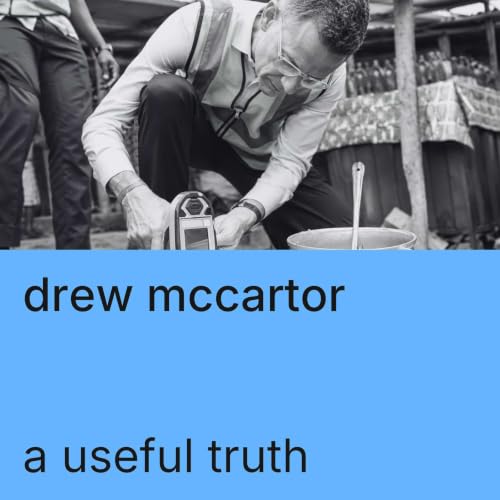
    Around a billion children are exposed to dangerous levels of lead. It can be hiding in cookware, spices and cosmetics, or released through industries like battery recycling. For a child, exposure can mean losing up to six IQ points - irreversible damage that, multiplied across hundreds of millions of children, becomes an enormous drain on human potential. And yet, unlike so many global challenges, we already know how to prevent it.

    Meet Drew McCartor, President of Pure Earth. For the past 17 years, Drew and his colleagues have been sounding the alarm about lead poisoning: gathering evidence, understanding the scale of the problem and building the playbook for how to solve it. Now, after decades of “yelling into the void”, the world is finally paying attention - and Drew believes we have an opportunity to eliminate lead poisoning altogether.

    In this episode:

    • Why around a billion children are exposed to dangerous levels of lead
    • The surprising places lead is still hiding - from cookware to spices
    • What losing four to six IQ points means for a child - and an entire country
    • How a Craigslist ad led Drew from unpaid intern to President of Pure Earth
    • Why Pure Earth spent years wondering if they were crazy
    • The young boy in Bangladesh who brought the human cost of lead poisoning home for Drew
    • What changed when the world finally started paying attention
    • Why Drew believes we can eliminate lead poisoning altogether

    About the title: A Useful Truth comes from a 1786 letter by Benjamin Franklin about lead poisoning: “You will observe with concern how long a useful truth may be known and exist before it's generally received and practiced upon.” Almost 250 years later, it feels remarkably apt.


    Timestamps:
    00:00 A Useful Truth
    00:55 Do you ever feel like something is wrong but no one will listen?
    03:20 Haven’t we already solved lead poisoning?
    05:00 What does lead poisoning actually mean?
    07:43 The curse of the Industrial Fairy
    10:20 What’s harder: solving lead poisoning or convincing people it matters?
    12:31 From Craigslist ad to President of Pure Earth
    14:50 How do a group of hippies change the world?
    17:36 Midpoint reflections
    20:09 When the world finally started paying attention
    22:57 What happens when you get the thing you’ve spent 17 years working towards?
    25:07 Lead and the global funding crisis
    29:06 The story that makes lead poisoning real
    33:58 The solutions are already here
    34:46 What happens if we raise the IQ of a billion children?
    39:01 What’s possible if we solve lead poisoning?
    44.59 Final Thoughts


    Curious to find out more?

    👉Check out the Pure Earth website
    👉Support their work
    👉 Listen to Drew's TED Talk
    👉 The Pure Earth SCALE Initiative to protect 500 million children from lead exposure


    About Fix The News:
    Fix The News is a solutions-focused media platform sharing stories from the frontlines of progress - exploring what’s working in the world and the people making it happen.


    Subscribe & follow:
    If you enjoyed this episode, follow the podcast and leave a review - it helps more people find these stories.


    Production credits:
    Hosted by Angus Hervey and Amy Davoren-Rose
    Produced by Fix The News
    Audio production: Anthony Badolato, Hear That!


    This episode was produced in Australia on the lands of the Gadigal, Wurundjeri and Woi Wurrung peoples.

    Daha fazlasını göster Daha Az Göster
    45 dk.
  • Can We Stop the Next Pandemic Before It Starts?
    15 Sep 2026

    What if we could catch the next pandemic before it starts?


    For most of human history, we’ve discovered outbreaks after people start getting sick. But what if we could spot a dangerous virus as it emerges, track it as it spreads and give health workers the information they need to stop it - in real time?

    Meet Dr Pardis Sabeti, geneticist, disease hunter and professor at Harvard University. Pardis has spent more than two decades on the frontlines of some of the world’s deadliest outbreaks, from Lassa fever and Ebola in West Africa to COVID-19. Now, through Sentinel, she and her team are trying to build something even more ambitious: an early-warning system for infectious disease that can work anywhere - including communities across Africa where laboratory resources are limited and outbreaks can easily go undetected.

    From why many “emerging” diseases may actually be diseases we simply haven’t detected to the devastating consequences of global health funding cuts - this is a conversation about how close we are to changing our relationship with infectious disease, and what it will take to stop the next outbreak before it becomes a pandemic.


    In this episode:

    • How Pardis and her team tracked Ebola as it spread through West Africa
    • Why many “emerging” diseases may already be circulating
    • How Sentinel is building an early-warning system for outbreaks
    • What Rwanda got right with Marburg
    • What global health funding cuts look like on the ground and in the lab
    • Why stopping the next pandemic will take more than technology
    • Why Pardis still believes we can build a world where outbreaks are stopped before they become pandemics

    Timestamps:
    00:00 The Disease Hunter
    00:42 If Pandemics Keep You Up at Night
    02:51 Inside the 2014 Ebola Outbreak
    03:38 The More You Test, the More You Find
    04:39 Building an Early-Warning System for Disease
    07:05 Are Diseases Emerging - or Are We Finally Detecting Them?
    08:48 How Did Pardis Know COVID Was Coming?
    10:36 Is Another Pandemic Inevitable?
    11:43 What Well-Timed Funding Makes Possible
    13:52 Why Every Person Matters in a Pandemic
    15:26 How Rwanda Stopped Marburg
    16:35 Why Ebola Is So Hard to Stop in the DRC
    18:26 Midpoint Reflections
    19:29 What Global Health Funding Cuts Look Like on the Ground
    21:39 Laying Off a Third of Her Team
    23:52 “Philanthropic Survivor’s Guilt”
    26:59 How Do You Take On a Trillion-Dollar Problem?
    29:08 Why Technology Alone Won’t Stop the Next Pandemic
    31:57 “I’m a Student of Humanity”
    34:03 The Work You Don’t Get to Finish

    Find Out More:

    👉 Explore Sentinel
    👉 Learn more about Pardis Sabeti and the Sabeti Lab
    👉 Discover The Audacious Project at TED
    👉 Read about Sentinel’s $100 million MacArthur 100&Change award

    About Fix The News:
    Fix The News is a solutions-focused media platform sharing stories from the frontlines of progress - exploring what’s working in the world and the people making it happen.


    Subscribe & follow:
    If you enjoyed this episode, follow the podcast and leave a review - it helps more people find these stories.


    Production credits:
    Hosted by Angus Hervey and Amy Davoren-Rose
    Produced by Fix The News
    Audio production: Anthony Badolato, Hear That!


    This episode was produced in Australia on the lands of the Gadigal, Wurundjeri and Woi Wurrung peoples.

    Daha fazlasını göster Daha Az Göster
    37 dk.
  • It’s Time to Clean Up the Mess
    1 Sep 2026

    What if the knowledge we need most for the future is something we’ve spent centuries forgetting?

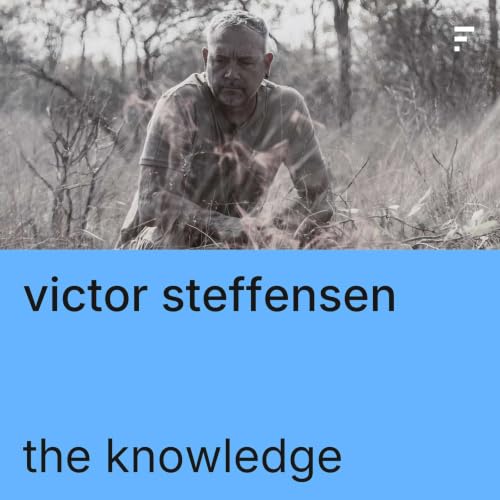
    Meet Victor Steffensen, Tagalaka man, author, filmmaker, musician and co-founder of the Living Knowledge Network. For decades, Victor has worked with Indigenous communities in Australia and around the world to revive traditional ways of reading and caring for Country. His new book, The Knowledge, asks a much bigger question: what have we lost by separating ourselves from the natural world - and what might happen if we learned how to listen again?


    From why the climate crisis may actually be an identity crisis to how Western science and Indigenous Knowledge Systems can work together and the deceptively simple idea that everything we create should help nature flourish - this is a conversation about Indigenous knowledge as you might never have heard it before. Not as something that belongs to a select few, but as the wisdom that underpins us all.


    In this episode:

    • Why Victor believes we’re all Indigenous to the planet
    • Why he thinks the climate crisis is, at its heart, an identity crisis
    • What happens when a landscape loses its identity and how you bring it back
    • How ancient knowledge and modern science can strengthen each other
    • The possibilities of reviving cultural memory and practice
    • And why, instead of arguing about who created the mess we're in, it’s time to get on with cleaning it up

    Timestamps:
    00:50 Introduction to Victor Steffensen

    05:21 Why Indigenous Knowledge is for everyone

    09:17 The moment that sparked 'The Knowledge' for Victor

    13:00 Indigenous Knowledge v Western Science

    17:32 What Victor has learned from apply the Knowledge in different countries

    20:06 Midpoint Reflections

    22:40 The Knowledge Triangle

    24:41 The Identity Crisis

    31:21 What does this actually look like?

    34:47 The job of cleaning up the mess

    41:32 Final Reflections


    Want to know more about The Knowledge?
    👉 Read Victor's new book, The Knowledge(Available online & at all good bookstores)
    👉 Explore the Living Knowledge Network
    👉 Follow the team's work: Instagram. LinkedIn. Facebook. Video.


    Image Credit:
    Harry Vincent - Living Knowledge Network

    About Fix The News:
    Fix The News is a solutions-focused media platform sharing stories from the frontlines of progress - exploring what’s working in the world and the people making it happen.


    Subscribe & follow:
    If you enjoyed this episode, follow the podcast and leave a review - it helps more people find these stories.


    Production credits:
    Hosted by Angus Hervey and Amy Davoren-Rose
    Produced by Fix The News
    Audio production: Anthony Badolato, Hear That!


    This episode was produced in Australia on the lands of the Gadigal, Wurundjeri and Woi Wurrung peoples.

    Daha fazlasını göster Daha Az Göster
    46 dk.
  • When the Taliban Banned Girls From School, SOLA Kept Teaching
    19 Aug 2026

    Five years ago, the Taliban banned girls from the classroom. One school refused to stop teaching.

    In August 2021, as the Taliban returned to power in Afghanistan, the staff and students of SOLA, the country’s first and only boarding school for Afghan girls, managed to escape to Rwanda, where they established a temporary campus to continue classes.

    Meet Shabana Basij-Rasikh, co-founder of SOLA, and our very first guest on this podcast when we launched in 2023. Five years since the Taliban takeover, Shabana returns to reflect on what has happened since: from Afghan women running secret schools and girls rationing internet data to keep learning to what has become of SOLA’s first cohort and what it means to create a place where Afghan girls have the freedom to simply be “girls who go to school.”

    In this episode:

    • Why Afghan women are continuing a generations-long tradition of secret schools
    • How the internet has become a lifeline for girls and women inside Afghanistan
    • What happened to the first cohort of SOLA girls
    • How SOLA built a permanent new home for Afghan girls in Rwanda
    • The importance of giving girls the safety to be normal teenagers
    • What five years of exile, education and resistance can teach us
    • Why Shabana’s message to the world is simple: “Don’t look away.”


    Help keep the doors open for Afghan girls:

    👉 Learn more about SOLA
    👉 Donate to SOLA
    👉 Explore SOLAx


    Timestamps:
    00:54 Introducing the School of Leadership Afghanistan (SOLA)

    03:10 What hope means to Shabana Basij-Rasikh

    05:07 The legacy of Afghan women and eduction

    08:43 Why the internet is a lifeline for Afghan women and girls

    13:10 SOLAx - the online school

    18:04 An update on the students of SOLA

    21:45 Midpoint Reflections

    23:17 SOLA has finished construction on a permanent campus in Rwanda

    27:43 The power of partnerships

    29:50 The relationship between SOLA and Rwanda

    32:18 What the students of SOLA have taught Shabana

    35:40 How the story of SOLA expands what's possible

    38:31 Final Thoughts


    About Fix The News:
    Fix The News is a solutions-focused media platform sharing stories from the frontlines of progress - exploring what’s working in the world and the people making it happen.


    Subscribe & follow:
    If you enjoyed this episode, follow the podcast and leave a review - it helps more people find these stories.


    Production credits:
    Hosted by Angus Hervey and Amy Davoren-Rose
    Produced by Fix The News
    Audio production: Anthony Badolato, Hear That!


    This episode was produced in Australia on the lands of the Gadigal, Wurundjeri and Woi Wurrung peoples.

    Daha fazlasını göster Daha Az Göster
    42 dk.
  • The Future of Farming: Healthy Soil, AI and Food Security
    5 Aug 2026

    The story of farming has always been one of adaptation. The next chapter may be its most one important yet.

    In this special episode of Fix The News, we bring together two conversations exploring one of the defining questions of our time: how do we feed a growing world without destroying the planet that we depend on?

    Meet Professor Rattan Lal, one of the world's leading soil scientists and a World Food Prize laureate, whose life's work has transformed our understanding of the living world beneath our feet. Then meet Alesha Miller, Chief Strategy Officer at Digital Green, who's helping smallholder farmers across Africa and Asia combine generations of local knowledge with artificial intelligence to build more resilient food systems.


    Together, they help us unpack that that the future of agriculture isn't about choosing between nature and technology, tradition and innovation, or human and artificial intelligence. It's about strengthening both.

    In this episode:

    • Why healthy soil is the foundation of healthy food systems
    • How our lifestyle choices today will help shape the future
    • The importance of the world's 500 million smallholder farmers
    • How AI can amplify rather than replace human knowledge
    • Why trust matters as much as technology
    • Why the future of farming may depend on combining old wisdom with new ideas


    Timestamps:
    00:13 The most common occupation on earth

    03:45 Meet Professor Rattan Lal

    04:54 Why soil is a living entity

    08:37 What does Regenerative Agriculture actually mean?

    12:05 The Law of Return

    20:53 Midpoint Reflections

    22:47 Meet Alesha Miller

    25:47 What is Digital Green?

    30:14 Can weather predictions save AI?

    37:21 Technology and Trust

    43:04 Closing Reflections: Choose Both


    Dig Deeper:

    👉Professor Rattan Lal
    👉 Digital Green


    About Fix The News:
    Fix The News is a solutions-focused media platform sharing stories from the frontlines of progress - exploring what’s working in the world and the people making it happen.


    Subscribe & follow:
    If you enjoyed this episode, follow the podcast and leave a review - it helps more people find these stories.


    Production credits:
    Hosted by Angus Hervey and Amy Davoren-Rose
    Produced by Fix The News
    Audio production: Anthony Badolato, Hear That!


    This episode was produced in Australia on the lands of the Gadigal, Wurundjeri and Woi Wurrung peoples.

    Daha fazlasını göster Daha Az Göster
    47 dk.
  • The Teen Sisters Rebuilding Gaza: Earth Prize Winners Tala & Farah Mousa
    22 Jul 2026

    Since October 2023, much of the world's attention has been focused on the destruction in Gaza. This conversation is about something we hear much less about: rebuilding.

    Meet Tala and Farah Mousa, two teenage sisters from Gaza and winners of The Earth Prize Middle East, one of the world's leading environmental competitions for teenagers. Their project, Build Hope is recycling the enormous volumes of rubble left behind by destroyed buildings and transforming it into reusable bricks to help rebuild their communities. The idea began with a Year 9 textbook in Tala's school bag. Today, it has the potential to give communities beyond Gaza, the tools to rebuild using what's already around them. It's an idea that has the potential to reduce waste, lower rebuilding costs and support reconstruction in disaster and war zones around the world.
    Podcast Image credit: Ali Awad


    In this episode:

    • Displacement and disruption - life as a teenager in Gaza
    • The inspiration behind their award-winning project
    • Their vision for helping communities beyond Gaza
    • Why rebuilding deserves as much attention as destruction

    Timestamps:
    00:35 What we know about Gaza and the Middle East Region

    04:18 Introducing Tala and Farah Mousa

    05:14 What they want us to know about their community

    05:58 The inspiration behind Build Hope

    08:12 A family and community project

    09:21 The problem with rubble

    09:54 Why its important for people in Gaza to have the tools to rebuild themselves

    10:53 Midpoint Reflections

    12:36 The next step for Build Hope

    13:17 What Tala and Farah have learned about themselves

    13:53 What hope means to these sisters

    15:49 Gaza 10 years from now

    16:37 Tala and Farah's message for young people around the world

    18:54 Final reflections


    Support Build Hope:
    Contact amy@fixthenews.com for more information

    About The Earth Prize

    The Earth Prize is one of the world's largest environmental competitions for teenagers, supporting young innovators developing practical solutions to the planet's biggest challenges.


    About Fix The News:
    Fix The News is a solutions-focused media platform sharing stories from the frontlines of progress - exploring what’s working in the world and the people making it happen.


    Subscribe & follow:
    If you enjoyed this episode, follow the podcast and leave a review - it helps more people find these stories.


    Production credits:
    Hosted by Angus Hervey and Amy Davoren-Rose
    Produced by Fix The News
    Audio production: Anthony Badolato, Hear That!


    This episode was produced in Australia on the lands of the Gadigal, Wurundjeri and Woi Wurrung peoples.

    Daha fazlasını göster Daha Az Göster
    24 dk.