• Spiritual Direction: The Lost Practice for Men Who Lead Everyone but Are Led by No One
    Jul 19 2026

    Most men in midlife leadership have accumulated the tools — executive coaches, counselors, mentors, books. And yet something stays unintegrated. The professional self and the father, the husband, the man of faith never quite come together. In this field note episode, Canyon Pathways founder Noel Bouché introduces spiritual direction: an ancient, relational practice that is at once counter-cultural and deeply relevant to the canyon of midlife leadership.

    Noel traces the field note's core definition — spiritual direction as one person walking with another, listening together for what the Spirit of God is doing and saying — and then opens up a personal metaphor from summiting Kilimanjaro. The guide, Charles, didn't choose the mountain or the route. His job was to attend: to watch, to listen, to walk alongside. That image becomes a template for everything spiritual direction is and is not.

    Three brothers from the Canyon Pathways community — a commercial pilot, a pastor-attorney, and an IT professional — share their own experiences in brief testimony clips, describing what changed when they entered this kind of relationship. And Noel closes with an invitation: if you've been on a Canyon Pathways retreat and want to go deeper, the spiritual direction pathway is the next step — a 10-session journey into living more fully as a son.

    This episode is the field note prelude to a full conversation episode with Sherman Bradley, Jason Lee, and Paul Kimball — men who are now stepping into spiritual director roles within the global Canyon Pathways community. Subscribe so you don't miss it.

    Key takeaways

    • Spiritual direction is a relational practice — not teaching, not coaching — in which one person walks with another to listen together for what the Spirit of God is doing in that person's life.
    • The guide doesn't pick the mountain: a spiritual director doesn't set the agenda or the destination; they attend to you on the journey you are already on.
    • Spiritual direction moves at the pace of the Holy Spirit — slower than executive culture, and that slowness is the point, not the problem.
    • Men who feel like they are leading everyone but being fathered by no one describe spiritual direction as finally having someone seek with them and listen for them.
    • Canyon Pathways offers a 10-session spiritual direction pathway for men who have attended a retreat and want to integrate sonship more deeply into daily life.

    Resources

    • Subscribe so every episode drops right into your feed.
    • More field notes: canyonpathways.org/blog
    • Bring our table to your inbox — the weekly devotional: canyonpathways.org/meditations
    • About Canyon Pathways: https://www.canyonpathways.org/about
    • Learn about our retreats: https://www.canyonpathways.org/retreats
    • The Heart of Man Film: http://heartofmanmovie.com
    • The Canyon Pathways Spotify playlist: https://canyonpathwayspodcast.com/cpspotify

    Produced by the team at Maroon Harpoon LTD. Thank you to our donors who make this venture possible — and thank you, friend, for being part of this Canyon Pathways community as we together live like sons and lead like fathers.

    Show More Show Less
    25 mins
  • He Found The Messiah Alone in Iran — No Church, No Community, Just Jonah | Kewmars Kazemzadeh
    Jun 19 2026
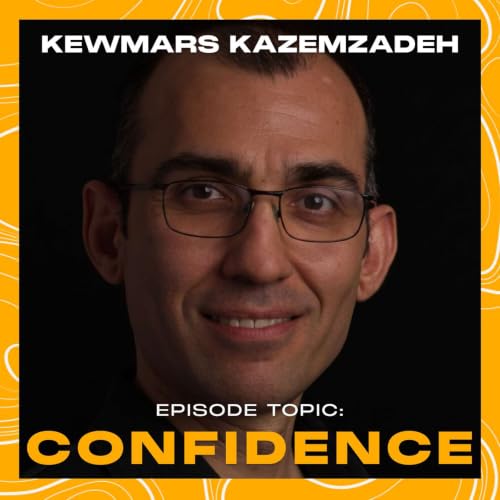
    Kewmars Kazemzadeh grew up in post-revolution Iran in a secular, partly Jewish family — navigating a society where the government was imposing an ideology on a people who had not asked for it. He had no religious upbringing. His first prayer was a teenage bargain with God over a girl who wasn't paying attention to him. What started as a transaction became a conversation — and the conversation, carried on alone for years, became the foundation of a faith that would survive solitary years in Malaysia, being robbed with nothing left, and a grueling season of caring for a father he had never been close to.Kewmars describes his conversion not as an emotional event but as an intellectual concession: the simplicity of 'do to others as you would have them do to you' showed him depth; the impossibility of 'love your enemy' showed him power. 'Zero possibility for any human being to be able to say that,' he says. 'This is not human.' From that moment he was in — not into religion, but into a relationship with a friend he did not yet know how to name.This conversation, anchored to the Canyon Pathways word for the episode — confidence — traces how Kewmars's self-confidence gave way to what the host Luke Smith calls Christ-confidence: not certainty about outcomes, but trust in a Father who hears, heals, and provides. The episode covers the Jonah morning that reframed his entire adult life, a decade of solitary faith across two countries, Holy Spirit encounters he did not have categories for until years later, a father's miraculous healing from late-stage Parkinson's, a business idea delivered in a vision, and a dream in which a King told him — against his protest — 'You are my son.' Kewmars closes with a prayer for every man who is walking alone and needs to hear: fear not, God is good, and he cannot disown himself.Key takeawaysConfidence built on self is exhausting — Kewmars describes arriving at this realization around 2015: 'I had achieved things that I had planned for, but what bothered me was it was so difficult… maybe the problem was myself, maybe I should not have put my confidence in myself.' The shift to Christ-confidence changed the texture of his life.Simplicity and impossibility are both evidence, not obstacles — Kewmars explains why 'treat others as you want to be treated' and 'love your enemy' moved him toward faith rather than away from it: 'If you want to explain something in a way that other people can understand it, you have to have very deep knowledge about it.' And: 'If God is God, it should be impossible.'God uses ordinary strangers at turning points — twice in the episode a stranger appears at a moment of need (the Muslim friend who offered a Bible in Iran; the man by the pool in Malaysia who knew of a job). Kewmars reflects: 'The second time now you've had just a random guy show up in your life that's meeting you at a point of need.'Sonship can be received before it is understood — Kewmars walked in the confidence and boldness of a son in Iran for nearly two years, telling people about God in a government factory, without knowing the language of sonship, without community, and without having read the Bible. The host notes: 'You were receiving like a son' — and traces this to Kewmars's own answer that receiving had always been the easiest of the three retreat words.The dream that names the show's entire mission — Kewmars recounts dreaming of a King whose face he could not see, who said 'You are my son,' and whom he argued with: 'My father is not a king. How can you be my father?' He later shared the dream with a pastor who said: 'The disbelief that showed up in my dream is also the story of all of us. We don't want to believe that we are basically a prince and our father is a king.'Discussion questions (PDF) — use this episode for personal reflection or with your small group. ResourcesSubscribe so every episode drops right into your feed.More field notes: canyonpathways.org/blogBring our table to your inbox — the weekly devotional: canyonpathways.org/meditationsAbout Canyon Pathways: https://www.canyonpathways.org/aboutLearn about our retreats: https://www.canyonpathways.org/retreatsThe Heart of Man Film: http://heartofmanmovie.comThe Canyon Pathways Spotify playlist: https://canyonpathwayspodcast.com/cpspotifyProduced by the team at Maroon Harpoon LTD. Thank you to our donors who make this venture possible — and thank you, friend, for being part of this Canyon Pathways community as we together live like sons and lead like fathers.
    Show More Show Less
    1 hr and 35 mins
  • Confidence: Why You Don't Have to Lead Alone - Field Note
    Jun 2 2026

    Confidence is a tricky thing in midlife leadership. For some of us it's been quietly draining away — through a loss, a reversal, an injury, or pain we've carried a long time. For others it's a newer ache: there was once a confidence tied to our wins, and now a fresh challenge has us rattled. Either way, the higher we climb, the lonelier it can get. We "mask up" for the day, hold it together for everyone around us, and tell ourselves we can't show the cracks.

    In this field note, Noel sits with that tension and then does what we love to do here at Canyon Pathways — he goes back to the word itself. Confidence comes from the Latin confidentia: con (with, together) and fidere (to trust). Tucked inside it are the words confide, confidant, fidelity — every one of them about trusting someone outside ourselves. Which turns the whole thing on its head. Confidence, it turns out, is less about belief in ourselves and more about belief in others. Self-confidence may even be a kind of oxymoron.

    But to live like a son is to live in abiding confidence — always trusting that we are seen, known, covered, and provided for by a faithful Father who has already prepared a table for us, right here in the valley. That's a confidence the canyon can't take away.

    Pull up a chair, brother. We'll stoke the fire while you settle in.


    What we explore in this field note

    • Why confidence wavers in the canyon — and how the isolation of leadership quietly erodes it
    • The word behind the wordconfide, confidant, fidelity, fiduciary, and what the Latin root reveals
    • The difference between a confidence and a secret — one unites, the other divides
    • Three takeaways:
      1. The confidence we usually imagine is born out of individual experience — "I've done it, so I can do it again." But over the years that can curdle from I can into I must, only I can — and that's where the isolation begins.
      2. Confidence is inherently relational. It literally means together-trusting. We were made for the "we will do it," not the lonely "I can."
      3. The deepest confidence is the confidence of sonship — we're not a hired hand whose contract is running out. We're sons and heirs, with a Father who has already prepared the inheritance, and the table.

    A line worth sitting with

    "It's not that I can do it, it's that we will do it. And by the way, we will continue to do it. That's the essence of Psalm 23."


    Scripture & references

    • Psalm 23 — the Shepherd, the valley of shadow, the table prepared in the midst of it
    • Hebrews 4:16 — "Let us draw near with confidence to the throne of grace…"
    • Epicurus — "We do not so much need the help of our friends as we do the confidence of their help in need."
    • Back to the Future — George McFly as the unlikely patron saint of confidence


    Coming up next

    We're staying with confidence — but moving from the field note to the fire pit. Next episode, Luke Smith sits down with Canyon Pathways brother Kewmars Kazemzadeh for a conversation about his own journey into sonship and how the Father has guided him through his life. You won't want to miss it.

    Resources

    • Subscribe so every episode drops right into your feed.
    • More field notes: canyonpathways.org/blog
    • Bring our table to your inbox — the weekly devotional: canyonpathways.org/meditations
    • About Canyon Pathways: https://www.canyonpathways.org/about
    • Learn about our retreats: https://www.canyonpathways.org/retreats
    • The Heart of Man Film: http://heartofmanmovie.com
    • The Canyon Pathways Spotify playlist: https://canyonpathwayspodcast.com/cpspotify

    Produced by the team at Maroon Harpoon LTD. Thank you to our donors who make this venture possible — and thank you, friend, for being part of this Canyon Pathways community as we together live like sons and lead like fathers.

    Show More Show Less
    19 mins
  • He Wasn't Supposed to Be Born. Then He Built a Business, Had Three Strokes, and Rode 13,000 Miles — Then God Stopped Him | J.P. Avekoe
    May 4 2026
    What does real progress look like for a man who has already built the business, made the first million, and still felt like it wasn't enough? For J.P. Avekoe — CEO of Hardy Global and co-founder of Rise and Shine Africa, a 240-acre initiative in Togo — that question took decades, three strokes, a failing heart, and a near-fatal motorcycle crash to answer.In this episode of the Canyon Pathways Podcast, host Luke Smith sits down with J.P. to trace the arc of one of the most remarkable sonship journeys in the CP community. J.P. grew up in Togo not knowing his own mother — raised by his grandmother, he called his mom 'Sister Lily' because that's what the culture taught him, and didn't learn the truth until he was an adult trying to make amends. Before he was born, his mother had heard a voice while sitting in a car on the way to an abortion clinic: don't do this. She stopped the car, fled into a field, and changed the course of both their lives.Years later, after immigrating to the United States, building an IT consulting firm, and reaching the external markers of success, J.P. found himself living what he describes as 'on borrowed time' — three strokes, a heart crisis, five days in the ICU, and one last push: 13,000 miles on a motorcycle in five weeks, which ended when an 18-wheeler crushed him between cars. A bystander told him afterward: 'I saw you gliding.'In early 2025, J.P. made a resolution: draw near to God, whatever it takes. That led him to three retreats in three months — a Canyon Pathways retreat in Spearfish, South Dakota; a Tres Dias retreat in East Texas where he received a vision and a calling ('Go build my church'); and a Canyon Pathways retreat in Broken Bow, Oklahoma, where the work of forgiveness began. Along the way, Noel Bouché gave him a word — 'journey' — that he had been writing in his journal without knowing it.The thread running through all of it: the difference between faith and trust. J.P. had faith his whole life. Trust — the confident expectation that God will fulfill his promises — is what he's learning now, as he prepares to leave America and return to Togo with his wife Lindsay to build a church, a school, and a sustainable agriculture initiative.Progress, J.P. says, isn't just advancement. It's alignment. And for the man who was told by his own mother 'you messed up my life,' learning that his heavenly Father had claimed him before he was born is the turning point that changes everything.If you're in a season where the grind feels like Groundhog Day — or you've hit every external marker and still feel hollow — this conversation is for you. Use the discussion questions in the show notes for personal reflection or with your small group.Key takeawaysProgress is alignment, not just advancement — J.P. distinguishes between moving forward and moving toward God, and describes this as the central shift in his own life.Faith and trust are not the same thing — faith is belief; trust is the confident expectation that God will fulfill his promises. J.P. grew up with faith and is only now learning trust.Sonship means receiving what you couldn't earn — J.P.'s story of being claimed by God before birth, rescued repeatedly through near-death experiences, and finally 'coming home' mirrors the prodigal son's return in Luke 15.Don't let the metrics define your progress with the Lord — J.P.'s closing prayer addresses men stuck in the grind of external scorekeeping: money, houses, family outcomes. The invitation is to let God's alignment redefine what counts.Play your own game — J.P.'s word to his younger self: don't compare. Everybody's time is different. The rules will change, and you will be cheated. Keep doing what you have to do.ResourcesSubscribe so every episode drops right into your feed.More field notes: canyonpathways.org/blogBring our table to your inbox — the weekly devotional: canyonpathways.org/meditationsAbout Canyon Pathways: https://www.canyonpathways.org/aboutLearn about our retreats: https://www.canyonpathways.org/retreatsThe Heart of Man Film: http://heartofmanmovie.comThe Canyon Pathways Spotify playlist: https://canyonpathwayspodcast.com/cpspotifyProduced by the team at Maroon Harpoon LTD. Thank you to our donors who make this venture possible — and thank you, friend, for being part of this Canyon Pathways community as we together live like sons and lead like fathers.
    Show More Show Less
    1 hr and 11 mins
  • FIELD NOTE | PROGRESS: When Forward Doesn’t Feel Like Forward
    Apr 24 2026

    We all want progress.

    We want to feel like we’re moving… like something is changing… like we’re not just stuck.

    But midlife has a way of complicating that.

    Sometimes it feels like a grind.
    Sometimes it feels like we’re going backward.
    And sometimes everything looks like it’s moving forward on the outside… while something inside is wearing down.

    In this Field Note, we slow down and reconsider what progress actually is—and what it isn’t.

    A Thought to Sit With

    “Progress means getting nearer to the place you want to be. And if you’ve taken a wrong turn, then to go forward does not get you any nearer.” — C.S. Lewis


    What This Episode Explores

    • The weight of midlife
    Responsibility in every direction can leave us feeling stuck, exhausted, and unsure if we’re actually moving forward.

    • The illusion of movement
    Not every step is progress. It’s possible to stay busy, take action, and still drift further off course.

    • The need for reorientation
    Real progress isn’t just motion—it’s direction. And for us, that direction is relational.

    • Progress as return
    Like the younger son, progress begins when we turn back toward the Father—and take one step at a time in that direction.

    A Simple Invitation

    If things feel stuck right now, don’t overcomplicate it.

    • Pause.
    • Reorient.
    • Take one step toward the Father.

    That’s progress.

    Reflection Questions

    • Where do you feel stuck or stagnant right now?
    • Are you moving—or actually moving forward?
    • What might it look like to reorient toward the Father this week?

    Resources

    • Subscribe so every episode drops right into your feed.
    • More field notes: canyonpathways.org/blog
    • Bring our table to your inbox — the weekly devotional: canyonpathways.org/meditations
    • About Canyon Pathways: https://www.canyonpathways.org/about
    • Learn about our retreats: https://www.canyonpathways.org/retreats
    • The Heart of Man Film: http://heartofmanmovie.com
    • The Canyon Pathways Spotify playlist: https://canyonpathwayspodcast.com/cpspotify

    Produced by the team at Maroon Harpoon LTD. Thank you to our donors who make this venture possible — and thank you, friend, for being part of this Canyon Pathways community as we together live like sons and lead like fathers.

    Show More Show Less
    18 mins
  • Anticipation: Leading with Vision w/ Aseka Taabu
    Mar 19 2026

    Anticipation sits at the center of leadership.

    In this episode of the Canyon Pathways Podcast, Sherman Bradley sits down with Aseka Taabu, a Canyon Pathways brother based in Nairobi, Kenya, to explore the Field Note word Anticipation and how it shapes the journey of sonship and leadership.

    Anticipation isn’t simply about predicting what might happen next. It’s the posture of reaching forward—seeing what may be coming and preparing both yourself and others for what lies ahead.

    As responsibilities increase in midlife, anticipation can begin to shift. What once felt like excitement about the future can slowly become anxiety or a sense of waiting for something to go wrong. Yet the invitation of sonship calls men back into a different posture—one rooted in trust.

    In this conversation, Sherman and Aseka reflect on how anticipation shapes leadership, parenting, relationships, and the decisions men carry as they steward influence in their families and communities.

    Aseka shares reflections from his own leadership journey in Kenya, offering wisdom on responsibility, preparation, and the importance of remaining grounded in identity as a son while navigating the demands of leadership.

    Anticipation, when rooted in sonship, is not about controlling the future—it’s about stepping toward it with faith, wisdom, and clarity.


    Key Takeaways

    • Anticipation plays a critical role in leadership and decision-making.
    • Leaders must learn to anticipate both opportunities and challenges.
    • Midlife leadership can shift anticipation from excitement to anxiety if identity isn’t grounded.
    • Anticipation allows leaders to prepare others—especially children and teams—for what lies ahead.
    • A son approaches the future differently than a servant.
    • Healthy anticipation helps leaders navigate uncertainty and guide others through complex seasons.
    • Identity as a son restores confidence and hope in how we face the future.


    Sound Bites

    “Anticipation can make or break leadership.”

    “Good leaders anticipate not only threats, but opportunities.”

    “Anticipation means reaching into the future and bringing it into the present.”

    “Midlife leadership can shift anticipation from excitement to anxiety.”

    “A son learns to anticipate with confidence.”

    Resources

    • Subscribe so every episode drops right into your feed.
    • More field notes: canyonpathways.org/blog
    • Bring our table to your inbox — the weekly devotional: canyonpathways.org/meditations
    • About Canyon Pathways: https://www.canyonpathways.org/about
    • Learn about our retreats: https://www.canyonpathways.org/retreats
    • The Heart of Man Film: http://heartofmanmovie.com
    • The Canyon Pathways Spotify playlist: https://canyonpathwayspodcast.com/cpspotify

    Produced by the team at Maroon Harpoon LTD. Thank you to our donors who make this venture possible — and thank you, friend, for being part of this Canyon Pathways community as we together live like sons and lead like fathers.

    Show More Show Less
    1 hr and 7 mins
  • From His Dad's Arrest to Fighting Human Trafficking — Jacob Johnson's Sonship Story
    Feb 8 2026

    Jacob Johnson is the founder of Calion Wax Company, a home fragrance social enterprise that has donated nearly $900,000 to U.S.-based nonprofits fighting human trafficking since launching in 2017. But the number is just the surface.

    Underneath it is a kid who grew up with a front-row seat to his pastor father's hidden life — the scripture readings at 6 a.m., the moral failures after dark, and the arrest in Jacob's senior year of high school that ended the relationship. Jacob went into college with a plan: study criminal justice, become a cop, stop men like his dad. Every law enforcement agency he applied to said no.

    In this episode of the Canyon Pathways podcast, Luke Smith sits down with Jacob to trace the story from that rejection through a transformative summer with CRU in Santa Cruz, California, to a chance candle idea that became a mission, a marriage, and a slow, ongoing education in what it means to live not as a son striving to earn his keep — but as a son who is already enough. Jacob also shares what happened when Noel Bouché prayed over him at a Canyon Pathways retreat and gave him the word 'light' — his knee-jerk resistance (he runs a candle company and was trying to get away from candles), and the moment the real meaning broke him open. If you are a man who has been performing your way through leadership and faith and wondering why it still feels hollow, this conversation was recorded for you. Canyon Pathways runs free retreats for men in midlife leadership. Learn more and find upcoming gatherings at CanyonPathways.org.

    Key takeaways

    • Performance and faith can wear the same face — Jacob grew up in a home with daily scripture and deep moral failure happening simultaneously, and names the confusion that creates for a son trying to understand God
    • The word 'light' at a Canyon Pathways retreat initially annoyed Jacob (he runs a candle company and wanted a break from candles) — but Noel Bouché's meaning, that God's burden and yoke are light, became one of the most freeing things he had ever heard
    • Jacob applied to multiple law enforcement agencies after his father's arrest, was rejected by all but one, and names that closed door as the moment God redirected him toward Calion Wax Company and a $900,000 anti-trafficking mission
    • Forgiving his father — whom he has not seen since the 2012 arrest — was not optional before marriage; a mentor pushed him to do the work first, and Jacob describes forgiveness as the thing that lowered the walls enough for God to go deeper
    • The sonship message Jacob would give teenage Jacob, and the word he offers the Canyon brotherhood at the close: 'You are enough. In Christ, we are enough. We are secure.'

    Resources

    • Subscribe so every episode drops right into your feed.
    • More field notes: canyonpathways.org/blog
    • Bring our table to your inbox — the weekly devotional: canyonpathways.org/meditations
    • About Canyon Pathways: https://www.canyonpathways.org/about
    • Learn about our retreats: https://www.canyonpathways.org/retreats
    • The Heart of Man Film: http://heartofmanmovie.com
    • The Canyon Pathways Spotify playlist: https://canyonpathwayspodcast.com/cpspotify

    Produced by the team at Maroon Harpoon LTD. Thank you to our donors who make this venture possible — and thank you, friend, for being part of this Canyon Pathways community as we together live like sons and lead like fathers.

    Show More Show Less
    1 hr and 28 mins
  • FIELD NOTE on "INTENTIONAL": To Stretch Toward That Place Inside
    Jan 23 2026

    In this episode of the Canyon Pathways podcast, host Noel Bouché explores the profound depth of what it means to be intentional. Drawing inspiration from an unlikely source—the 90s alt-rock hit "Father of Mine" by Everclear—Noel unpacks how intentionality is less about strategic planning and more about the relational effort of reaching toward another.

    From the etymology of the word to the character of God as an intentional Father, this field note challenges the "box-checking" mentality of leadership and parenting. Noel invites us to move beyond mere methods and into the heart-level work of stretching out our hands to those we lead, mirroring the way Abba reaches out to us. It is a call to move from the striving of servanthood into the restful security of sonship, finding wholeness in the places that are often the hardest to reach.

    Takeaways

    • Intentionality is about motives, not just methods. Taking someone to the beach or the movies is just a means; the true goal is reaching the inner person.
    • To be intentional is to "stretch out." Rooted in the Latin intendere, it literally means to reach toward another with effort, energy, and passion.
    • True intentionality requires relational humility. It means setting aside our own agendas to discover what brings joy and delight to the other person.
    • God is the ultimate Intentional Father. He is not distant or passive; He is constantly reaching out to rescue, comfort, and deliver His children.
    • Our response to being reached is to reach back. We are invited to stretch out our hands in response to God, moving from fear into the freedom of being a beloved son.
    • Intentionality pushes back chaos. By providing order and focus, purposeful intent acts as a proactive force against the dehumanizing disorder of life.

    Download Reflection Questions

    Subscribe to the Canyon Pathways podcast and visit canyonpathways.com for show notes, discussion questions, and new episodes. Join us as we live like sons and lead like fathers.

    Resources

    • Subscribe so every episode drops right into your feed.
    • More field notes: canyonpathways.org/blog
    • Bring our table to your inbox — the weekly devotional: canyonpathways.org/meditations
    • About Canyon Pathways: https://www.canyonpathways.org/about
    • Learn about our retreats: https://www.canyonpathways.org/retreats
    • The Heart of Man Film: http://heartofmanmovie.com
    • The Canyon Pathways Spotify playlist: https://canyonpathwayspodcast.com/cpspotify

    Produced by the team at Maroon Harpoon LTD. Thank you to our donors who make this venture possible — and thank you, friend, for being part of this Canyon Pathways community as we together live like sons and lead like fathers.

    Show More Show Less
    19 mins